
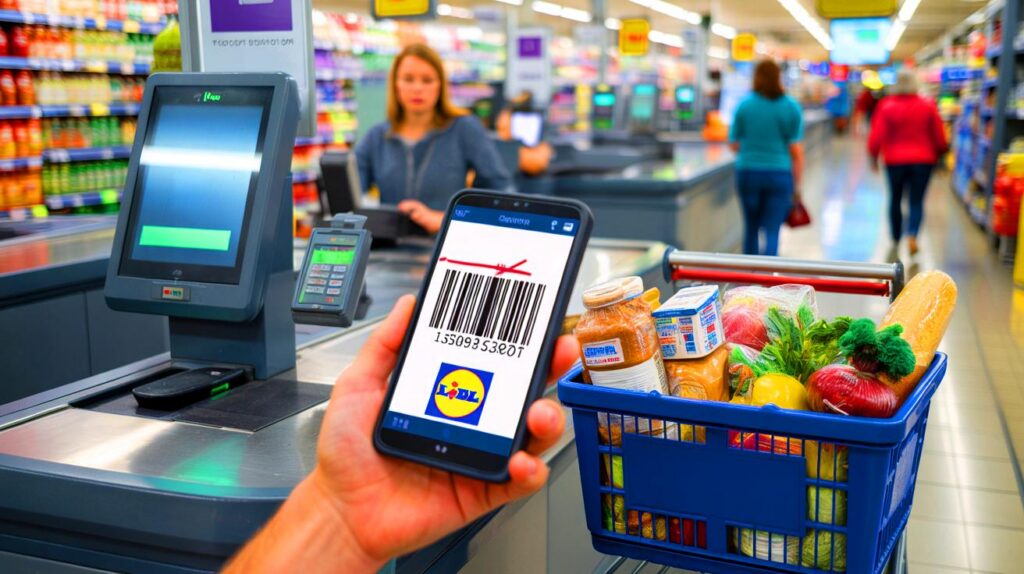
Queues face fresh pressure this week as a budget favourite quietly deepens its app’s role at the checkout, promising slicker trips.
Lidl has embedded payment into Lidl Plus, giving shoppers a single barcode to handle coupons and pay in one movement at tills and self-checkouts nationwide.
What’s changed in the Lidl Plus app
The discounter has switched on Lidl Pay, a digital wallet inside its Lidl Plus loyalty app. The feature lets you authorise a contactless-style payment by scanning the Lidl Plus barcode at the till. In the same move, the app applies your digital coupons and vouchers. Staffed lanes and self-checkouts accept the new flow.
One scan now applies Lidl Plus coupons and completes the payment — no separate card tap or second scan needed.
Lidl says the rollout covers stores across Great Britain, following small-scale tests. For regulars juggling offers and a bank card at the till, removing a step aims to cut faff and keep queues moving.
How it works at the till
- Open Lidl Plus on your phone and select Lidl Pay.
- Check your chosen payment method inside the app.
- Scan the Lidl Plus barcode when prompted at self-checkout or by the cashier.
- Coupons apply automatically; the payment processes immediately.
- Collect your printed receipt or view your digital record in the app if available.
Security, encryption and your details
Lidl points to accredited payment partners and strong encryption protecting stored card details. The supermarket describes Lidl Pay as fast and secure, with sensitive data handled by specialist providers rather than exposed at the checkout.
Payment data is held by accredited providers and protected with premium-grade encryption, not left on the till.
Shoppers remain free to use a physical card, cash, or an external mobile wallet. The change adds a route; it does not remove existing choices.
Part of a bigger digital push
Lidl Plus membership has grown by more than a third over the past year, according to the retailer. Lidl Pay lands after the chain introduced a self-scanning capability in July, enabling customers to scan as they shop, track spend and discounts live, and finish at self-service checkouts. An integrated version of that functionality began a four-store pilot in September, ahead of a phased roll-out planned for next year.
The company has also trialled a Click, Reserve and Collect service via Lidl Plus and expanded self-checkouts across stores. Leadership frames the app’s new payment feature as one step in a broader plan to give shoppers flexibility while streamlining the journey.
Self-scanning pilots, self-checkout expansion and in-app payment point to a staged redesign of the Lidl shop.
Where shoppers may feel the difference
- Speed: one barcode scan replaces the usual apply-coupons-then-pay rhythm.
- Simplicity: fewer actions at the till, especially useful at busy times.
- Consistency: the same flow at a manned lane or self-checkout.
- Control: with self-scanning, customers can watch their spend and discounts mount in real time.
- Trade-offs: your phone becomes your wallet, so battery level and screen brightness matter.
Before vs after at the checkout
| Before | With Lidl Pay |
|---|---|
| Scan Lidl Plus to add coupons, then pay separately with card or wallet. | Scan Lidl Plus once to apply coupons and pay in the same action. |
| Switch between app, card and, if used, self-scan device. | Keep everything inside the Lidl Plus app, including self-scan where available. |
| Choose staffed lane or self-checkout and repeat the two-step flow. | Choose either checkout type and follow the single barcode flow. |
What Lidl’s move means for shoppers
For discount hunters, the biggest gain is removing friction. Coupons auto-apply without a second scan, which helps when you have a queue at your back and a basket full of weekly staples. Families juggling a big shop should notice fewer prompts on screen and a shorter dance at the card reader.
Expect subtle shifts in store behaviours as well. If more people rely on the app to pay, phones will appear in more hands at the front of each queue. That tends to speed flow when it works and stall it when a device fails. Keeping a back-up payment method in your pocket remains wise, especially on low-battery days.
How this fits the UK retail picture
British supermarkets have spent years tuning loyalty apps, scan-as-you-shop tools and self-checkouts. The direction of travel is clear: match discounts to shoppers, cut the friction at payment and let customers pick their preferred journey through the store. Lidl’s approach bundles those aims into one app workflow rather than scattering them across multiple steps and devices.
Other grocers run their own mixes of loyalty scanning, mobile self-scanning and contactless payment, but not all combine coupons and payment into a single barcode inside a loyalty app. Lidl’s all-in-one presentation may appeal to customers who value a predictable checkout routine over switching between screens and cards.
Set-up tips before your first try
- Update Lidl Plus to the latest version on iOS or Android.
- Add a payment method to Lidl Pay inside the app and follow any verification prompts.
- Enable a phone screen lock and, if offered, biometric authentication for quick approval.
- Test the flow at a quieter time before relying on it for a large shop.
- Carry a spare card while you get used to the new journey.
What’s next for the in-app shop
The four-store September pilot of integrated self-scanning paves the way for a staged expansion in 2025. If the tests stay on track, more customers will scan as they go, watch running totals, and pay in a single step. Expect Lidl to fine-tune prompts, basket limits and on-screen guidance as the roll-out widens.
There are practical questions shoppers will want answered as adoption grows: how refunds and partial returns appear in the app, how to switch payment cards quickly, and whether digital receipts can stand in for paper at customer services. Early users can reduce snags by keeping the app updated, checking voucher expiry dates before they shop and confirming the correct card is selected in Lidl Pay.



One scan for coupons and payment is exactly the kind of polish Lidl needed. If it’s reliable at peak times, queues should move faster.
Quick security question: are card detials tokenised per transaction or stored long-term with the partner? Also, how are refunds handled back to the right card?