
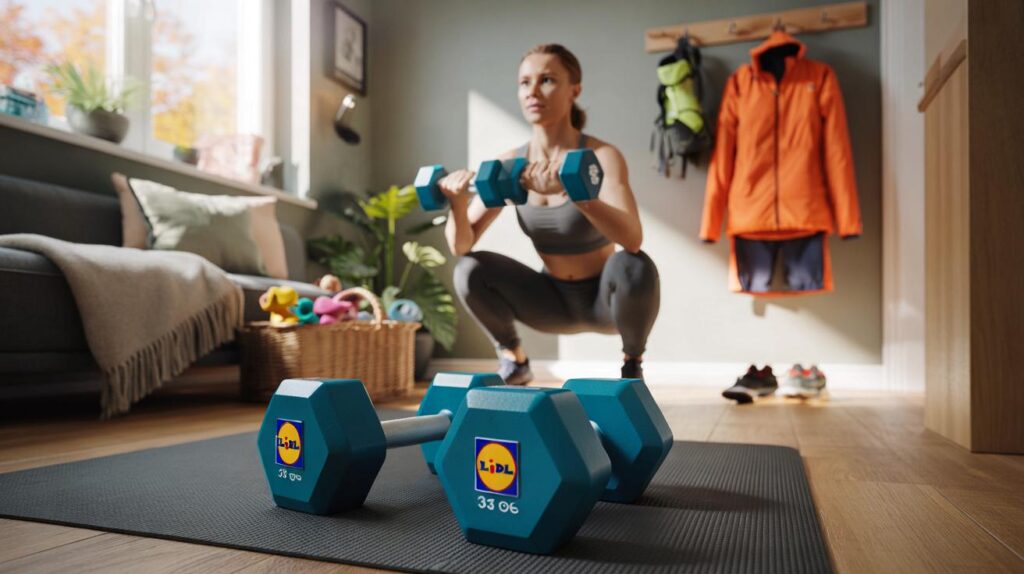
A budget-friendly bit of kit is about to tempt busy parents back into strength work, no membership or commute needed.
Lidl’s latest Crivit Sports drop arrives this month with a wallet-friendly focus on home training. The standout? A £13 pair of 3kg dumbbells that promise simple, no-fuss strength sessions between school runs, nap windows and late-night telly.
What’s landing in the middle aisle
From 21 September, Lidl rolls out a new sporting range featuring more than 40 items. The collection leans into practical, affordable kit that suits autumn routines. Think a lightweight windproof jacket that shrugs off showers, running trainers for pavement miles, and a hydration backpack for longer walks and weekend hikes.
On the floor-mat side, the Crivit Yoga Fitness Mat sits at £7.99, with pink and black options, and enough grip for home workouts or a quick stretch after the school drop-off. Yet it’s the dumbbells that will draw the eye of anyone short on time and space who still wants to build muscle and bone strength without a contract.
The £13 dumbbells at a glance
Lidl’s 3kg dumbbells come as a pair for £12.99. They target beginners, returners to exercise, and anyone who wants to lift safely at home. The pair sits neatly by the sofa and doubles as a strength and cardio booster in short circuits.
- Solid iron core wrapped in a floor-friendly PVC coating for durability and quieter landings
- Anti-slip, textured finish to help hands stay put when palms get sweaty
- Ergonomic, slightly rounded handle for a comfortable hold during longer sets
- Hexagonal heads that stop the weights rolling under furniture
- Approximate 10 cm handle length suited to most hand sizes
Prefer a heavier challenge? Lidl is also stocking 4kg and 5kg versions, ideal if you already lift or want room to grow.
£12.99 for a pair of 3kg dumbbells, with 4kg and 5kg options available in stores from 21 September—while stocks last.
Who 3kg weights suit—and who should size up
New to strength work? A 3kg pair carries you through the foundations: upper-body pushes and pulls, core moves and lower-body patterns. It suits teens, older adults building back confidence, and post-holiday returners who want to move without faff. It also fits high-rep conditioning sessions where form matters more than brute force.
If you can press or row 12–15 reps per set with ease, step to 4kg for upper body and 5kg for legs and glutes. Stronger users can mix pairs: 3kg for shoulders and rehab-style work; 5kg for squats, lunges and hip hinges. The goal is a weight that feels challenging by the last two reps while your technique stays neat.
A 20-minute plan you can do in your living room
Warm up for 3–4 minutes with marching, arm circles and bodyweight squats. Then run this circuit two or three times. Rest 45–60 seconds between moves as needed.
- Goblet squat (hold one 3–5kg dumbbell at chest): 10–12 reps for legs and glutes
- Bent-over row (one dumbbell in each hand): 10–12 reps for back and arms
- Floor press (lying, one in each hand): 8–12 reps for chest and triceps
- Romanian deadlift (pair): 10–12 reps for hamstrings and back line
- Overhead press (pair or single): 6–10 reps for shoulders—switch to 3kg if form wobbles
- Suitcase carry (one dumbbell at your side): 20–30 seconds each side for core stability
Finish with a minute of brisk step-ups or stairs to raise the heart rate, then stretch calves, hips and chest.
Aim for 2–3 sessions per week. Progress by adding 1–2 reps per set, then move up to the next weight when sets feel smooth.
Value check: how far does £13 go?
Many UK gym memberships run £25–£60 a month. A one-off £12.99 spend grants permanent access to basic, effective resistance training at home. The PVC coating protects floors and quietens contact with the ground, so late-night workouts won’t wake a sleeping baby. The hex design keeps storage tidy; slide the pair under a sofa or into a hallway basket.
Want a low-cost starter bundle? Combine the £13 dumbbells with a £7.99 mat for under £22. For outdoor sessions, add the lightweight jacket when the wind picks up and keep a hydration pack handy for longer weekend walks. You’ll cover strength, mobility, and light cardio without touching a treadmill.
Safety, technique and tracking progress
- Warm up joints before lifting; two minutes of gentle movement helps.
- Keep wrists straight, ribs down and knees tracking over toes.
- Place weights down with control—don’t twist while bending.
- Brace your core as if zipping up tight jeans; breathe out on the exertion.
- Protect floors with a mat, and keep a clear area around you.
- If you have shoulder or back pain, shorten ranges or skip overhead moves.
Use a simple effort scale from 1–10. Aim for 6–8 on most sets: challenging but tidy. When a weight drops to a 5, add reps or pick the next size. Write down sets, reps and how each session felt. Two weeks of small gains add up fast.
Who benefits most right now
Parents who can’t justify a commute to the gym. Older adults trying to slow age-related muscle loss. Runners needing stronger hips and calves to cut injury risk. Teenagers learning safe movement patterns. Anyone short on space who wants a neat, roll-proof pair that works for hundreds of exercises.
| Weight option | Best for | Sample exercises |
|---|---|---|
| 3kg pair | Beginners, high-rep circuits, shoulder-friendly work | Lateral raises, floor press, rows, goblet squats |
| 4kg pair | General fitness with room to progress | Presses, lunges, deadlifts, suitcase carries |
| 5kg pair | Lower-body strength and mixed-modality workouts | Romanian deadlifts, step-ups, thrusters, farmer’s walks |
What the science says about timing and age
Muscle starts to decline from our 30s, a process known as sarcopenia. Two to three short strength sessions per week can slow that slide and restore lost power. Lifting light to moderate loads for 8–15 reps improves bone density stimulus, supports healthy blood sugar, and makes day-to-day tasks feel easier.
If you’re short on time, split the 20-minute plan into two 10-minute blocks. Do the first three moves at lunch, then the last three after bedtime stories. The training effect remains, and compliance rises when the plan fits real life.
Smart add-ons for autumn
Pair the dumbbells with brisk 30-minute walks, a parkrun at the weekend, or a hilly family hike. The lightweight jacket from the same range handles gusty weather, while the hydration pack supports longer efforts without juggling bottles. A cheap mat under your weights saves the carpet and encourages you to finish with stretches for hips and hamstrings.
Small, consistent sessions beat heroic, rare efforts. Keep the weights visible, and you’ll use them more often.
New to lifting after pregnancy or returning from injury? Start with 3kg and keep ranges comfortable. Focus on posture and breathing, and stop a set if technique starts to slip. If you have a medical condition, seek tailored guidance and adjust exercises accordingly.
Ready to build a habit? Ring-fence two 20-minute slots in your diary each week. When those feel automatic, add a third session or bump to 4kg. The £13 pair will still earn its keep for warm-ups, finishers and recovery days as you get stronger.



£12.99 for a pair? That’s a steal. The hex heads alone sell it. Cant wait for 21 Sept.
Isn’t 3kg too light for most moves? I can do 15+ reps easy—should I skip to 5kg for legs and 4kg for presses, or mix pairs like you suggest?