
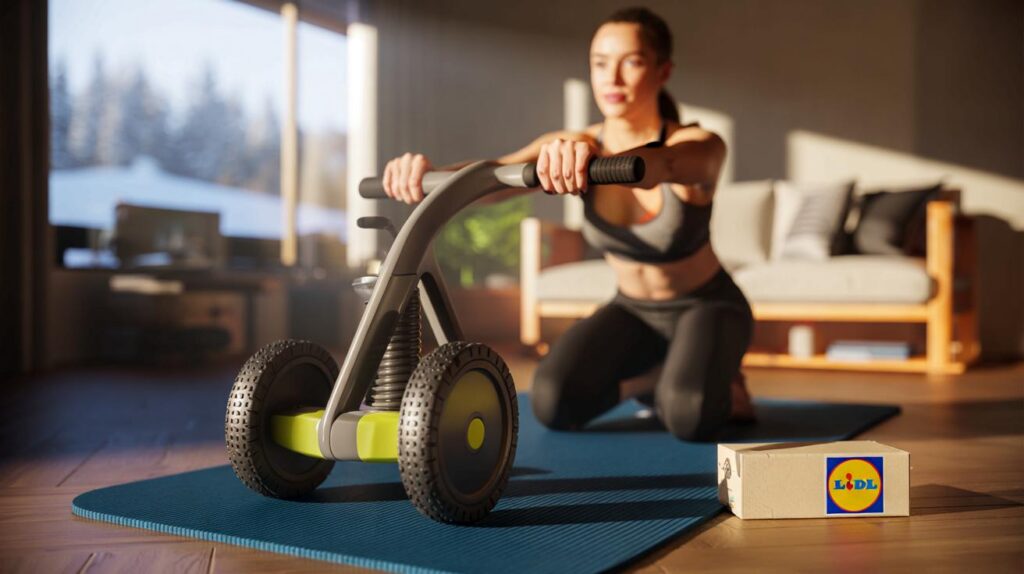
As temperatures fall and comfort food tempts, living rooms turn into training corners where small gadgets punch above their weight.
This winter’s surprise hit is an ab wheel from Lidl’s Crivit range, priced at €16.99 and buoyed by a 4.6/5 user score. It targets core strength with compact hardware, a stable base and a mechanical assist that aims to make rollouts less intimidating for beginners.
What is Lidl’s €16.99 ab wheel and why is it trending
The Crivit ab wheel lands squarely in the home-workout sweet spot: cheap, compact and simple. It uses a two-wheel layout on a triangular support to keep the roll straight, so you feel less wobbly when you extend forwards. Wide, rubber-coated wheels add grip on hard floors and dampen noise. A mechanical return helps you come back from the rollout without yanking through your lower back. Padded elbow rests and straightforward handles round off a design meant to reduce the “I’m going to face-plant” fear many feel on day one.
€16.99, dual-wheel stability, mechanical assist and a 4.6/5 rating: a low-risk entry into core training at home.
| Feature | What you get |
|---|---|
| Price | €16.99 |
| User score | 4.6/5 (retailer reviews) |
| Design | Dual wheels on a triangular support for straighter tracking |
| Assistance | Mechanical return to guide the comeback phase |
| Comfort | Padded elbow support and grippy handles |
| Surface grip | Wide, rubberised wheels for quiet, controlled rolling |
| Footprint | Compact, easy to assemble, fits small spaces |
How it works: muscles targeted and the promise behind the pitch
Rollouts are a core anti-extension drill. Your abs, deep core and obliques stop the lower back from arching. Lats, deltoids and serratus stabilise the shoulders. Glutes and quads lock the hips to keep the pelvis from tilting. The mechanical return on this model softens the hardest part of the move—the start of the return—so you can focus on bracing rather than fighting panic.
Will it flatten a belly by itself? Visible abs rely on body-fat levels. A calorie-appropriate diet and regular movement shift that dial. The wheel builds function and tone; nutrition and daily activity reveal the shape you’re building.
The wheel sculpts strength. A consistent routine and sensible food choices reveal it.
Who should start and who should be cautious
Beginners, busy parents and anyone short on space gain most from a guided, stable wheel like this one. If you have shoulder impingement, acute lower-back pain or hernia concerns, get cleared first and start with short ranges, on your knees, with a neutral spine. Pregnant users should avoid aggressive rollouts.
Getting started at home
Set the wheel on a mat. Kneel behind it. Place elbows on the pads, hands on the handles, ribs tucked, glutes lightly squeezed. Roll forward slowly until you feel your core working hard but your lower back stays neutral. Pause. Use your abs and lats to guide the return. Stop before the low back arches.
- Keep a long spine and eyes on the floor to maintain alignment.
- Start with a small range. Add a few centimetres only when control holds.
- Breathe out as you return; it helps the ribcage set and the abs engage.
- Use a non-slip mat to protect knees and prevent drift.
- If you shake, reduce the range, slow down and rebuild tension.
A 10-minute plan you can actually stick to
Short, frequent sessions deliver results without wrecking motivation. Try this four-week progression, three days per week, resting 48 hours between sessions:
- Week 1: 5 sets of 5 controlled half-rollouts (knees down), 45 seconds rest. Finish with 2 sets of 20-second plank.
- Week 2: 5 sets of 6–8 half-rollouts, 45 seconds rest. Add 2 sets of 6 eccentric-only rollouts (roll out slowly, use knees to reset).
- Week 3: 6 sets of 6–8 three-quarter rollouts, 40 seconds rest. Add 2 sets of 20-second hollow hold.
- Week 4: 6 sets of 8 full range rollouts you can control without back arching. Finish with 2 sets of 8 slow negatives.
On non-wheel days, pair 20–30 minutes of brisk walking or cycling with protein-rich meals. That combination supports fat loss and recovery.
What buyers highlight
Retailer reviews that contribute to the 4.6/5 score frequently mention steadier tracking than single-wheel models, quick assembly, and a compact shape that stores under a sofa. Many praise the padded elbow platform and the way the assisted return builds confidence on day one. Value for money and low noise in small flats also come up.
How it stacks up against pricier options
Classic single-wheel rollers cost little but wobble more and demand better shoulder control. Mid-tier wheels with wider tyres or spring assists often sit around €25–€40. Premium kits add knee pads, detachable resistance bands or app guidance and can climb to €60+. Lidl’s €16.99 tag undercuts most assisted designs and still provides the two things beginners crave: stability and a bit of help on the way back.
Safety, setup and small wins
Warm up shoulders and hips with arm circles, cat–camel and glute bridges for five minutes. Set the wheel to roll straight ahead, not diagonally. Keep elbows stacked under shoulders at the start, hands gripping firmly. If wrists feel stressed, shift more weight through the elbows onto the pads. Aim for clean reps, not maximal range.
Wipe the wheels after use to keep grip consistent. If you train on polished wood, place the wheel on a mat to prevent slipping. Store it assembled so you’re less likely to skip sessions.
What to pair it with for faster progress
Combine rollouts with anti-rotation drills such as side planks and dead bugs. Add loaded carries (suitcase carry with a single dumbbell) to train core stability while walking. Twice a week, run a short mobility mini-circuit: thoracic rotations, lat stretches and hip flexor stretches to keep the rollout smooth and shoulder-friendly.
When “no gym” meets real-world results
The ab wheel is honest. It rewards tension and consistency, not fancy kit. A €16.99 purchase with three 10-minute sessions per week, a daily step target and protein-forward meals will move the needle for most people. Expect stronger bracing within two weeks, better posture at your desk and steadier shoulders when lifting groceries. Visibly flatter midsections follow when your weekly energy balance trends down for several weeks.
Two final notes for anyone pushing hard. First, back discomfort means stop and shorten the range; your abs should be burning, not your spine. Second, if you plateau, swap one rollout day for tempo work: three seconds out, three seconds in, for 6–8 reps. The slower cadence multiplies time under tension without adding kit or complexity.



At €16.99 this feels like a steal. I’m a beginner and the assisted return defintely made the first rollouts less scary. Ten minutes had my core shaking but not my lower back, which is rare for me. Curious how long the rubberised wheels last on hardwood though—anyone noticed wear after a month?
Does the 4.6/5 include long-term reviews or just day-one hype? Always wary of early ratings.