
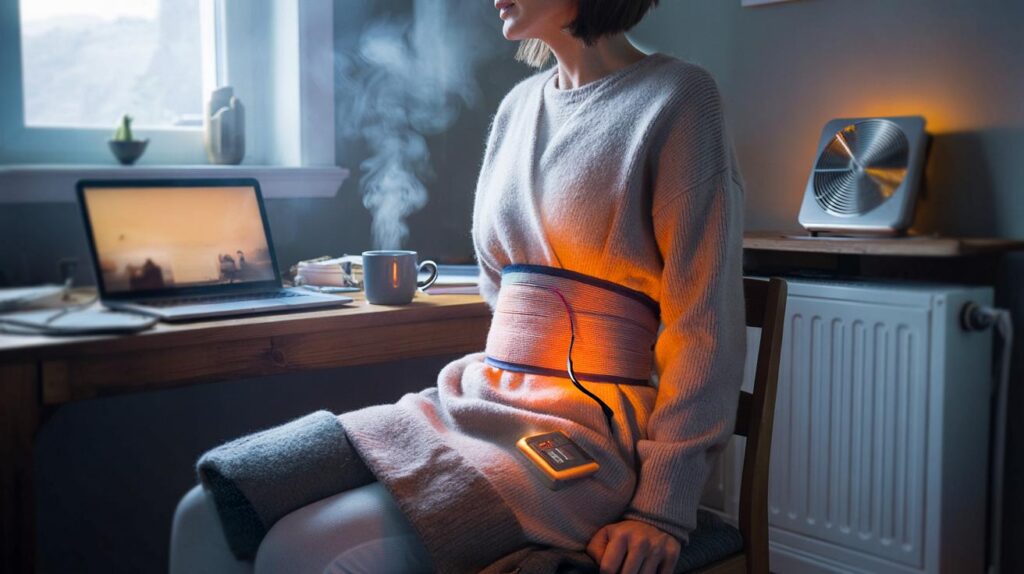
Cold nights are back, energy budgets are tight, and small gadgets promise warmth without cranking up the thermostat at home.
Across the country, shoppers are turning to personal heating gear as the mercury dips. A £10 waist wrap from B&M, inspired by MoneySavingExpert founder Martin Lewis’s “heat the human, not the home” mantra, is fast becoming the season’s trending buy.
What sparked the buzz
The B&M heated waist wrap targets your core, where warmth matters most for comfort. It fastens with Velcro, sits snugly under a jumper, and runs off a simple USB lead. That means you can plug it into a wall adapter or slip a power bank into its pocket for cable-free movement around the house.
There are three heat settings, with a small light letting you know which level you’re on. Low takes the edge off a chill. Medium suits a long stint at your desk. High delivers quick relief when you first put it on.
Price tag: £10. Power: USB. Aim: heat yourself, not every room. For many home-workers, that’s the sweet spot.
Shoppers drawn to the Martin Lewis approach say the wrap helps them delay turning on the boiler. Several report using it through the working day, pairing it with a hot drink, warm socks and a throw, and keeping the central heating off until evening.
How much could you save
The running costs can be tiny. A typical USB heated belt uses roughly 8–10 watts. At an electricity rate of 27p per kWh, five hours at 10 watts costs about 1–2p. That’s the same ballpark as charging a phone several times, and vastly lower than heating a whole room for the afternoon.
| Item | Typical power/heat source | Upfront price | Estimated 5-hour cost |
|---|---|---|---|
| B&M heated waist wrap | USB, ~10W | £10 | ~1–2p |
| Heated throw | Mains, ~100W | £20–£35 | ~14p |
| Fan heater | Mains, ~2000W | £15–£40 | ~£2.70 |
| Hot water bottle belt | Kettle boil (~0.1 kWh) | £6 | ~3p per fill |
Gas central heating remains cheaper per unit than electricity, but it heats whole zones and runs longer to warm walls, furniture and air. That’s where personal heat wins: far less energy for targeted comfort.
Real-world use at home
Working from home, the wrap keeps your midriff warm, which helps your hands and feet feel warmer too. The snug fit helps soothe lower-back niggles, and many users say gentle warmth eases period pain as well. Because it sits under clothing, heat isn’t wasted into the room.
Pair the belt with a 10,000 mAh power bank and expect around 3–4 hours’ use on medium before a recharge.
A 10,000 mAh pack stores roughly 37 Wh of usable energy. At a 10W draw, that’s near four hours on paper, slightly less in real life. A 20,000 mAh bank usually covers a full workday with a top-up charge at lunch.
Cord-free alternative at £6
Prefer no cables at all? Greater Manchester-based Online Home Shop sells ribbed hot water bottle belts for around £6. The fleece belt holds a small bottle against your core. It’s simple, silent and cheap to run: a typical kettle boil for one fill costs about 3p on current tariffs.
Heat lasts 1–3 hours depending on room temperature and how tightly it sits against clothing. Replace the water as it cools, and never use boiling water straight from the kettle. Let it stand for a minute and fill carefully to reduce the risk of splashes and scalds.
Electric or hot water, the goal is the same: concentrate warmth where your body needs it most, for pennies.
What to check before you buy
- Wattage and settings: look for adjustable levels and a low draw (under 15W keeps costs tiny).
- Fit and fastening: a wide Velcro band stops slipping and spreads heat evenly across the core.
- Power options: a USB-A or USB-C lead works with plugs and power banks you likely own already.
- Materials: soft, breathable fabric reduces sweat; removable liners help with washing.
- Safety features: overheat protection, auto shut-off and clear instructions matter.
- Care and cleaning: check if covers are machine-washable and how the power unit detaches.
- Warranty and returns: a simple exchange policy is handy for sizing or defect issues.
Safety notes you shouldn’t skip
Start on low and step up slowly. Avoid direct skin contact on high heat for long periods. If you have reduced sensation, circulation issues or diabetes, take extra care and consult a clinician if unsure. Do not sleep with a powered belt on high. Inspect cables and connectors for damage and stop using at any sign of scorching or unusual smells.
For hot water bottle belts, never overfill. Expel air before sealing to reduce pressure. Check the stopper and seams regularly and replace at the first sign of wear.
Will it really mean less heating?
It can for many scenarios. If you’re at a desk for six hours, a 10W belt costs roughly 1.6p per hour. Use it with a warm layer and a hot drink, and you may keep the thermostat lower until more people are home. That’s where the savings add up: fewer hours running the boiler or electric heater during the day.
Example: six hours a day, five days a week on a 10W belt equals about 0.3 kWh weekly, roughly 8p on a 27p/kWh tariff. A 2 kW fan heater for the same schedule uses 60 kWh, close to £16.20. The gap widens across a winter.
Smart ways to boost the effect
- Layer clothing: thermals under a jumper trap belt heat and reduce drafts.
- Draught-proof doors and windows: cheap seals and stoppers make rooms feel warmer.
- Use a heated throw on your legs: 50–100W targeted warmth beats heating the whole room.
- Move your desk: sunlight and an interior wall feel warmer than a window or external wall.
- Set short heating bursts: 20–30 minute boosts in the evening, not a constant daytime background heat.
- Keep humidity balanced: 40–50% relative humidity can make the same air temperature feel more comfortable.
Extra numbers worth knowing
Power bank maths: 10,000 mAh (about 37 Wh) gives 3–4 hours at 10W; 20,000 mAh (about 74 Wh) gives 6–8 hours. Charging a 10,000 mAh bank from empty uses around 0.04–0.05 kWh, roughly 1–1.5p.
Hot water routine: one kettle boil per refill is about 0.1 kWh. Two refills across an evening costs roughly 5–6p. Many users combine a hot water belt for the sofa, then switch to a heated wrap at the desk the next day.
Bottom line for bill-payers
A £10 B&M heated waist wrap offers a low-cost, low-energy route to comfort on work-from-home days, school runs and cold evenings. A £6 hot water bottle belt gives a cable-free alternative that pairs well with layers. Both fit the Martin Lewis principle of heating people, not empty rooms, and both help push back the moment you reach for the thermostat.
If you live in a shared home, consider zoning: keep shared spaces at a modest setting for short periods and let personal heat do the heavy lifting. Track your usage for a week with a plug-in meter or your smart meter’s in-home display to see the impact. Small numbers soon stack up when they run every day through winter.



Just picked up the £10 B&M waist wrap and paired it with a 10,000 mAh power bank—got ~3–4 hours on medium while WFH. Hands stopped feeling like ice, and I didn’t touch the thermostat. For 1–2p an afternoon, it’s defintely a win 🙂