
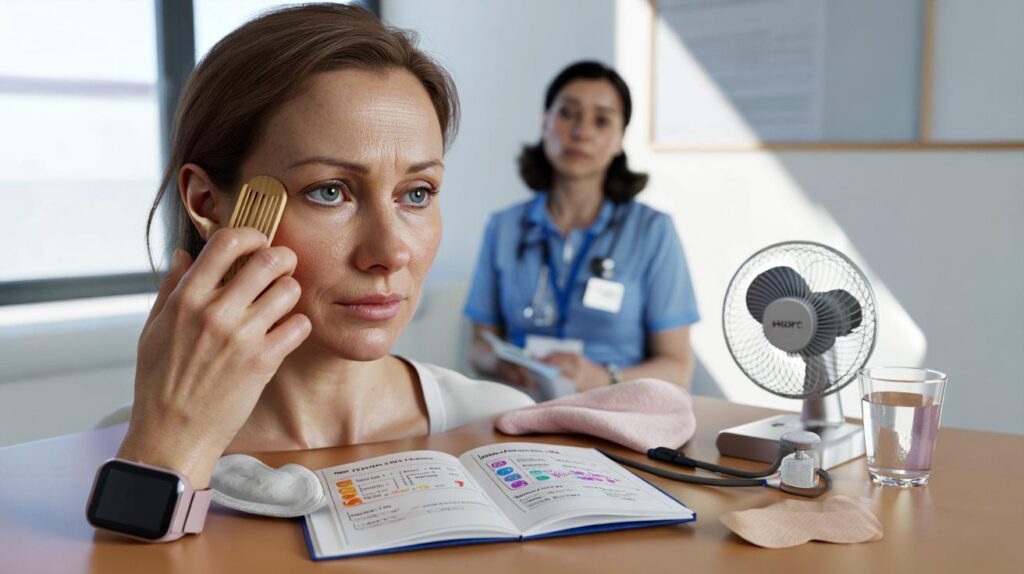
Midlife can feel unsettling when your body changes without warning, with small clues often hiding in plain sight.
From 2026, NHS Health Checks will start asking about menopause. Knowing early symptoms helps you act sooner, seek advice and steady your routine.
What the new health check means for you
For the first time, routine NHS Health Checks for adults aged 40 to 74 will include questions about menopause and perimenopause. Officials expect nearly five million women to benefit as clinicians add symptom screening, basic guidance and signposting to treatment. The rollout sits within a wider plan to close gaps in women’s health and reduce delays to support.
You will not receive a diagnosis at the check itself. Instead, staff will raise the topic, document symptoms and encourage a conversation with your GP or a specialist service if you want help. The programme is due to begin in 2026 after clinical questions are finalised.
Four in five women report menopause symptoms. Around one in four say those symptoms seriously disrupt daily life.
Menopause and perimenopause explained
Perimenopause is the transition when hormones fluctuate and symptoms start while periods continue. Cycles may shorten, lengthen or vary in flow. Menopause is confirmed when you have had no period for 12 months, marking the end of fertility. Most people reach this stage between 45 and 55, although the age range varies.
Because symptoms ebb and flow, patterns can be confusing. Keep a simple diary of cycle changes, sleep, mood, hot flushes and any new pains. A few weeks of notes can speed up conversations with your GP.
Early or premature menopause
Stopping periods before 45 is classed as early menopause. Before 40, it is premature menopause. Both can occur naturally or follow treatments such as chemotherapy and radiotherapy. Removing the ovaries leads to surgical menopause and symptoms can start quickly.
Risks for earlier menopause include smoking, a very low body weight and starting periods at a young age. If your periods stop before 45, clinicians often recommend HRT unless there is a clear reason not to, because oestrogen protects bone and heart health.
The early signs you should not brush off
Symptoms differ from person to person. Some feel only a handful; others face several at once. Common early signals include:
- Changes to periods, such as irregular timing or heavier bleeding
- Hot flushes during the day
- Night sweats disrupting sleep
- Difficulty sleeping, even when tired
- Palpitations or a racing heartbeat
- Headaches or more frequent migraines
- New joint aches or muscle stiffness
- Dry or itchy skin
- Vaginal dryness, soreness or discomfort during sex
- Recurrent urinary tract infections or urinary urgency
- Lower libido
- Sensitive teeth, gum soreness or burning mouth sensations
- Low mood, anxiety or volatile moods
- Brain fog, lapses in memory or trouble concentrating
If symptoms cluster, last several months or affect work, relationships or sleep, it is time to speak to your GP.
How long do symptoms last?
There is no single pattern. Some people notice a few months of changes; others report symptoms for several years. Hot flushes and night sweats often settle, while joint pain or vaginal dryness can persist after periods stop. Many women move through stages: sleep improves, for instance, but anxiety or brain fog then rise. Track your symptoms to spot trends and share them during appointments.
Treatment choices and what they do
Treatment depends on your medical history and symptom mix. Some people manage with lifestyle changes alone. Others choose hormone replacement therapy (HRT), which restores oestrogen and, when needed, progesterone. HRT can ease flushes, improve sleep and protect bones, lowering the risk of osteoporosis. If periods stop before 45, clinicians usually discuss HRT for long-term bone and cardiovascular protection.
Common HRT formats
- Tablets taken by mouth
- Skin patches delivering steady hormones
- Gels or sprays absorbed through the skin
- Implants that release hormone over time
- IUS (hormonal coil) to provide progesterone to protect the womb lining
| Symptom | First steps that may help |
|---|---|
| Hot flushes and night sweats | Cool bedroom, light bedding, regular activity; discuss oestrogen-based HRT if suitable |
| Low mood or anxiety | Routine exercise, breathing techniques, peer support; consider HRT or talking therapies |
| Vaginal dryness | Vaginal moisturisers and lubricants; low-dose vaginal oestrogen is highly effective |
| Joint aches | Gentle strength work, stretching, anti-inflammatory measures; review HRT options |
| Brain fog | Sleep hygiene, task lists, hydration; check iron, thyroid and discuss HRT if needed |
Early menopause needs prompt discussion about bone density, calcium intake and vitamin D, alongside HRT where appropriate.
When to book an appointment
You will be invited for an NHS Health Check from age 40, with menopause questions added from 2026. Do not wait if symptoms already affect you. Contact your GP now if cycles change sharply, sleep breaks down or anxiety builds. Clinicians may check for other causes such as thyroid problems and, in younger women, use blood tests to assess hormone patterns.
Seek urgent help for red flags: chest pain, severe shortness of breath, heavy bleeding soaking through pads or tampons hourly, or new neurological symptoms such as weakness or slurred speech.
Life at work and simple adjustments
More employers now discuss menopause at work and update policies. Small changes can make a large difference: flexible start times after a rough night, access to a fan, easier toilet breaks, breathable uniforms and quiet spaces for short resets. If you feel uncomfortable raising this, ask a trusted manager or HR contact for a confidential chat.
How to prepare for your GP visit
Bring a clear picture
- A three-month symptom diary with dates and examples
- Period log: cycle length, flow changes, missed periods
- Medication list and any relevant family history, including breast cancer, blood clots or early menopause
- Questions you want answered: treatment aims, HRT formats, side effects, follow-up plan
What you might discuss
Whether your symptoms fit perimenopause, the pros and cons of HRT for your history, non-hormonal options, and checks for bone health if periods have stopped early. You can also agree a review date to measure progress and adjust doses.
Why symptoms matter beyond comfort
Falling oestrogen affects more than temperature control. It influences bones, cholesterol and the urinary tract. Addressing symptoms can improve sleep, reduce stress and support heart and bone health. For people with premature menopause, the long-term health case for treatment is stronger, so do not delay a conversation.
Extra help you can use this week
- Build a calcium-rich menu with yoghurt, milk, beans, leafy greens and tinned fish with bones
- Add two short brisk walks on workdays to steady mood and sleep
- Stop smoking and cut back on alcohol, which can worsen flushes and sleep
- Set a consistent bedtime and cool your room to around 18°C
If you prefer structure, try a simple self-check: rate sleep, flushes, mood, joint aches and concentration from 0 to 10 over two weeks. If two or more scores reach 6 or higher, schedule a GP appointment and bring your notes. If your periods have stopped before 45, ask about bone density scans and tailored HRT. Many people need a few adjustments before finding the right plan, and a review at 6 to 12 weeks keeps treatment on track.



Really appreciate the clear list of early signs—this is the first piece that made me feel prepared for a GP chat. The symptom diary tip is gold, will definately start tonight.