
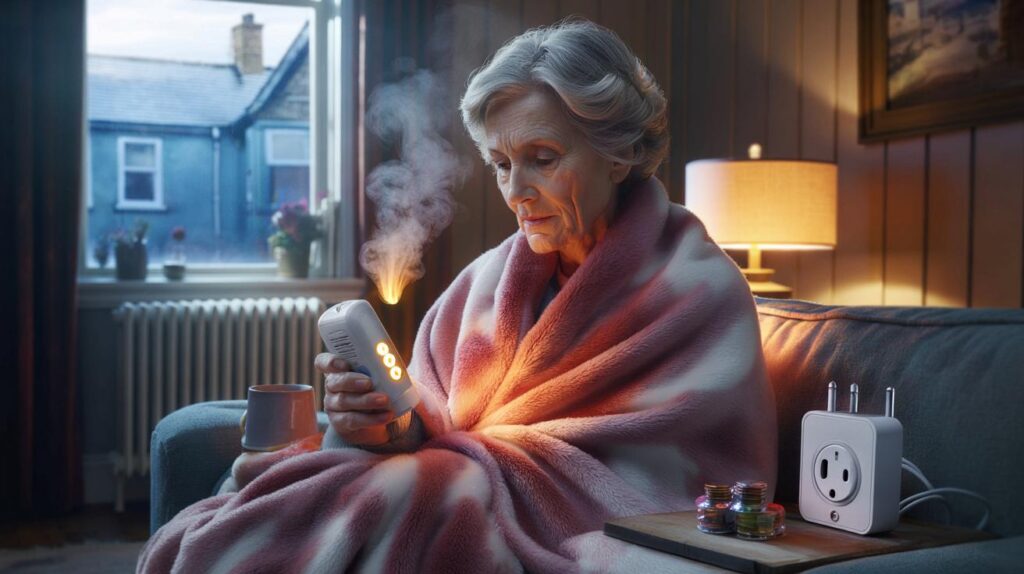
Colder nights are arriving, budgets already feel tight, and many households fear the thermostat. A cheaper path to warmth exists.
One of Britain’s biggest suppliers says targeted help can keep people warm for pennies, not pounds, as energy costs bite again.
Why an electric blanket can outsmart whole-home heating
Heating an entire property often wastes money when only one room is occupied. That’s why targeted heat has gained traction. Octopus Energy points to a stark contrast: heating a whole home can cost around £4 a day, while an energy-efficient electric blanket can warm a person for about 4p an hour. For people who live alone or spend long stretches seated, the arithmetic speaks for itself.
Octopus reports 93,000 blankets already delivered to vulnerable customers, with a further 10,000 earmarked for this winter.
The company adds that recipients recorded, on average, a 20% reduction in gas use. Electric blankets do not replace central heating on the coldest days, but they can cut the time the boiler runs. That trims bills without forcing people to sit in the cold.
The numbers behind the promise
- Estimated cost to heat a home for a day: about £4
- Estimated cost to run an electric blanket: roughly 4p per hour
- Blankets distributed so far: 93,000
- Additional blankets this winter: 10,000
- Average gas bill reduction reported by recipients: 20%
Small shifts matter: swapping an hour of whole-home heating for an hour under a blanket can save pounds across a week.
Who can apply and how the process works
The free electric blankets come through Octopus Energy’s Octo Assist support route. There is no blanket eligibility list published, and awards are not automatic. The firm assesses each case, prioritising customers living with specific vulnerabilities and medical needs.
Application follows a clear path. Customers begin by completing a budget via Paylink, a standard income-and-spending review. The supplier then evaluates personal circumstances and decides which help best fits, which could include a free blanket.
What you will need to provide
- Details of household income, benefits and any irregular earnings
- Regular expenditure, including rent or mortgage, council tax and debts
- A short explanation of the pressures affecting your energy bills
- Any relevant medical or vulnerability information
Speed matters. Stocks are finite and demand rises as temperatures fall. If your circumstances have changed since you last engaged with the supplier, update the information so the assessment reflects your current position.
How much could you save? A quick guide
Exact costs vary by tariff and region. The figures below use indicative price-cap rates and Octopus’s own comparisons to illustrate the scale of potential savings when you use targeted heat for part of the day.
| Scenario | Typical usage | Estimated cost |
|---|---|---|
| Whole-home heating (gas) for a day | Several hours across morning/evening | About £4 |
| Electric blanket for 1 hour | Low setting, seated use | About 4p |
| Electric blanket for 8 hours overnight | Low–medium setting | About 32p |
| Five evenings at 3 hours each | Instead of running heating longer | About 60p |
Use a simple test: if you heat the whole home primarily for one person, shift part of that time to a blanket and note the meter readings for a week. Even modest changes can ease pressure on monthly budgets.
More support if you are struggling with bills
Octopus Energy has expanded its Octo Assist fund to £40 million. The company says more than 100,000 customers have received help so far. Support can include bill grants, standing charge holidays and, in some cases, debt write-offs.
Matched payments mean every extra pound a customer pays off energy debt sees Octopus add another pound towards clearing the balance.
Pensioners can access targeted support as well, with a one-off credit of up to £200 for eligible cases. The supplier’s teams also help customers check entitlement to wider financial support from government and charities.
Practical tools offered by the supplier
- Heat-loss cameras: short-term loans of thermal cameras to spot draughts and insulation gaps
- Energy Helpers: in-person advice visits, with more than 300,000 homes already assessed
- In-house social workers: one-to-one support for complex situations
- Saving Sessions: rewards for using less energy during peak times; over two million participants
- Free Electricity Sessions: extra free electricity for Octoplus members when wholesale prices drop sharply
If you are not an Octopus customer
Other suppliers run their own hardship funds and vulnerability services. Ask about grants, payment matching and their version of a priority register. You can also check national schemes: Warm Home Discount, Cold Weather Payments and Winter Fuel Payment. Energy-trust charities may help clear arrears if you provide a full income-and-outgoings summary and evidence of hardship.
Make contact early if your direct debit looks unaffordable. Agree a plan before missed payments build up. Energy firms must consider reasonable repayment arrangements when you engage with them and share accurate budget details.
Safety and smart use of electric blankets
Electric blankets, heated throws and underblankets use modest power, typically 50–100 watts. At modern unit rates, that often equates to a few pence per hour. To get the best from them, use a timer, start on a higher setting to pre-warm, then drop to low. Layer clothing and a fleece to trap heat. Keep draft excluders in place to stop cold air undoing the gains.
- Do not use a hot water bottle with an electric blanket
- Check the cable and controller for wear before each season
- Follow manufacturer guidance for washing and drying
- Turn off when not in use, and keep pets away from the wiring
People with circulation issues or certain medical conditions should confirm the correct product type and temperature settings with a clinician. If mobility is limited, ensure the controller is easy to reach and the cable cannot cause trips.
A final thought for winter budgets
Targeted heat is not a cure-all, but it can stretch cash while keeping living spaces tolerable. For many, a blanket covers long inactive periods, leaving the boiler for short warm-ups. If you fit the vulnerability criteria, apply promptly through the support route. If not, ask your supplier what practical help they can offer and run your own one-week test to measure the savings from partial switchovers.
If you plan to buy your own blanket, compare wattage and auto shut-off features, and look for independent safety marks. A unit drawing 70 watts for three evening hours uses 0.21 kWh. At a mid-range unit price, that sits comfortably under 10p per night, which is why many households now treat them as a first line of defence against creeping winter bills.



Is the 4p/hour based on low setting only? My throw is rated 100W; at current unit rates that seems nearer 3–4p but only if I remember the timer. Also, any safety guidance for pets + cables would be helpful—my cat thinks everything is a chew toy. Definately don’t mix with hot water bottles, right?