
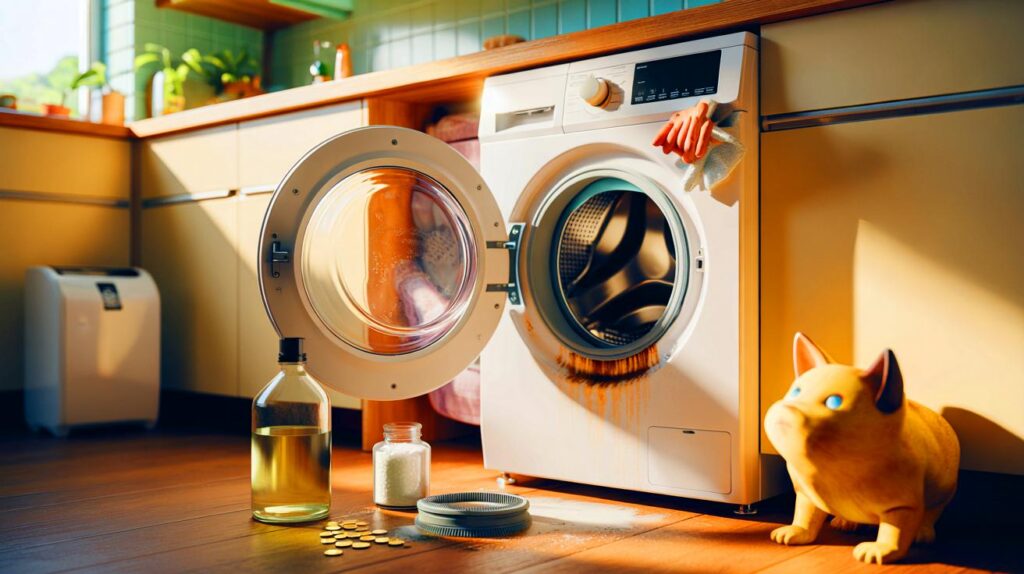
Many households prop washing machine doors wide for hours, assuming fresher laundry. A small engineering detail suggests a smarter habit.
Across Britain, people swear by airing the drum after every cycle. Yet appliance engineers and manufacturer manuals point to a different routine that protects parts, cuts smells and avoids avoidable costs.
Why the open-door habit backfires
Leaving the door gaping all day looks harmless. It isn’t. A heavy glass porthole loads the hinges and the latch every minute it hangs open. Over time, the hinge pin can twist, the door can misalign and sealing becomes hit and miss. On top-loaders, moisture can creep into lid mechanisms and strip lubrication, inviting corrosion and flimsy closures.
The inside takes a beating too. Constant airflow dries residues where you least want them. Detergent traces and fibres harden in crevices, the detergent drawer and the sump. That crusty layer encourages odours and forces the heater to work harder through the film, nudging energy use upwards.
Door left open for hours = stressed hinges, brittle residues, and a drum that smells sooner rather than later.
What engineers say about residual water
Modern machines deliberately retain a small pool of water after draining — usually around 0.5 to 2 litres. That puddle keeps pump seals moist, protects hoses, and helps the main gasket stay supple. When the cabinet dries out constantly, residues stiffen and seals age faster. The heater then meets limescale and soapstone, which insulate it. In that state, some households see energy use rise — figures around the 10–25% mark circulate when heaters are heavily scaled and cycles run warm most of the time.
Modern washers are designed to hold a little water to protect seals and pumps. Over-drying undermines that design.
How long should you air the drum
A simple rule works: prop the door ajar for 1 to 2 hours after the final spin, then close it. That window lets steam clear and surfaces dry without suspending the door weight all day. Overnight airing defeats the point; odours usually begin in the drawer and in trapped residues, not from the door being closed.
Ventilate briefly, then shut: 1–2 hours after the cycle, not all day and never overnight.
If your utility room is damp, longer airing won’t fix the root cause. Use a short burst of ventilation, dry the gasket by hand, and run the machine’s drum-clean programme on a regular schedule. For persistent moisture in the room, crack a window or use a small dehumidifier during that 1–2 hour window.
Child safety, pets and the hidden risks
Open doors attract toddlers and pets. Children climb, sit, or hide inside the drum. Dogs chew at the gasket. Cats test the hinge as a perch. Each episode adds play in the hinge and tears in the seal. Those tears lead to leaks that can creep under plinths and floors. Close the door once the airing window ends, and use the child lock while the machine runs.
Costs people rarely factor in
Repairs caused by a permanently open door add up. Hinges and latches on front-loaders often cost more than the part price suggests, because alignment takes time. Rubber door seals fail sooner when nicked or left to dry out between washes. Energy costs rise when a scaled heater fights through residue, especially on warm programmes used several times a week.
| Part at risk | Typical fault | Likely cost (UK) | Triggered by |
|---|---|---|---|
| Door hinge/latch | Misalignment, poor closing | £80–£200 fitted | Door hanging open for hours |
| Door gasket | Tears, leaks, mould | £40–£120 part, plus labour | Chewed edges, over-drying, residue |
| Heater element | Limescale insulation | £70–£150 fitted | Hardened soaps, slow-scale build-up |
| Pump seals | Premature wear | £60–£140 fitted | Loss of protective moisture film |
Consider the energy hit. A typical household running 220 cycles a year at roughly 1 kWh per cycle could waste an extra 30–60 kWh if the heater struggles through residue. At recent tariffs, that’s around £9–£18 a year, before any repair bills.
Maintenance that beats musty odours
- Wipe the gasket and the detergent drawer after each run to remove film and lint.
- Remove damp laundry straight away; do not store it in the drum.
- Run a maintenance wash monthly at 60–90°C using the machine’s drum-clean programme.
- Use white vinegar (200–400 ml) or citric acid (about 100 g) on that hot maintenance cycle if your manual allows it.
- Clean the drain filter every 6–8 weeks to keep water flowing and smells down.
- Prop the door ajar for 1–2 hours after washing, then shut the door and the drawer.
Vinegar or citric acid
Both dissolve limescale and soften soap residues. Citric acid leaves no lingering smell and works quickly at 60°C. White vinegar is cheap and easy to measure. Never mix either with bleach. If your manufacturer warns against acids on specific rubbers or coatings, follow that advice and choose a branded cleaner instead.
Where odours really start
The detergent drawer breeds the smell most people blame on a closed door. Water splashes into the tray and sits there. Pull the drawer fully out once a week and rinse the channel. Check the grey sump area inside the door seal for hair and lint; remove it before it turns slimy.
Front-loaders and top-loaders are different, but the rule holds
Front-loaders have heavy glass doors that punish hinges when left open. Top-loaders often rely on a lighter lid, but moisture migrating into the hinge and latch corrodes them faster. In both cases, short airing followed by closing protects the structure and the seals. If a latch microswitch starts to stick, alignment or a tired spring may be to blame — both favour closing the door between washes.
If your utility room is very damp
Short airing still wins. Wipe the gasket dry, open a window or run a small dehumidifier while the door sits ajar, then close. A constantly open machine becomes a cold surface where airborne moisture condenses, feeding mould in places you can’t see.
When to seek help
Persistent odour after good maintenance suggests a blocked drain path, a tired pump, or a biofilm behind the tub. A technician can flush the system, check the pressure sensor hose and verify heater performance. If your machine offers an “auto drum clean” reminder, keep it active; these cycles prevent the build-up that leads people to leave the door gaping.
Airing for 1–2 hours, drawer and seal wiped, monthly hot clean: that trio keeps doors closed and bills down.
Extra tips that pay off
Switch to the correct detergent dose for your water hardness; overdosing fuels residue. Run fewer low-temperature cycles back-to-back; mix in a hot programme weekly to keep biofilm in check. If you use fragrance beads, halve the amount and prioritise cleaning cycles, as beads can cling to the sump and trap odours.
Households with toddlers or curious pets should close the door after airing every time. Modern child locks stop door opening during a cycle, not between cycles. A closed door protects small hands and prevents a surprise start with a stowaway inside the drum.



So the rule is 1–2 hours ajar then shut. In a damp basement flat, do you recommend wiping the gasket every time and using a mini dehumidifier, or is that overkill? I’ve been leaving it open overnight—definately rethinking now.
I’ve left my front-loader door open overnight for years—no broken hinge, no smells. Is this scaremongering, or do you have failure-rate data on hinge aligment and latch wear?