
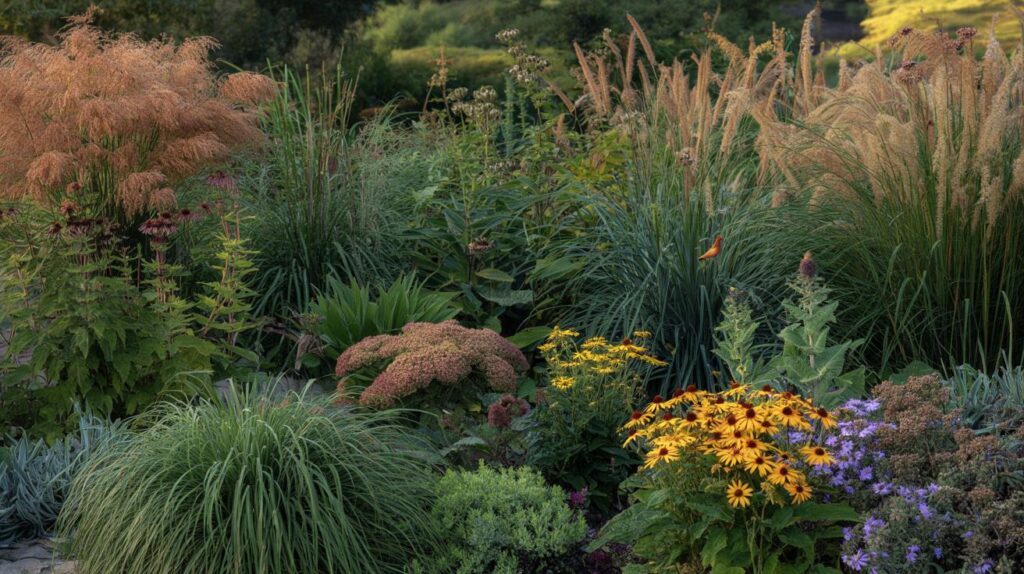
Autumn sun lingers, nights draw in, and borders still promise drama when timing, texture and simple groundwork quietly do the lifting.
Mid-october offers warm soil, cooler air and steady moisture. Roots sprint while leaves rest. A few bold choices now can turn parched summer beds into colourful, low-care scenes next year.
Why mid-october hands you the easiest planting window
Warm soil, cool skies and fewer risks
Topsoil in many regions still holds 10–15°C in October, which keeps roots active. Daylength shortens and evapotranspiration drops, so plants lose less water. Heat spikes fade, so young transplants avoid stress. Autumn rain and regular dew wet the root zone without flooding it.
Plant in mid-october, then mulch 5–10 cm, and you can cut summer watering needs by up to 80%.
Grasses and hardy perennials build strong, deep roots before winter. They meet summer dry spells with reserves rather than panic growth. You set the stage once, then enjoy months of colour with little fuss.
Tough grasses that ask for no hose
Form, movement and drought sense
Ornamental grasses bring light, height and motion. Fine blades cast shade on their own crowns, which lowers soil evaporation. Stiff stems hold their shape long after frost, so borders keep presence when flowers fade.
- Miscanthus sinensis – upright fans with silky plumes; best for back-of-border structure and winter silhouettes.
- Panicum virgatum ‘Heavy Metal’ – cool blue leaves and airy panicles; stands firm in dry, poor soil.
- Stipa tenuissima (syn. Stipa tenuifolia) – hair-fine texture that moves with every breeze; ideal for edges and gravel.
- Pennisetum alopecuroides – bottlebrush tufts that soften paths and decks; warms to caramel shades in late season.
- Carex spp. – compact mounds for shade or damp corners; good in pots and under shrubs.
Mix heights for depth and rhythm. Repeat one grass three times to link a bed visually. Keep gaps around crowns to stop winter rot.
Perennials with autumn colour and stamina
Local heroes that shrug off dry spells
Hardy perennials from similar climates cope with lean soil and erratic rain. Their roots mine moisture, and many hold leaves that shade the ground. Pollinators feed on them late, when nectar runs low.
- Echinacea purpurea – pink or white cones that stand into November; seedheads feed finches.
- Rudbeckia fulgida – gold rays with dark centres; great for bold drifts along paths.
- Hylotelephium spectabile (syn. Sedum spectabile) – fleshy domes that blush to wine-red; a magnet for late bees.
- Symphyotrichum novi-belgii (syn. Aster novi-belgii) – violet stars that carry borders into the first frosts.
- Gaura lindheimeri (syn. Oenothera lindheimeri) – clouds of white or pink that float above gravel or paving.
One glance guide: pick by height, spacing and season
| Plant | Height | Spacing | Flowering peak | Water need after year one |
|---|---|---|---|---|
| Miscanthus sinensis | 1.6–2.2 m | 90–120 cm | September–November | None, except extreme drought |
| Panicum ‘Heavy Metal’ | 1–1.4 m | 60–80 cm | August–October | Minimal |
| Stipa tenuissima | 40–60 cm | 35–45 cm | June–October | Minimal |
| Pennisetum alopecuroides | 80–120 cm | 60–80 cm | August–November | Minimal on free-draining soil |
| Echinacea purpurea | 70–100 cm | 45–60 cm | July–October | Minimal once established |
Choose three grasses and three perennials, repeat in groups of three, and your border looks designed, not scattered.
Set the ground once, then step back
Soil prep in 15 minutes per square metre
Loosen the top 20–25 cm with a fork to break pans and let roots breathe. Work in 2–3 kg of mature compost per m² to feed soil life. Avoid rich fertiliser that pushes soft growth. Water each plant in well once at planting to settle soil around roots. Lay a 5–10 cm mulch of shredded bark, leaves or chipped prunings to lock in moisture and block weeds.
- Free-draining patch: add 10–20 litres of compost per m² to hold moisture.
- Heavy clay: add sharp sand or grit in planting holes for drainage around crowns.
- Windy sites: stake tall grasses for the first winter, then remove supports.
A simple 2 m² plan you can copy tomorrow
Set a 2 m² bed on sun or light shade. Plant nine pots, each 2–3 litres. Keep 45–60 cm between perennials and 60–80 cm for larger grasses.
- Back row: 2 × Miscanthus sinensis, 1 × Panicum ‘Heavy Metal’.
- Middle row: 2 × Rudbeckia fulgida, 1 × Hylotelephium spectabile.
- Front row: 2 × Stipa tenuissima, 1 × Gaura lindheimeri.
Budget £60–£90 depending on pot size and cultivar. First fortnight: give 3–5 litres per plant every three days if no rain. Then stop unless the soil dries like dust.
Maintenance in three quick touches
Cut, comb, top up and walk away
Leave stems standing for winter structure and wildlife cover. From late February to early March, cut Miscanthus, Panicum and Pennisetum to 10–15 cm. Comb Stipa with gloved fingers to remove dead thatch. Shear Rudbeckia and Echinacea down when new shoots show. Top up mulch each October to 5 cm. Hand-weed once in spring to remove early seedlings.
Average time saved: two hours a week from June to August on a 20 m² border, compared with thirsty annual bedding.
Biodiversity gains you can measure
Food, shelter and a cleaner conscience
Seedheads of Echinacea and Rudbeckia feed finches and sparrows. Hollow stems shelter lacewings and solitary bees. Staggered flowering keeps hoverflies working. Fewer mowings and water runs mean lower emissions. You cut green waste by leaving stems until spring.
What to avoid when you plant for drought
Common pitfalls and easy fixes
- Planting too deep: keep crowns level with the soil surface to prevent rot.
- Rich compost in holes: feed the soil, not the hole, or roots circle and stall.
- Overwatering after week two: light stress hardens plants and drives roots deeper.
- Unstable cultivars: pick clump-forming Miscanthus to prevent unwanted seedlings.
- Frost pockets: in very cold sites, choose Panicum and leave Pennisetum for containers you can move.
Extra help for small spaces and tight schedules
Containers, greywater and smart grouping
Grow Stipa, Carex and Gaura in 30–40 cm pots with a peat-free, free-draining mix. Add 20% grit for drainage. Water deeply once a week in the first summer, then only when the top 5 cm dry. Group pots to create a shared humid microclimate. Use cooled pasta water or rain saved in a butt rather than mains water. Avoid greywater with soap on Gaura and Carex, which dislike detergent residue.
Trial a micro-plot before you overhaul the whole garden. Mark a 1 m² square, copy the 2 m² plan at half density, and track water use with a 10-litre can for eight weeks. Note plant response, then scale up with confidence.
Numbers that help you plan smarter
Spacing, water and cost at a glance
- Root growth threshold: most hardy perennials push roots above 6–8°C, which October soil often exceeds.
- Mulch depth: 5 cm for loam, 7–10 cm for sandy soil to suppress weeds and hold moisture.
- First-season water: 10–15 litres per plant across the first two weeks if rainfall stays below 10 mm.
- Annual mulch top-up: one barrow per 5 m², roughly 80–100 litres of material.
- Five-year cost: £3–£6 per m² per year with mulch and occasional replacements, far below annual bedding.
Beyond the border: handy add-ons
Firebreaks, hedgehog corridors and heat relief
Gravel swales between drifts slow rain and recharge roots. Low, loose planting at fence bases lets hedgehogs move through gardens. Pale stone paths reflect light onto late asters. A small pond or half-barrel keeps toads near slugs rather than your Echinacea. Shade a south-facing wall with Miscanthus to cut reflected heat on nearby perennials during heatwaves.
Plan a winter task day with neighbours. Swap divisions of Panicum and Sedum in March. Share a bulk load of mulch to cut cost and plastic. Add a simple log pile near the border edge to hold beetles that clean decaying stems. Small steps stack benefits when water stays scarce and summers run hot.



Brilliant timing advice—warm soil, cool air really does the trick. I followed a similar plan last year with Miscanthus sinensis and Stipa tenuissima, mulched 7 cm, and I barely watered after June. The maintenance section (combing Stipa, cutting Miscanthus in late Feb) is gold. Quick Q: on sandy soil, would you push mulch closer to 10 cm and still keep crowns clear to avoid rot?
“Never water again” feels a bit optimistic—and two hours a week saved sounds high. What about a 6‑week heatwave at 35°C? Do these perennials still cope without a single drop?