
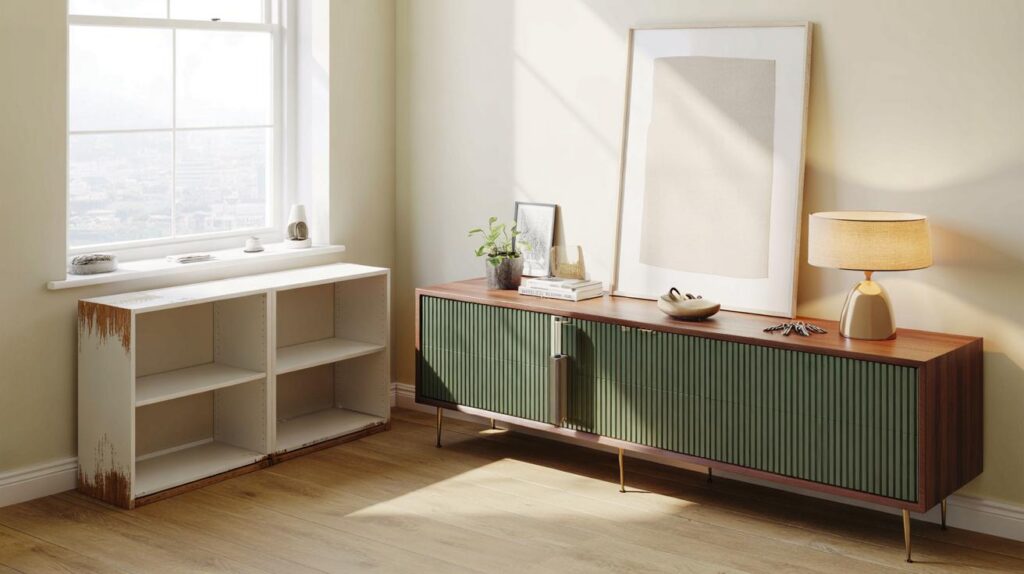
I was standing in a rental kitchen in Hackney when the penny dropped. Two scuffed IKEA Billy bookcases were slouched under a window like tired soldiers, their edges knocked white by years of moves. A neighbour had left an off‑cut of oak worktop by the bins, and suddenly the outline appeared: raise the Billys on legs, add a proper top, hide the chaos with doors. It felt a bit cheeky. It also felt right.
The apartment didn’t need more stuff, it needed smarter stuff. We’ve all had that moment where the cheap stopgap starts to feel permanent. The Billys weren’t glamorous, but they were straight, square and waiting to be useful. I grabbed a tape measure and a pencil. Then I smiled at a fact no designer wants to admit out loud.
Everything good starts plain.
The internet’s favourite bookshelf is having a glow‑up
Walk through Instagram today and the old Billy is everywhere, just wearing better clothes. Cane fronts. Fluted MDF. Slim brass legs that make it hover like a boutique hotel console. People are taking a £45 marketplace find and recasting it as a sleek sideboard that could pass for Danish vintage at five paces. It’s not just thrift. It’s a tiny rebellion against throwaway life.
The appeal is practical too. A sideboard swallows life’s small messes without shouting. Cables. Board games. The ugly router. One London couple told me they slid three Billys together, shimmed them level, and topped the run with a 2m walnut slab. All in, their “designer” storage came under £250, and friends kept asking for the showroom link. The secret? You control the top, the legs and the doors. That’s the whole look.
There’s a cultural wave behind it as well. #ikeahack has racked up billions of views, and the Billy is the safe canvas everybody knows. The proportions are friendly to British homes, where hallways are tight and radiators lurk under windows. Standard Billy height with legs plus a top lands in that sweet sideboard zone around 80–90cm. Add doors, and the raw bookshelf disappears. What’s left reads expensive, because your eye catches material and shadow, not the flatpack bones.
The step-by-step: from Billy to bespoke sideboard
Start with width. Two Billys give you a compact console; three make a statement wall. Build the frames, skip the shelves for now, and link units side by side with small metal plates inside. Screw on adjustable furniture legs or a continuous plinth. Aim for 10–15cm lift so it feels airy, not boxy. Drop an 18–25mm timber or MDF top across the run, overhanging 10–20mm. Prime the carcasses, add doors, and the magic clicks. Your bookcase is a sideboard.
Paint is the make‑or‑break moment. Use a melamine primer, then a satin or eggshell in a grown‑up colour. Deep green, bone, muddy blue. If you want texture, go fluted: glue 6–9mm half‑round dowels to plain doors, sand lightly, then paint. Cane webbing behind OXBERG frames hits a coastal note while hiding clutter. Let’s be honest: nobody wants to baby a show pony in the hallway. Durable finishes win.
Don’t overcomplicate the styling. One big artwork, a table lamp, a bowl for keys. Hide the router behind a shelf and drill a cable grommet through the back panel. If you’re skirting radiator pipes, scribe the top so it hugs the wall. And yes, fix the run to the wall brackets. Small effort, big calm.
“Designers cheat space with lines,” says furniture maker Saffron Lim. “Raise anything on legs, give it a crisp top, and the brain reads ‘bespoke’.”
- Budget: £120–£400 depending on top, legs and doors
- Time: A focused weekend, or two lazy evenings
- Look: Classic with shaker doors, cool with fluted fronts, light with cane
Why this hack sticks — and keeps spreading
The Billy‑to‑sideboard move works because it respects the maths of good furniture. A strong horizontal top calms a wall. Slight elevation gives light and leg. Repetition of vertical lines on doors adds rhythm. Nothing is loud, yet the room feels finished. Minimalism for the rest of us, with places to put the ugly bits.
There’s also a kindness to the planet here. Repurposing a bookcase you already own beats buying fresh MDF dressed up as “design”. Swap the top in a few years and you’ve got a new piece without starting again. The hack flexes with life: nursery now, media unit later, hallway landing spot when you finally get the keys. Small moves, big mileage.
And the story is shareable. Friends notice. Guests ask. You post the before/after and someone DMs, “Wait, that’s BILLY?” When a trick is this achievable, it becomes a language. People translate it into their rooms, their budgets, their colours. Trends fade. Utility, dressed with a bit of joy, tends to hang around.
Notes from the real world, not a catalogue
The cleanest hack I’ve seen didn’t use fancy tools. She cut nothing. She set three 80cm Billys side by side, spaced them with a coin to keep doors from kissing, and screwed a 240cm pine worktop across the lot. Primer, two coats of stone‑white, arched brass pulls. The legs were simple black cones, 12cm high. Done. You could feel the room breathe.
Another maker kept the Billy width but deepened the top with a 30cm slab so the piece read chunkier. He added beadboard to the door fronts for cottage charm, then matched the wall colour so the sideboard melted into the skirting. Smart. He painted the inside a secret burnt orange for a tiny hit of mischief every time it opened. Small joy counts.
Some will obsess over millimetres. Soyons honnêtes: nobody lives like a showroom. If a joint isn’t perfect, fill it, sand it, paint it, move on. Your eye catches the whole, not the hiccup. The point isn’t to trick guests. It’s to trick Monday into feeling less messy.
| Key points | Details | Interest for reader |
|---|---|---|
| Reuse beats replace | Turn an existing Billy into a credible sideboard with legs, top and doors | Save money and reduce waste without sacrificing style |
| Proportions do the heavy lifting | 80–90cm height, slim overhang, repeated verticals on doors | Why the hack looks expensive even on a shoestring |
| Finish with restraint | Melamine primer, durable paint, one hero object, subtle hardware | Make it last, keep it calm, avoid visual clutter |
FAQ :
- Can a Billy sideboard hold heavy items like records or a TV?Yes for records if you add a centre support and keep shelves on the lowest pins. For TVs, rest the weight on the top, fix to the wall, and use stout legs or a plinth.
- Do I need special primer to paint Billy?Use a melamine/laminate bonding primer first. Then apply two coats of quality eggshell or satin. Light sand between coats for a factory feel.
- What doors work best for the sideboard look?OXBERG frames with cane for lightness, plain doors with fluted dowels for texture, or third‑party shaker doors for a classic read. Hinges can stay stock.
- How do I choose the top material?Solid wood feels warm and ages well. MDF with veneer is cheaper and paints beautifully. Stone looks luxe but needs strong support and careful scribing.
- Is this renter‑friendly?Yes. Use legs with felt pads, patch minimal wall fixings when you leave, and keep the original shelves and backs so you can revert if needed.



Love this—taking a scruffy Billy and turning it into a sidebord with cane fronts and slim brass legs is genius. Feels like Danish-lite without the price. Also appreciate the honesty that everything good starts plain; that line kind of hit home.
Looks fab in photos, but how sturdy is it long‑term? Billy backs are a bit flimsy and the chipboard edges swell if you drip paint. If I load it with records and board games, will the shelves sag over time? Do the adjustable legs have enough strengh, esp. with kids + cats climbing? Not trying to be a downer, just realy don’t want a wobbly ‘designer’ piece in 6 months.