
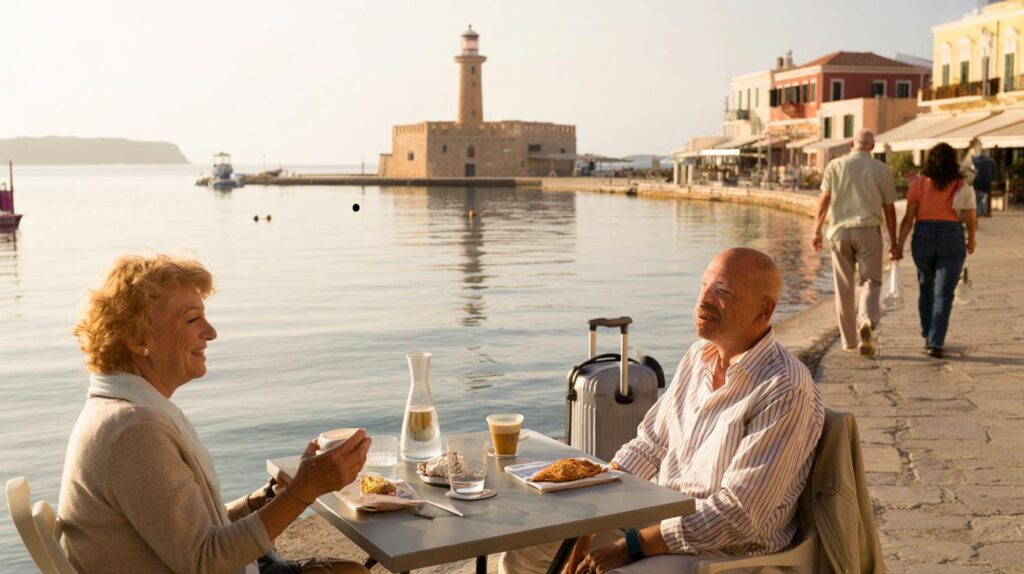
Rainclouds on the horizon at home, yet a sunlit alternative sits four hours away, with culture, comfort and calm.
New figures show a surge in later-life travellers seeking warmth before winter bites. One Mediterranean heavyweight stands out this October with shirt-sleeve days near 26C, easy public transport, gentle days out and prices that stretch a pension further than you might expect.
Weather you can bank on in October
Crete’s shoulder season hits a sweet spot. Daytime highs hover around 26C, evenings cool enough for a light cardigan, and seas usually warm enough for an unhurried swim. Beaches thin out after the school rush, yet cafés, museums and walking paths stay open. You can sit by the water in Chania’s harbour without jostling for a table, and stroll through Heraklion’s centre without the summer crush.
Average highs near 26C and warm seas make October feel like summer’s softer encore, not its end.
| October at a glance | Typical value |
|---|---|
| Daytime high | 25–27C |
| Sea temperature | 22–24C |
| Rainfall | Low to moderate, short showers |
| UV level | Moderate: hat and sunscreen advised |
| Sunset time | ~7pm early month, earlier by month’s end |
Travel trend: more of you are going
Research this year shows the share of over-55s taking trips abroad jumping from 40% to 60%. Warmer weather in easy-to-reach places sits near the top of plans. Crete meets that brief thanks to direct UK flights in season, two main airports (Heraklion and Chania), and an island network that keeps moving after summer.
Over-55s travelling abroad up 50% year-on-year, with warmth, access and value driving decisions.
Getting around without the stress
Crete’s intercity KTEL buses link major towns reliably and affordably. Hubs sit at Heraklion, Chania and Rethymno, with services to archaeological sites, beach towns and walking trailheads. Coaches are modern, air-conditioned and luggage-friendly. Drivers load bags; you sit back and watch olive groves roll by.
- Chania – Rethymno – Heraklion: frequent, all day
- Heraklion – Knossos: short hop to the palace site
- Chania – Elafonissi: scenic run for a beach day
- Chania – Omalos: gateway to Samaria Gorge (seasonal)
Taxis fill gaps for shorter hops. Expect town fares that undercut most UK equivalents. Car hire remains an option if you want full freedom; mountain roads are well-engineered but twisty, so allow time and avoid night driving.
Two airports, clear bus hubs and wallet-friendly fares make Crete simple to navigate at an unhurried pace.
Culture, food and slow days
The island carries layers of history in plain sight. The Minoan world’s headline site, the Palace of Knossos, sits a brief ride from Heraklion. Venetian fortifications and lanes frame Chania and Rethymno, where narrow streets open onto flowered courtyards and lighthouse views. In Agios Nikolaos, a lakeside café table quickly turns into an afternoon.
Food rewards curiosity. Dakos (barley rusk topped with tomatoes and local cheese) highlights simple flavours. Lamb with wild greens tells a story of the mountains. Seafood arrives clean and unfussy at seaside tavernas. Shoulder season trims prices without shrinking portions.
- Café coffee: roughly €2–€3
- Taverna mains: from about €9–€15
- House wine by the carafe: good value, often local
Stays that fit your budget
Family-run pensions and small hotels remain the heart of island hospitality, often from £45–£70 per night in October. Mid-range waterfront hotels commonly fall between £80 and £140, depending on location and view. Self-catering flats suit longer stays, especially near markets in Chania or Rethymno. Ask about lifts if stairs are a concern, and check heating provision if you plan to extend into November.
Health, costs and peace of mind
Larger towns such as Heraklion and Chania host modern hospitals and clinics, with smaller private practices spread around the island. Pharmacies keep generous hours and can advise on minor issues. Carry your GHIC and take out travel insurance that covers pre-existing conditions. The emergency number across Greece is 112.
Daily costs sit well below many parts of Britain. A local bus, a sit-down lunch and a sunset glass of wine come in cheaper than at home, which stretches a state pension or fixed income. Supermarkets stock familiar basics, while bakeries and greengrocers make self-catering both easy and pleasant.
Lower living costs and accessible healthcare make longer autumn stays feel doable, not indulgent.
Gentle adventure or total rest
Active travellers can add a gorge walk to the week. Samaria, at 16km one-way, rewards good knees and a steady pace; transfers simplify the logistics. For something easier, the Imbros Gorge offers drama over a shorter distance with less descent. Stick to sturdy shoes and carry water; October sun still carries weight.
Beach days need little planning. Elafonissi shines with pale sand and shallow water. Balos brings jaw-dropping blues; go early for fewer crowds. Vai, framed by a native palm grove, suits gentle swimming. Many organised beaches provide shade and loungers for a modest fee.
- Half-day ideas: Knossos and Heraklion museum; Chania harbour and market; Rethymno old town loop
- Low-effort nature: botanical parks, short coastal paths, olive mill tastings
- Evenings: live music at small kafeneia, harbour promenades, sunset viewpoints above town
Plan your week: a simple later-life template
Day 1: land, settle and take a flat harbour walk. Day 2: Knossos early, long lunch, museum if energy holds. Day 3: coastal bus to a Blue Flag beach with facilities. Day 4: vineyard visit and village taverna. Day 5: lighter gorge such as Imbros, with transfers. Day 6: Rethymno’s lanes and Venetian fortezza. Day 7: café-and-book day, markets and packing without rush. You leave rested, not wrung out.
What to watch for
October normally behaves, but the first proper shower can arrive late in the month. Pack a light rain layer and shoes with grip for cobbles. The meltemi wind can freshen in the west; a windproof layer helps on coastal paths. Sun protection still matters. Most places accept cards; carry small notes for buses, cafés and tips.
Longer stays, bigger savings
Shoulder-season rentals often discount for two weeks or a month. That suits retirees eyeing a warmer autumn without long-haul fatigue. Non-EU passport holders should track the 90-in-180-day Schengen rule; many find a three- to five-week stay hits the value sweet spot without residency admin. Ask hosts about winter heating and airflow if dates run into November.
Where the value really adds up
Weigh the numbers. Return flights in October often undercut summer by a tidy margin. Local transport and dining bills shrink compared with UK city prices. The real gain, though, comes from the pace: reliable buses, walkable old towns, and manageable daily temperatures remove friction. That makes each day feel fuller, without feeling busy.
Four hours from the UK, 26C days, ancient sites at the bus stop and prices that go further: the equation favours you.



Is that 50% increase year-on-year or absolute? Do the “cheap fares” apply from regional UK airports or just London hubs, and what’s the realistic total once bags and seat fees are added? Also curious about accomodation availability near Chania harbour in late October—do small hotels close early?