
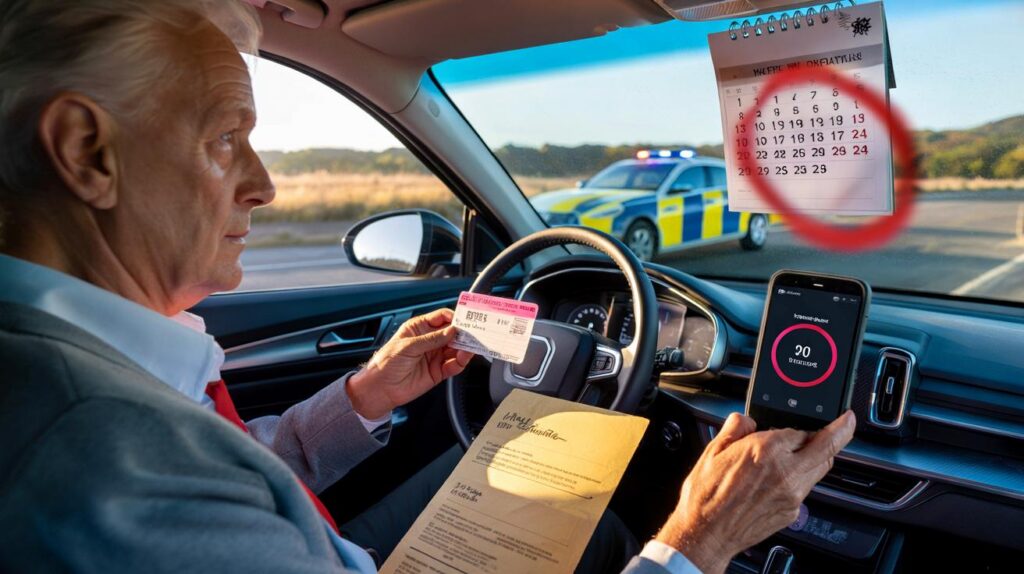
If you’re nearing a big birthday, fresh red tape and tight deadlines could catch you out before the cake is cut.
As the clock ticks towards age 70, routine driving turns into an admin race, with strict renewal dates, medical declarations and processing times that can leave motorists grounded if they slip. The rules are clear, yet many drivers only find out when it’s already too late.
What changes at 70
Your photocard driving licence stops rolling on automatically once you hit 70. From that point, you must renew it to keep your entitlement. The renewal itself costs nothing if you apply online, but timing and accuracy matter.
At 70, licence renewal becomes mandatory and repeats every three years. Miss it and you cannot legally drive.
The DVLA opens a 90‑day window before your 70th birthday so you can apply early. That buffer helps avoid any gap in entitlement if there are medical checks or personal details to verify. If you fail to renew in time, you lose your legal ability to drive until a new licence is issued.
How to renew without stress
There are three main routes to renewal. Each has different timings and paperwork. Choose the one that best fits your situation and health disclosures.
- Online renewal: free, quickest route for most drivers, available within 90 days of turning 70.
- D46P form: sent by the DVLA around three months before your birthday for postal applications.
- D1 form: available from larger Post Offices if your original pack did not arrive or was misplaced.
Ministers say new photocards usually arrive within three weeks. Allow longer if health or identity checks are needed.
If you apply by post, factor in mailing time both ways. Online applications remove postage delays and give on‑screen confirmation that your request is lodged.
The rules that catch drivers out
Many older motorists assume a lapsed photocard is only an admin issue. It is not. Once your licence expires at 70, you no longer hold valid entitlement to drive. Police can issue fixed penalties, insurers can decline claims, and collision liability becomes complicated.
Driving without valid entitlement risks a fine up to £1,000 and penalty points, and could derail insurance claims.
Insurers generally require a valid licence at the time of any incident. If your entitlement has expired, your cover may be challenged, even if premiums are paid. Always check your policy terms and keep email or postal proof of a submitted renewal.
What you need to declare at renewal
Renewal involves a health and eyesight confirmation. You must meet the legal standard to read a number plate at 20 metres, with glasses or contact lenses if needed. You also need to tell the DVLA about conditions that can affect safe driving.
Common conditions you may need to report
- Vision problems such as significant cataracts or glaucoma that impair sight.
- Neurological conditions including epilepsy, seizures or past strokes.
- Cardiovascular issues like certain arrhythmias or implanted defibrillators.
- Diabetes treated with insulin or medications with a risk of hypoglycaemia.
- Sleep disorders that cause excessive daytime sleepiness.
- Progressive conditions such as Parkinson’s disease or dementia diagnoses.
Not every diagnosis means you must stop driving. The DVLA assesses fitness to drive using medical guidance and, in some cases, time‑limited licences or added conditions are issued.
Can you drive while you wait?
If you submit a valid renewal and your previous licence was in force, section 88 of the Road Traffic Act can let you keep driving while the DVLA processes your application, provided you meet medical standards and there are no disqualifications. Keep proof of application. If your entitlement has already expired and you have not applied, do not drive.
Do not forget the categories
Another easy mistake is losing entitlement to vehicles you still intend to use. When you renew, your car entitlement returns unless the DVLA says otherwise. But extra categories, such as light lorries, minibuses or towing rights, may not automatically carry over unless you request them and you remain medically eligible.
Tick the categories you still want when you renew. Leave them out and you may be limited to cars only in future.
How long will it take?
Government guidance suggests three weeks for standard renewals, longer if medical checks are needed. Postal renewals can add days for delivery and scanning. Online services confirm receipt immediately and let you complete identity checks digitally in many cases.
Timing tips that save hassle
- Mark your calendar 100 days before your 70th birthday.
- Apply as soon as the 90‑day window opens to avoid gaps.
- Check your eyesight with a home plate test at 20 metres.
- List any medical changes since your last renewal.
- Photograph your application or save the online confirmation page.
What happens if you miss the deadline
Suppose you wake up at 70 plus one day and your renewal is still on your to‑do list. From that moment, you cannot legally drive. Bookings, school runs, and hospital appointments all need a new plan until your application is processed. If you drive and are stopped, you could face penalties. If you crash, your insurer may dispute cover.
Act quickly: submit an online renewal the same day, confirm you meet section 88 conditions, and only drive if you clearly qualify to do so. If in doubt, pause your driving until the DVLA confirms your status.
Why the system works this way
Road safety policy aims to balance independence with clear checks on eyesight and health. The rapid rise in motorists aged 70 and over means more renewals, more admin and a sharper focus on medical self‑declaration. Free online renewal keeps costs down for drivers, while the three‑year cycle allows regular review without yearly bureaucracy.
Extra help if you rarely drive
If you only drive locally, consider whether a time‑limited licence still meets your needs. Community transport, senior bus passes and ride‑hailing credits can bridge short gaps while a renewal is processed. Households with two cars might add the older driver as a named driver on one vehicle once the new licence arrives, cutting premiums and simplifying cover.
A quick self‑check before you apply
- Can you read a clean number plate at 20 metres in daylight with your usual glasses?
- Do you have any new diagnoses your GP has advised you to report?
- Are you keeping categories such as towing or minibus, and do you meet the medical bar?
- Do you have your National Insurance number and past addresses to hand for online identity checks?
- Will you be away around your birthday? If yes, apply early in the 90‑day window.
Renew for free online within 90 days of turning 70, keep proof of application, and plan for up to three weeks’ processing.
If you want a trial run, set a reminder for a month before your 70th. Practise the 20‑metre plate test, draft a list of medicines, and decide which vehicle categories you still need. That small rehearsal can prevent last‑minute panic.
Drivers managing long‑term conditions can also speak with their GP about any adjustments that keep journeys safe, such as daytime driving only, new lenses, or route planning. Good preparation protects your independence and reduces the chance of a costly stop at the roadside.



Quick question: if I apply online 60 days before my 70th and my photocard expires while DVLA checks a medical disclosure, can I still drive under Section 88? What proof do police actually accept—email receipt, reference number, or a printed confirmation page? Also, do I need my National Insurance number and past adress exact, or can small mismatches delay everything?