
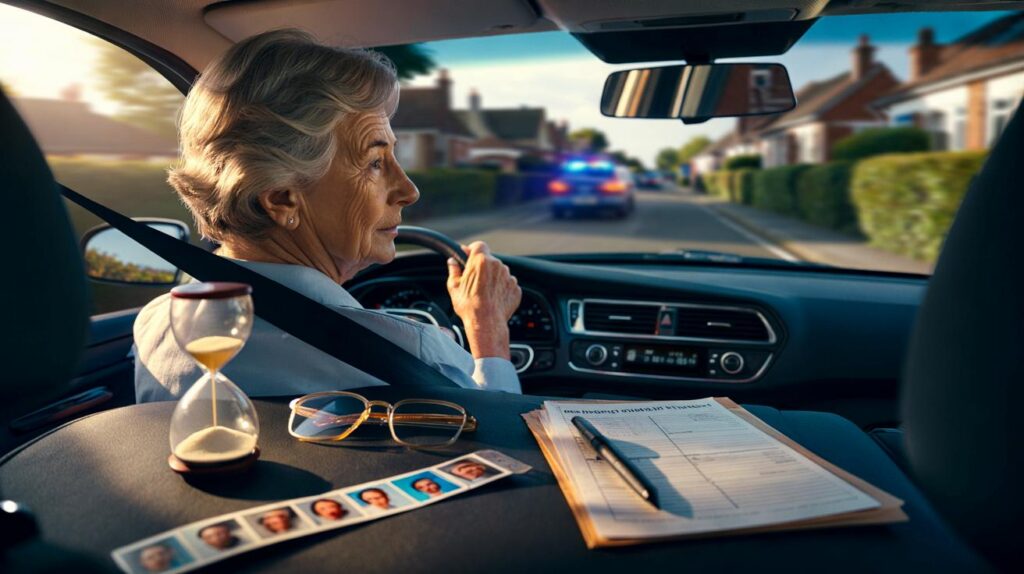
A birthday that brings cake and cards can also bring deadlines. For many, it’s the moment motoring turns into admin.
The run-up to your 70th can quietly decide whether you stay on the road or hand over the keys. A little planning now avoids a scramble later, and protects you from unwanted costs, points and insurance headaches.
What changes at 70
At 70, your driving licence does not automatically continue. You must renew it, and then renew again every three years. The process is free if you do it through the Driver and Vehicle Licensing Agency (DVLA), but the clock matters.
Once your licence expires, you are not legally allowed to drive. There is no grace period after the expiry date.
The DVLA normally posts a D46P reminder about 90 days before your 70th birthday. You can renew as soon as that arrives, or renew online within that 90‑day window. Waiting until the day itself risks a gap.
The 90 day window
That three‑month cushion matters. It gives time for photo updates, address checks and any medical queries. Ministers say most new photocards reach doormats in up to three weeks. If DVLA needs to verify health details, it can take longer.
Renewal is free at 70, and it stays free each time you renew every three years.
How to renew without stress
You have three main routes. Each suits different needs and comfort levels with technology.
| Route | Cost to DVLA | Typical timing | What you need | Possible drawbacks |
|---|---|---|---|---|
| Online via GOV.UK | £0 | Up to three weeks | National Insurance number, passport details (helps with your photo) | Requires internet access and confidence using forms |
| D46P by post | £0 | Up to three weeks from DVLA receiving it | Completed D46P reminder form, new photo if asked | Postage time adds days; errors can cause delays |
| D1 application by post | £0 | Up to three weeks from DVLA receiving it | D1 form (from Post Offices or DVLA), passport‑style photo | Post Office photo/checking services may charge a fee |
Extra categories many forget
Plenty of drivers who passed before 1997 have extra entitlements on their licence, such as C1 (medium goods vehicles) or D1 (minibuses, not for hire or reward). At 70, these do not always roll over automatically.
If you do not actively apply to keep certain categories, your renewed licence may only cover cars (category B).
Keeping some categories can involve extra forms and a medical assessment. Expect the D2 application for lorries/buses and a D4 medical report completed by a doctor or optometrist. Clinics set their own prices for medicals; many charge somewhere between £50 and £120. If you rely on a motorhome over 3.5 tonnes, a horsebox, or you drive a community minibus, check this early.
What happens if you miss the deadline
If your licence expires and you keep driving, you risk more than a telling‑off.
- You can be prosecuted for driving otherwise than in accordance with a licence, which can mean a fine of up to £1,000 and penalty points.
- Your motor insurance may not pay out after a crash if you were not correctly licensed at the time.
- Police can seize vehicles where valid insurance is not in place.
The easiest way to avoid all of this is to set a reminder at 69 years and 9 months, then renew within the 90‑day window.
Section 88: can you keep driving while DVLA decides?
Many older motorists ask whether they can drive after applying but before the photocard arrives. UK law allows driving in some cases under “Section 88” while DVLA processes your application. You must meet strict conditions:
- You have held the relevant GB entitlement before.
- You have sent a correct, complete renewal application.
- You meet the medical standards for driving and your licence has not been refused or revoked.
- You are not disqualified and you follow any conditions (for example, driving with corrective lenses).
Keep proof of your application in the car. If in doubt, wait until the new licence lands.
Health and eyesight: what you must declare
Renewal at 70 asks you to confirm your health. You must tell DVLA about conditions that affect safe driving. The list includes, for example:
- Serious eyesight problems or recent vision loss in one eye.
- Epilepsy or seizures.
- Stroke or transient ischaemic attack (TIA).
- Insulin‑treated diabetes with episodes of hypoglycaemia.
- Certain heart conditions or sleep apnoea with excessive daytime sleepiness.
You must be able to read a standard number plate at 20 metres, with glasses or contact lenses if needed. If your optician has concerns, sort that before you drive. Not telling DVLA about a notifiable condition can bring fines and can invalidate insurance.
Common pitfalls that catch people out
- Leaving the photo unchanged when DVLA has asked for an updated one.
- Moving house and forgetting to change the address on your licence before renewing.
- Using unofficial websites that charge fees for “help” with a free renewal.
- Assuming automatic cover for C1/D1. Many find those categories vanish at renewal because they did not request them.
- Assuming you are insured while your licence is expired. Most policies require a valid licence at the time of any incident.
Practical steps to stay on the road
A little preparation prevents panic and protects your independence.
- Set calendar alerts for 90, 60 and 30 days before your 70th birthday.
- Renew online if you can. It is free, quick and avoids postal delays.
- Ask a trusted family member to sit with you while you apply if you are not comfortable with online forms.
- Check whether you need to keep C1/D1. If you do, book any medical early.
- Keep your National Insurance number, passport details and current address to hand.
- If you must post forms, use a tracked service and keep copies.
What this means for families
For many households, one person does most of the driving. If that driver turns 70 this year, treat renewal as a joint project. Help with the online form, offer a lift to a photo booth or GP, and set shared reminders. If medical issues limit driving, look at alternatives such as community transport, lift‑sharing schemes, staged taxi budgets, or planning deliveries for heavy shopping.
Need‑to‑know numbers and dates
- Age 70: you must renew your driving licence.
- Every 3 years after 70: you must renew again.
- 90 days before 70: expect the DVLA D46P reminder and you may renew online.
- Up to 3 weeks: typical time for a new photocard to arrive, longer if DVLA checks medical details.
Miss nothing: 70, renew; 73, renew; 76, renew; then repeat every three years. Set those dates now.
If you stop driving, options still exist
Some people choose to stop driving at 70 or later, especially after health changes. You can voluntarily surrender your licence and reclaim unused full months on vehicle tax. Many councils offer discounted bus or community travel, and some insurers will suspend a policy while you decide. A short pause to recover from surgery, supported by Section 88 when you return, often beats forcing through a renewal before you are ready.
The bottom line for motorists
The rule is simple: renew on time, tell the truth about your health, and check which categories you want to keep. Do that, and the big birthday stays a celebration, not a stop sign. Ignore it, and you risk fines, points and a nasty shock from your insurer. A 10‑minute reminder now can save weeks of worry later.



Excellent guide—wish I’d seen this before my dad’s renewal. Didn’t realise extra entitlements like C1/D1 can vanish unless you actively reapply, and that medicals can cost £50–£120. Setting alerts and keeping proof of application in the car is top advice. Thnaks!
70: cake, candles, and admin. Guess I’ll celebrate with a D46P and a new photo—party time! formms