
Are we raising children who can take a knock, or kids who shatter at the first hint of friction? Between health-and-safety everything, relentless grade pressure and parenting advice by the gallon, the line between protection and overprotection feels thinner than ever.
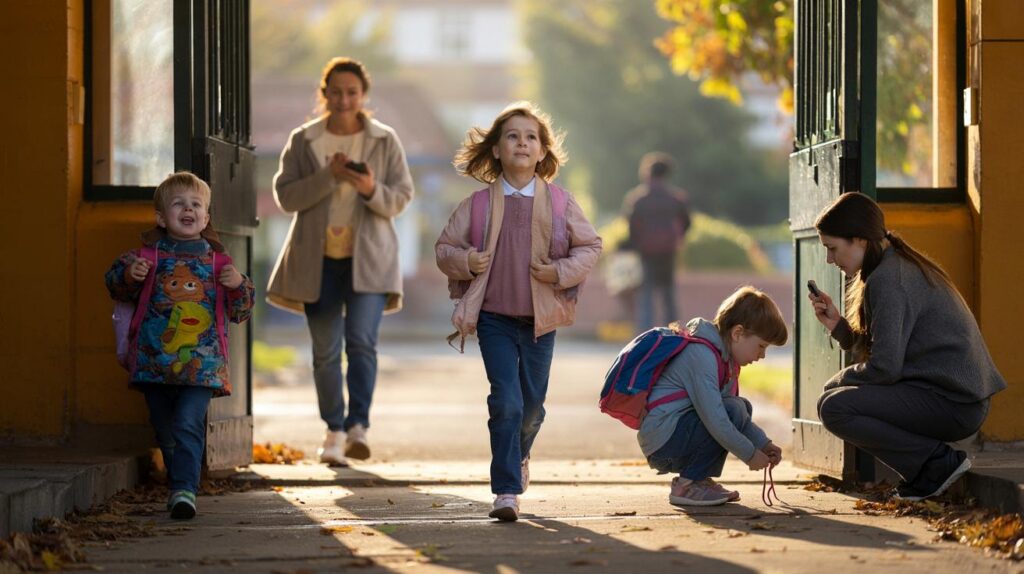
The school gate at 8:42 is a whole opera. One boy in a dinosaur coat is in tears over a forgotten book; his mum sprints home, mouth tight, phone in hand. Another kid shoelace-stumbles, and his dad waits, hands in pockets, letting him fumble the loop. A girl in Year 6 takes a deep breath, squares her shoulders and walks in alone, practising bravery like it’s a piano scale.
We’ve all had that moment when our child wobbles and our stomach flips. Do we swoop, or do we stand back? A child psychologist I spoke to smiles at the question, like she’s heard it a thousand times. “The trick,” she says, “isn’t choosing one. It’s knowing when.”
Which is harder than it sounds.
Are We Making ‘Snowflakes’—Or Teaching Skills We Can’t See?
There’s a loud cultural story that kids are softer than they used to be. Screens everywhere, participation trophies, parents who hover. Yet in therapy rooms and classrooms, another story hums: children carry more invisible loads—online dynamics, academic grind, climate dread—that adults didn’t face at that age.
Child psychologist Dr Maya Bennett puts it plainly over tea. “Resilience isn’t a personality type,” she says. “It’s a skill set, like swimming. Some kids learn in calm water. Others are thrown in the deep end, which doesn’t teach much beyond panic.” Her point lands: we confuse suffering with strength, comfort with weakness.
Here’s a small scene Dr Bennett uses when teaching parents. A nine-year-old forgets his PE kit. One parent drives home, rescues the kit, stops the embarrassment. Another parent lets him tell the teacher and borrow spares, then helps him make a checklist that night. Same love, different muscle. One soothes the moment; the other trains the system.
Zoom out and it’s not about toughness. It’s about nervous systems learning to ride bumps without tipping into meltdown or shutdown. That learning happens through “dosable” difficulties—minor setbacks with a predictable end and a caring adult nearby. Too little friction? No practice. Too much? The brain hits overwhelm and avoids.
So when people say “snowflake”, they’re sometimes seeing a nervous system that hasn’t had enough graduated stress, or one that’s carrying far more than meets the eye. The label hides the mechanics. **Resilience isn’t born in comfort; it’s shaped in small, safe struggles.**
The sweet spot is what psychologists call the window of tolerance. Inside it, a child can feel big feelings and still think. That’s where planning, humour, and problem-solving live. Parents widen that window by being warm “coaches” rather than pure protectors or drill sergeants. Warmth first, then skills.
From Cushioning to Coaching: What Actually Builds Resilience
Try the 3N method: Name, Normalise, Navigate. When your child gets stuck, help them Name the feeling (“This is frustration”). Normalise it (“Lots of people feel this learning long division”). Then Navigate one step (“What’s the very first line you can do?”). It’s coaching in thirty seconds.
Another practice: tiny discomfort reps. Pick a low-stakes challenge your child can choose—ordering their own hot chocolate, asking a classmate for a pencil, walking to the shop with you a few paces behind. Celebrate the try, not the outcome. Let’s be honest: nobody keeps a gold-star chart for courage every day.
Big traps parents fall into? Over-reassurance (“You’ll be fine!”) and instant rescue. Both feel loving in the moment, and sometimes they’re exactly right. **But repeated every time, they teach a nervous system that relief comes only from escape, not from skills.**
When things wobble, use the “SLO” check: Safety, Load, Opportunity. First, is the situation genuinely safe? If yes, what’s the emotional load today—hungry, tired, overwhelmed? If there’s a sliver of capacity, where’s the micro-opportunity to learn?
Let your child make mistakes you can afford. Forgotten homework once a term beats perfection with panic. Give choices with boundaries: “You can cycle to school with me behind, or we walk and you lead.” Progress is often messy and sideways; that’s not failure, that’s data.
Dr Bennett keeps coming back to this: don’t perform calm, be present. Kids read our faces more than our words. *Steady is contagious.*
Here’s how she puts it when parents ask for a script:
“Say less, sit closer. Breathe like you want them to breathe. Then ask, ‘Do you want help, a hint, or just a hug?’ That question grows a problem-solver.”
- Use “when-then” structure: “When the bag’s packed, then we read together.”
- Swap praise for process: “You stuck with the hard bit,” not “You’re so smart.”
- Build a “brave list” of tiny wins on the fridge; review on Fridays.
- Model your own bounce-back: “I burned dinner, so I’m ordering eggs-on-toast.”
- Limit the lecture. Two sentences, max.
What If We Changed the Story?
Maybe the question isn’t “snowflakes or resilient?” Maybe it’s “Which conditions help each child’s nervous system practise wobble-and-recover?” Protection and growth aren’t enemies. **They’re dance partners, and the music changes daily.**
There’s also a values piece here. Are we training kids to tolerate everything, including unfairness? Or to notice discomfort, hold steady, and then act with care—for themselves and others? Resilience without empathy becomes armour. Empathy without resilience gets swept away.
Picture your home one ordinary Tuesday. A lost jersey, a late bus, a friendship sting. You can’t bubble-wrap the world, and you don’t have to. You can be a calm harbour where kids practise launch, drift, return. The day won’t be tidy. It’ll be real. And real is where the muscles grow.
| Point clé | Détail | Intérêt pour le lecteur |
|---|---|---|
| Resilience is trained, not innate | Use dosable difficulties with a caring adult nearby | Gives a practical lens for daily decisions |
| Coach, don’t just cushion | 3N method (Name, Normalise, Navigate) + tiny discomfort reps | Simple tools you can try in minutes |
| Watch the nervous system | Work inside the “window of tolerance” and widen it over time | Helps prevent overwhelm while still building skills |
FAQ :
- Isn’t life hard enough already—why add challenges?We’re not adding pain, we’re shaping practice. Low-stakes reps while you’re nearby build capacity for the harder stuff that arrives uninvited.
- How do I know if I’m pushing too far?Look for thinking to switch off—blank stares, rage spikes, or freezing. Pull back, regulate together, then try a smaller step next time.
- What if my child is highly sensitive or anxious?Go slower, shrink the challenges, keep predictability high. Sensitive kids often become deeply resilient with steady scaffolding.
- My teenager calls me “controlling” when I coach. Help?Offer choices and timing: “Want to troubleshoot now or after dinner?” Respect autonomy while keeping the joint goal in sight.
- Do rewards undermine resilience?External rewards can jump-start habit, but move quickly to process praise and self-reflection so grit sticks from the inside.



Love the “Name, Normalise, Navigate” framing—finally something I can remember at 7 a.m. panic o’clock. Printing a brave list for the fridge today. Thanks! 🙂