
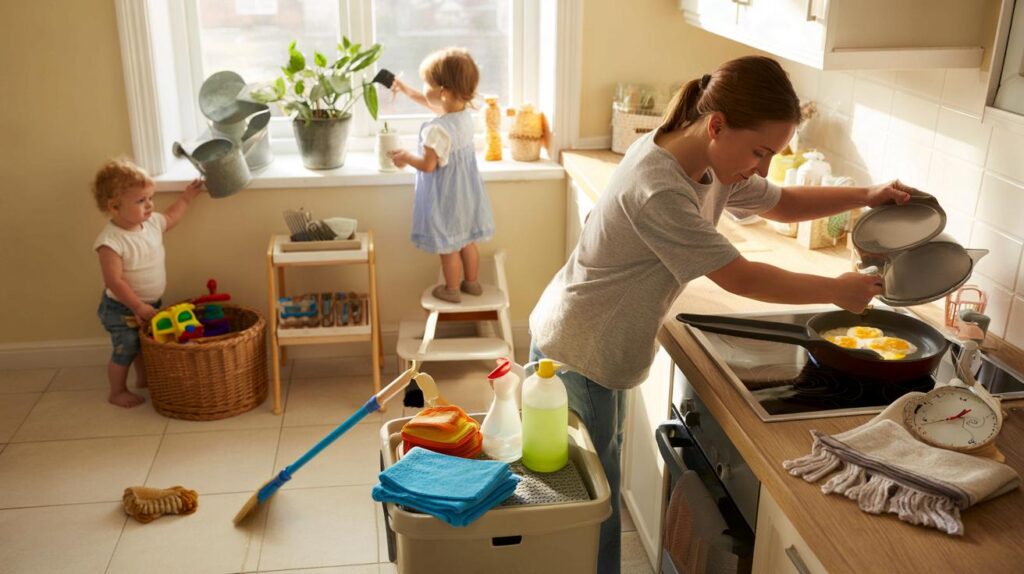
Screens tempt, routines slip, and families juggle. Yet small daily habits can steady children, and households, surprisingly fast.
Across the UK, parents face sighs, strops and creative dodges when jobs get mentioned. Fresh research, plus a few street‑smart tactics, shows how to build lasting routines without rows, while giving children skills that pay off far beyond a tidy hallway.
What the science says
Multiple studies link regular chores to sharper thinking, steadier moods and warmer friendships. A US team led by paediatrician Rebecca Scharf reports that children who pitch in show more helpful behaviour and find it easier to connect with peers. Researchers at La Trobe University in Australia add a key detail: hands-on tasks such as cooking and gardening tie closely to memory and attention, the foundations of learning.
Regular, practical chores correlate with better focus, stronger working memory and more pro-social behaviour in children.
None of this means children should spend hours scrubbing. Play, learning and rest still set the rhythm of childhood. The goal is simple: small, repeatable jobs that show children they are part of the team and that their effort matters.
From tiny helper to capable teen
Start early and keep expectations modest. A two-year-old can carry the post to the table. A five-year-old can water houseplants. By primary school, children can prep snacks and sort washing. By early secondary, they can cook a basic meal and manage laundry. Skill grows with practice, not perfection.
| Age | Daily wins | Weekly stretch tasks | Time guide |
|---|---|---|---|
| 2–3 | Put toys in a basket | Match socks by colour | 3–5 minutes |
| 4–5 | Make the bed | Put away low-shelf groceries | 5–8 minutes |
| 6–7 | Fold small towels | Peel carrots with a peeler | 8–12 minutes |
| 8–9 | Load and empty the dishwasher | Cook scrambled eggs with supervision | 10–15 minutes |
| 10–12 | Mop the kitchen | Cook a simple one-pan meal | 15–20 minutes |
Toddlers aged 2–3
- Drop toys into a box and stack board books on a low shelf.
- Carry post to a table and place spoons next to plates.
- Match socks by colour or pattern and pair them.
- Help feed pets with an adult and wipe small spills with a cloth.
Ages 4–5
- Smooth the duvet, plump a pillow and straighten soft toys.
- Water window plants with a small jug and clear plates to the counter.
- Return groceries to low cupboards and vacuum crumbs with a handheld.
- Wipe door handles and light switches with a disinfectant wipe.
Ages 6–7
- Prepare cold snacks such as fruit and cheese or toast with toppings.
- Fold flannels and towels; rinse cups and stack them on a rack.
- Wheel bins to the kerb, pull simple weeds and bring in kindling.
- Use a peeler to prep carrots; replace loo roll without being asked.
Ages 8–9
- Stack and empty dishwasher trays; check cutlery goes in the right slots.
- Change a light bulb with guidance and tidy their room to a checklist.
- Hang T‑shirts, fold joggers and put clean clothes away.
- Scramble eggs safely; walk the dog with a grown-up nearby.
Ages 10–12
- Deep‑clean the loo and sink using spray, gloves and ventilation.
- Cook a one‑pan pasta and veg, and serve it hot and safe.
- Mow a flat patch under supervision; wash and rinse the family car.
- Sort, wash and dry a small laundry load end to end.
Teens 13–16
- Plan a simple weekly dinner, shop to a list and cook it.
- Manage personal laundry, including stain treatment and ironing basics.
- Babysit siblings for short periods where local rules allow.
- Set a budget for essentials and track spend against receipts.
Make it work at home
Clashes usually come from vague requests. Swap “tidy your room” for a short checklist. Name the task, the place and the time. Keep it concrete and doable. Then step back and let them try.
Say what, where and when. Keep it short. Then let them try, and praise the effort you see.
- Offer choices: “blocks or crayons first?” Choice gives control without a debate.
- Use a two‑minute timer. Racing the clock adds focus and cuts faff.
- Model once, then hand over. Your child learns more by doing than by watching.
- Resist re‑doing the job. Perfection kills motivation; progress builds it.
- Link to a positive outcome: extra story time, bike ride, or picking tonight’s film.
- Keep a visible rota. Rotate jobs weekly so skills and boredom both move on.
A 14‑day ramp‑up plan
Parents ask what to do when children refuse. A short, predictable build often beats bribes and stand‑offs.
- Days 1–3: one tiny job a day after snack time; two-minute timer; big praise.
- Days 4–7: keep the tiny job; add a five‑minute job at the weekend with music.
- Days 8–10: swap the tiny job for a slightly bigger one; add choice.
- Days 11–14: create a simple rota with names and days; celebrate the first week.
Safety, fairness and rewards
Match tools to size. Use child‑safe peelers, blunt knives for practice and oven gloves. Keep hot pans, bleach and sharp blades out of reach. Supervise new tasks closely, then loosen the reins as confidence grows.
Money divides opinion. Some families tie pocket money to extra jobs, not the basics. Others keep chores separate from cash and use privileges instead. Pick one approach and stick to it for a month so your child knows the rules.
Extra ideas that lift the load
Try a points system for siblings. Assign values to jobs based on time and effort, then let children swap points for agreed treats such as choosing Sunday breakfast or an extra half‑hour at the park. Keep the menu of treats visible and capped per week to avoid haggling.
Build a five‑item cleaning caddy: microfibre cloth, washing‑up gloves, mild spray, dustpan and brush, and a small timer. Label it and store it low. When tools live where children can reach them, jobs start faster and finish sooner.
Chore time works best when it feels shared. “We all muck in” beats “because I said so”.
For busy weeks, set a “ten‑minute tidy” after dinner. Put on one song, assign one area each and stop when the music ends. Short, predictable sprints fit around homework and clubs, and keep the house from sliding.



Loved the concrete checklists by age. The “say what, where and when” tip is gold. We started with socks-matching for our 3‑year‑old and she actually asked for more jobs (who knew?). Will definitley try the 14‑day ramp‑up next week. Thanks for citing Scharf and La Trobe too.