
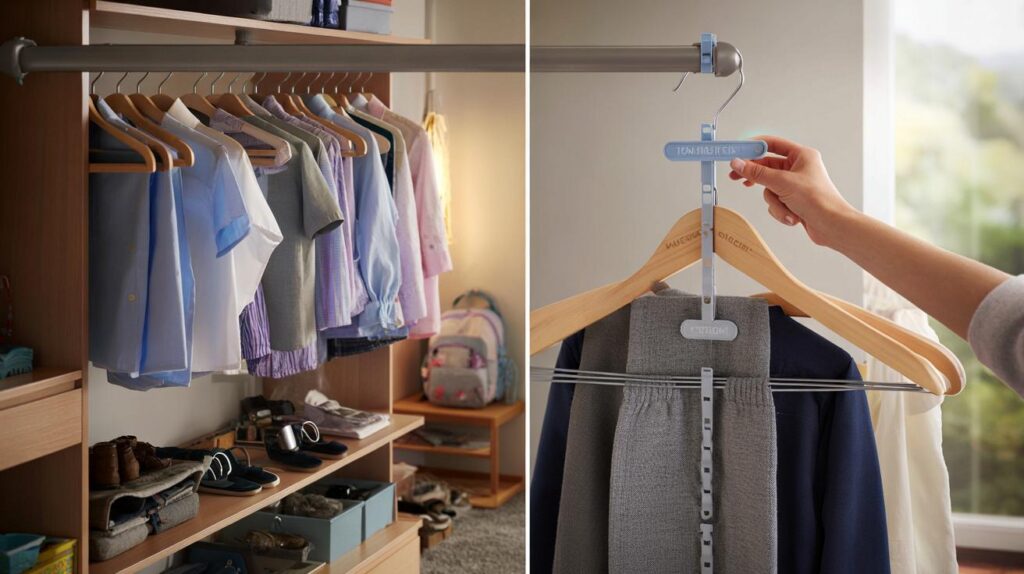
Another weekday dawns and the wardrobe door groans. Shirts, coats and school bits tangle together. Minutes vanish. Tempers fray. Sound familiar?
Across Britain’s bedrooms, hallway cupboards and student flats, a new 75p widget from IKEA is turning crowded rails into calmer, quicker mornings. It’s called OMTRENT, it comes in a pack of ten, and it promises more space without a new wardrobe, a drill, or a flat-pack marathon.
What the 75p connector is and why people care
OMTRENT is a small grey clip that links one clothes hanger to the next, stacking outfits vertically instead of ramming them shoulder to shoulder. In a single move, it reclaims dead air beneath each hanger and turns it into usable storage for tops, trousers and uniforms.
OMTRENT costs 75p for 10 connectors and, per IKEA’s guidance, each clip can carry two extra hangers. That’s a potential 200% increase per starting hanger.
Parents trying to tame schoolwear, commuters laying out work looks, and renters contending with narrow wardrobes all share the same problem: too many garments, not enough rail. The appeal here is obvious. You keep the furniture you’ve got, add a few grams of plastic, and gain the order you’ve been chasing.
How it works
Set-up in seconds
- Hook OMTRENT over the neck or crossbar of your existing hanger.
- Slide a second hanger into the lower slot; add a third if you need the full capacity.
- Group items by outfit, child, or garment type to create tidy chains.
The clip sits snugly, so the chain hangs straight and stays easy to browse. IKEA shows it with its BUMERANG wooden hangers, but the connector sits on most standard hangers with a slim neck.
What it can actually hold
Each connector is rated to support two additional hangers, so a single “starter” hanger can become a three-piece vertical stack. Light to medium garments work best: shirts, blouses, cardigans, school trousers, skirts and light knitwear. Heavier pieces like winter coats belong on the rail itself.
| Starting hangers on rail | Connectors used | Potential total hangers | Notes |
|---|---|---|---|
| 20 | 20 | 60 | Light to medium items; keep heavy coats separate |
| 30 | 30 | 90 | Space gain depends on wardrobe height and garment length |
| 40 | 40 | 120 | Use two-hanger stacks if rail height is limited |
Plan outfits into “chains” — shirt, trousers, jumper — and you remove three separate searches from a frantic morning.
Design choices that matter
OMTRENT is made using 50% recycled plastic, a small nod to sustainability that feels right for an item designed to extend the life of the storage you already have. The connectors are low-profile, so they don’t add bulk, and they have rounded edges that won’t snag knits. IKEA has tested and approved the design for typical household loads, which helps with peace of mind when the rail is already busy.
Real-world wins for different households
- Families with school-age children: bundle a week’s uniforms into five chains, one per day, to cut the pre-school scramble.
- Shift workers: arrange “early”, “late” and “weekend” stacks for fast changes after long shifts.
- Small-space renters: reclaim vertical clearance in short wardrobes and narrow alcoves without new furniture.
- Students: keep placement outfits, sports kit and laundry-day basics grouped, even on a flimsy landlord rail.
- Shared wardrobes: assign each person a section of the rail, then use chains to multiply their slice.
The maths on value
At 75p for 10, each connector costs 7.5p. Because a single clip can add two extra hanger positions, that works out at about 3.75p per additional hanger. For a couple of coins, you can change the feel of a whole wardrobe. That cost-to-impact ratio is why the product is catching attention.
Limits, risks and smart use
A rail can only take so much load. Even when connectors are rated to carry two extra hangers, the bar itself might sag if you cram heavy pieces together. Spread weight, keep bulky coats standalone, and rotate out off-season items. If your wardrobe is shallow from front to back, avoid overly wide hangers that might knock the door.
Height matters. Children’s wardrobes are often shorter; two-hanger stacks may be the sweet spot there. Adult wardrobes with a high rail can take a third hanger comfortably, especially if you pair shorter items together.
Simple strategies to save more time
Make outfits, not piles
Think in complete looks. Hang tops with matching bottoms and a layer. Add socks in a small mesh pouch on the lower hanger. One grab, and everything comes out together.
Label the week
Slip paper tags over the top hanger — Mon to Fri — and pre-build five chains on Sunday night. Children can pick their day’s chain themselves, which cuts morning negotiation.
What to pair it with
- Slim velvet or plastic hangers to reduce bulk and keep slippery fabrics in place.
- Vacuum storage bags for off-season knits, freeing space so the connectors can work on what you actually wear.
- A short shoe rack or box under the rail, where the new vertical chains leave more floor clearance.
Who benefits most
Households juggling multiple wardrobes stand to gain first: families with two or more children, flatmates sharing a single built-in, or anyone in a rental with a bar that sits high and wastes headroom. If you already colour-code and still struggle, this adds a physical layer of order that labelling alone cannot deliver.
Availability and what to expect
The connector has rolled out this month across IKEA’s UK range at 75p for a pack of ten. Expect the grey finish as standard and a snug fit on IKEA’s own hangers. If your rail carries a lot of woollens or denim, start with two-hanger stacks and work upward. Keep a few connectors spare to swap in for laundry day or a quick seasonal switch.
Extra detail for the organised-minded
Estimate your gain before you buy. Measure the rail-to-shelf gap. If you have 90 cm of clearance and most tops hang to 65 cm, a two-hanger chain leaves enough room for fingers and airflow. A third hanger works when you pair two shorter items at the bottom, like a T-shirt and a skirt. Aim to keep at least 10 cm between the lowest hem and anything beneath for ventilation.
For mixed wardrobes, try a simple rotation: one rail section for current daily wear chains, one for occasion wear without connectors, and one for “pending” items heading to laundry or repairs. The small clip becomes a signal, not just a space-saver, and that cuts decision time each morning.



Does this really give 200% more space, or just compress everything so sleeves crease? My wardobe is shallow—do the chains bump the door? The piece says slim-neck hangers; will these clips fit chunky supermarket ones, or do I need BUMERANGs? Any one tested with heavier shirts? Sounds good, but I’m sceptical.