
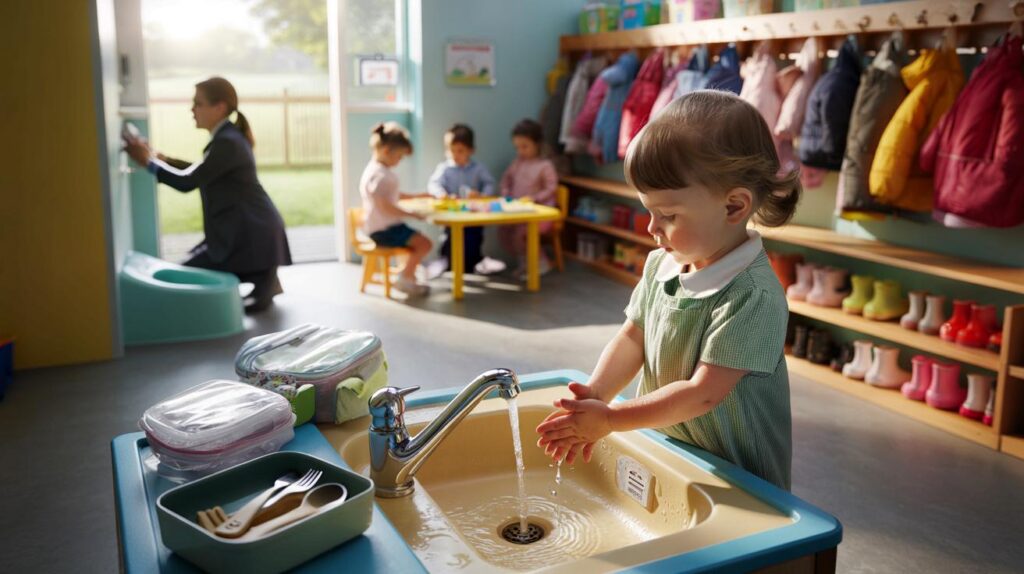
At the school gate, nerves and lunchboxes jostle for space as teachers juggle rising needs and parents hunt for reliable guidance.
A new government-commissioned poll of 2,000 parents with children under five suggests many families rate formal learning above independence. Six in ten respondents said toilet training is not essential before Reception. Large shares also downplayed table skills, short stints of focus and early language milestones.
What the new poll shows
The Department for Education survey offers a snapshot of how families view school readiness in 2025. It points to shifting expectations at home, and growing pressure in classrooms when the term begins.
Six in ten parents said being potty trained isn’t essential before starting Reception, according to the government poll.
| Skill or expectation | Share of parents who said it’s not essential before school |
|---|---|
| Toilet training | 6 in 10 |
| Using a knife and fork | 70% |
| Concentrating on a task for 10 minutes | Nearly two-thirds |
| Speaking in full sentences | Around half |
| Recognising letters or numbers | 60% |
These figures echo staffroom stories. Reception teachers say more pupils arrive needing help with toileting, dressing and simple turn-taking. That changes the rhythm of the day and shrinks time for phonics, play and social learning.
Teachers warn of classroom fallout
Headteachers’ leaders have flagged a pattern: schools filling gaps left by stretched health and family services. Staff often double as teacher, social worker and counsellor. When children need help with core self-care, the knock-on effects land on everyone in the room.
Minutes spent on nappies, handwashing and spare clothes add up fast — and they replace story time, messy play and conversation.
Where the pressure comes from
Several currents meet here. Cuts to local services have reduced the face-to-face support many families once relied on. Pandemic-era disruptions frayed routines and reduced access to toddler groups and health visitors. The cost of living squeezed childcare choices. All of that filters into school readiness.
Teachers do not blame parents. They describe families overwhelmed by noise online and mixed messages about what matters most at four. Many mums and dads assume phonics sheets matter more than zips, spoons and toilet trips. The poll suggests that belief is common.
Government steps in with guidance
In response, the Department for Education has launched Best Start in Life, a free NHS-backed guide for parents and carers. It brings together practical advice on sleep routines, feeding, speech and language, toilet training and how to find local childcare and services. Ministers say the goal is clarity and trust, so families spend less time sifting opinions and more time building simple habits at home.
- Clear advice on toilet readiness and how to set a routine.
- Simple language games to boost vocabulary and turn-taking.
- Tips for mealtimes that build cutlery skills and patience.
- Pointers on local support, from health visitors to children’s centres.
Guidance stresses everyday routines over flashcards: dress, eat, chat, play, and repeat — little and often.
What readiness really looks like at four
Reception teachers value independence, not perfection. They look for small, repeatable actions that free children to learn and free adults to teach. Here’s how that breaks down.
Self-care and independence
- Toileting: recognising the urge, asking for help, wiping as best they can, washing hands with soap.
- Dressing: pulling up pants, managing simple zips or Velcro, changing into spare clothes after a spill.
- Eating: holding a spoon, practising a fork, trying new textures, sitting with peers for a short time.
Communication and focus
- Speaking: using short sentences to ask, answer and share ideas.
- Listening: waiting a turn, following a two-step instruction, joining group time for several minutes.
- Play: sharing space and materials, starting to negotiate rules in games.
Recognising letters and numbers helps some children, but it is not the entry ticket. Teachers can teach phonics and counting. What they cannot easily replace is the confidence to use the loo, the words to ask for help and the stamina to stick with a task for a few minutes.
A quick reality check on time lost
Consider a typical class of 30. If five children need five minutes of toileting help before lunch, that is 25 minutes. Add two clothing changes after outdoor play and you lose another 10 minutes. A teacher and one assistant can claw back some time, but the lesson shrinks regardless. Multiply that across a week and learning time erodes.
None of this blames families. It shows why small routines at home pay big dividends in school. Independence frees children to join in quickly and enjoy the fun stuff.
How parents can tackle toilet training calmly
Toilet training rarely runs in a straight line. Regression happens after illness, a house move or a new sibling. Night-time dryness often comes later. Aim for steady practice, not instant success.
- Spot readiness: longer dry spells, interest in the toilet, pulling at a wet nappy, telling you before or after they go.
- Build a routine: regular sits after meals and before leaving the house, with a simple handwashing sequence.
- Dress for success: elasticated waists, easy shoes, spare clothes packed in a labelled bag.
- Use words: the same short phrases each time; praise the process rather than the outcome.
- Expect setbacks: keep calm, clean up, try again later; talk to your health visitor if worries persist.
Think practice, not perfection. Short, predictable routines build confidence long before the first bell rings.
What this means for you and your child
If your child starts Reception soon, pick two basics to practise this week: handwashing and toileting, or coat on and off. Keep sessions short, upbeat and daily. At mealtimes, pass the fork, share food talk and model patience. During play, swap turns and name feelings. Each small habit eases the first few weeks of school.
For families feeling pulled in all directions, remember that readiness is a range, not a fixed age. Teachers expect variety. They want children who try, ask and join in. The rest follows quickly once the routine takes hold.
Two practical add-ons you can try
- Ten-minute focus game: set a timer, build a block tower together, then tidy up as a team when the bell goes.
- Morning drill: toilet, hands, uniform, breakfast, teeth, shoes, out the door — the same order every day.
The wider picture schools juggle
Leaders say stretched budgets and rising needs shape the Reception experience. Staff buy spare clothes and wipes. They liaise with health teams when children need extra support. Clear expectations at home reduce that load. It lets classrooms hum with stories, music and outdoor play instead of queueing for the sink.
Admissions do not depend on continence, and schools will support children who struggle. But families who can build basic habits before term starts give their child, and their classmates, a flying start. That is the thread running through this debate: independence first, worksheets later.



Thanks for cutting through the noise—“independence first, worksheets later” should be on every school newsletter.
If six in ten think potty training isn’t essential, what support do Reception teams actually get for the extra care? Our school has one TA for 30 kids; that maths doesn’t add up.