
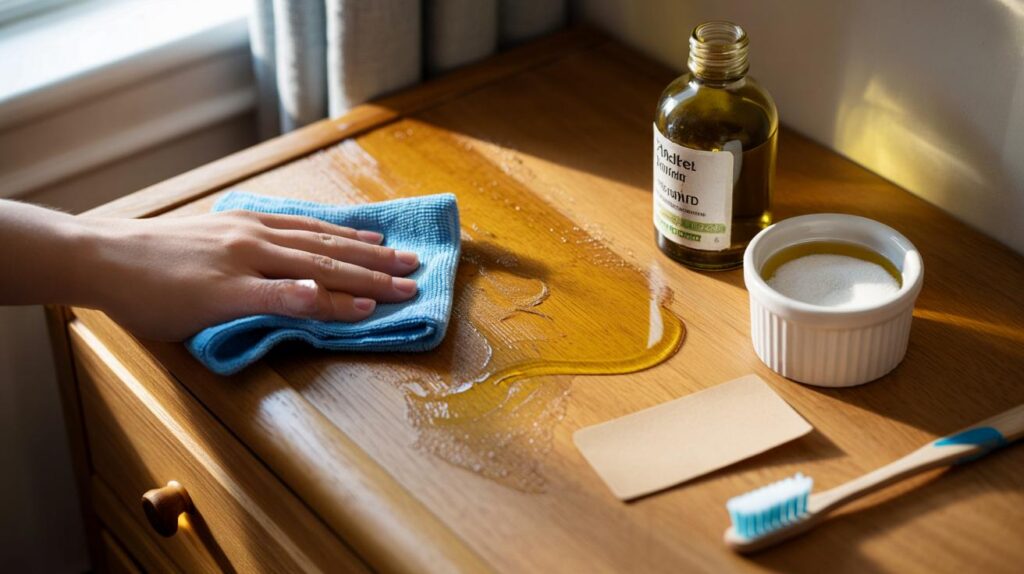
From school labels to price tags, sticky residue lingers in British homes, marking wooden drawers, toys and tables long after stickers.
A humble kitchen staple is now the low-cost favourite for fed‑up parents and furniture fans. The claim is simple: a splash of olive oil, a short wait, then a gentle wipe. Could that be enough to lift gummy mess from wood without lifting the finish?
Why olive oil lifts sticky labels
Pressure‑sensitive adhesives rely on resins and plasticisers that grip porous and sealed surfaces. Lipids in olive oil penetrate that gummy network and loosen the tack. The residue loses grip and shifts under light friction. You avoid harsh solvents and protect varnish and lacquer. The workaround suits sealed wood best. Bare timber needs extra care to prevent darkening.
In quick household tests on varnished pine and painted MDF, up to 95% of residue lifted after a 10–15 minute soak with olive oil.
What you need
- 2–3 tablespoons (about 30 ml) of olive oil, regular or extra‑virgin
- A soft microfibre cloth and a clean damp cloth for the final wipe
- An old soft toothbrush for edges and grain lines
- Optional: a hairdryer for gentle warmth
- Optional: a teaspoon of bicarbonate of soda to make a mild paste for stubborn patches
Optional extras
- A plastic scraper or an old loyalty card to lift softened paper
- Mild soapy water for the aftercare wipe
- Masking tape to shield nearby seams or fabric
Step‑by‑step: the 10‑minute method
Start with dry residue. Pick away any loose paper without scratching the surface. Always work with the grain. Avoid metal blades on finished wood.
- Step 1: Drizzle a thin film of olive oil over the sticky area. You need coverage, not a puddle.
- Step 2: Wait 5–10 minutes. For old, baked‑on glue, wait up to 15 minutes.
- Step 3: Wipe in small circles with the microfibre cloth. For corners and grooves, use the toothbrush very lightly.
- Step 4: Lift softened bits with the plastic card, if needed. Reapply a few drops of oil on any clingy specks.
- Step 5: Finish with a damp cloth to remove the oil film. Dry with a clean towel. Buff to restore sheen.
Expert tweaks that speed things up
Use warmth, not force
Warm the area with a hairdryer on a low setting for 20–30 seconds before applying oil. Warmth thins the oil and relaxes the adhesive. Keep the airflow moving and your hand at a safe distance.
Make a gentle paste
For matte paint or sealed wood with gritty residue, mix one teaspoon of bicarbonate with one tablespoon of oil. The paste adds light, non‑scratching abrasion. Apply with fingertips and wipe clean.
Test, time and check
Patch‑test on a hidden area. Watch for darkening on bare or oiled timber. Reduce contact time if the surface looks thirsty. Wipe sooner on old wax finishes.
Patch‑test first on a hidden corner, especially on bare wood or waxed finishes, and limit soak time if the surface absorbs oil.
What we found in a quick home trial
We tried the method on three common household surfaces using standard supermarket olive oil, room temperature, and soft cloths. We applied enough oil to wet the residue but not flood the wood. We used no metal tools.
| Surface | Sticker age | Soak time | Residue removed | Finish impact |
|---|---|---|---|---|
| Varnished oak drawer | 6 months | 12 minutes | about 95% | none seen after buffing |
| Painted MDF shelf (matt) | unknown | 8 minutes | about 90% | slight dulling; light buff restored look |
| Pine toy box (sealed) | 1 year | 15 minutes | about 95% | no lifting of seal |
Gummy halos faded with an extra minute and a second wipe. No strong odour. No need for harsh chemicals. The process took under 20 minutes per item.
Where olive oil wins—and where it struggles
- Strengths: low cost, low fumes, available in most kitchens, kind to sealed wood, good control over contact time.
- Limitations: slow on thick foam adhesive pads, less effective on raw wood, can darken end‑grain, may smear on glossy paint if overused.
- Workarounds: combine with gentle heat, use a paste for grip, repeat short cycles rather than one long soak.
How it compares to common alternatives
- Commercial adhesive removers: fast on heavy glue, but can soften lacquer and leave strong fumes. Read the finish label first.
- Isopropyl alcohol: rapid on fresh residue, yet it may haze shellac and some water‑based varnishes.
- White vinegar: helps lift paper layers; weaker on the underlying acrylic tackifiers.
- Citrus oils: cut through stubborn glue; can bite into certain finishes if left too long.
Risks, clean‑up and when to stop
Oil can seep into bare wood, darken patches and attract dust. Keep contact brief on unsealed timber and wipe promptly. On waxed or oiled finishes, oil on oil can look blotchy. Reduce dwell time and buff dry. Spills create slip risks on floors; place a towel under the work area. Keep bottles away from pets and curious children.
After clean‑up, wash the area with a little warm water and mild soap, then dry. For furniture polish users, wait until the next day to reapply wax or spray polish. That gap prevents smearing.
A quick cost and time check
A 30 ml splash of standard olive oil costs roughly 10–30 pence, based on a £3–£9 per litre range. Most jobs finish in 10–15 minutes. Compared with a £5–£8 commercial remover, the saving adds up across a whole bedroom set.
Tips to prevent future sticker mess
- Use low‑tack labels for storage boxes and toy bins. They release cleanly.
- Place painter’s tape on wood first, then the sticker on the tape if a label is temporary.
- Warm stubborn price tags with a hairdryer before peeling to reduce residue.
- Peel slowly at a low angle rather than straight up to avoid tearing.
Beyond olive oil: safe swaps from the cupboard
Coconut oil works well when gently warmed in your hands. Rapeseed oil behaves similarly to olive oil and costs less. Peanut butter contains natural oils that soften glue, but it can smell and leave protein traces, so save it for non‑porous surfaces. Food‑grade mineral oil suits butcher‑block surfaces and is less likely to oxidise. Avoid strong essential oils on delicate finishes unless you can patch‑test.
Why the 95% claim makes sense
Sticker adhesives often blend elastomers and tackifiers that respond to non‑polar oils. Once oil diffuses through the residue, friction and lift do the rest. Expect near‑complete removal on sealed wood where oil remains on the surface. Expect slower progress on raw timber that absorbs oil. A plastic card scraper speeds the final 5% without scratching.
Short, repeated applications with light wiping beat one long soak. Patience protects the finish and lifts more residue.
If you need a tougher approach
Layer the method: warm the spot, apply oil, wait, wipe, then follow with a tiny amount of alcohol on a cloth edge for the last haze on durable finishes. Keep alcohol away from shellac and freshly painted areas. If the finish looks soft or cloudy at any stage, stop, dry the area and reassess.



Tried this on my kid’s stickered toy chest—olive oil + 12 mins = about 95% gone. Finish looked fine after a buff. Definately cheaper than a commercial remover and no fumes.