
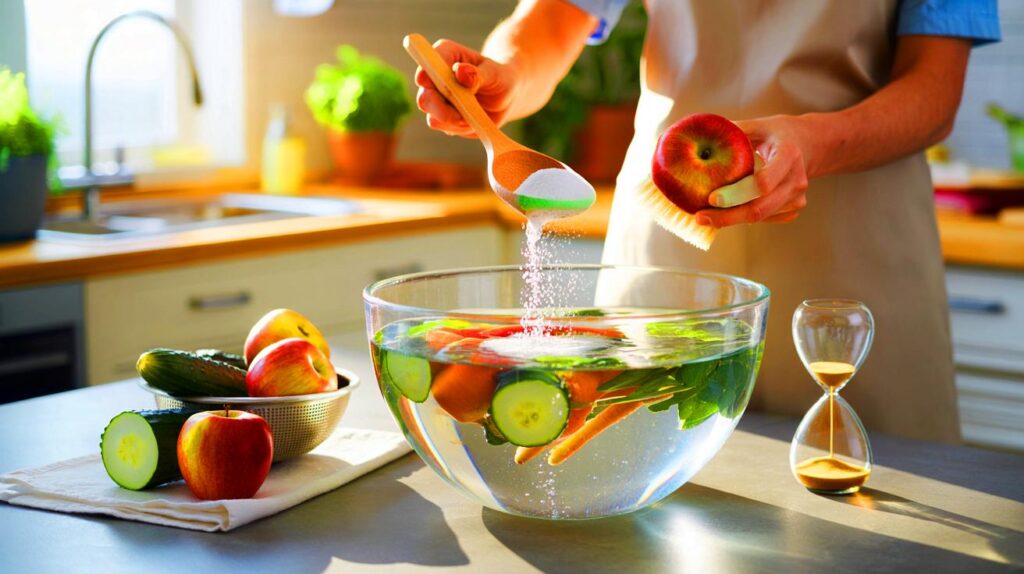
Concerns over chemical residues now reach the dinner table. A simple kitchen routine offers calmer meals, no gadgets, little cost, and swift results.
Shoppers face a new reality in the produce aisle. Residues that were once rare now appear more often, especially on shiny skins. Households want a method that fits weeknights, trims risk, and keeps flavour and texture intact.
Why the kitchen sink has become a frontline
Monitoring shows a sharp rise in detections over the past decade. Families feel the squeeze between time, budget and peace of mind. The good news is that technique matters more than fancy equipment.
Fruit samples with PFAS rose from 3.4% in 2011 to 25.1% in 2021. Vegetables increased from 2% to 8.6%.
Not all residues behave the same. Non-systemic pesticides cling to the surface and respond to washing. Translaminar products sit just under the skin. Systemic pesticides move through plant tissues and prove harder to dislodge. Cold running water already reduces loose dirt and some residues. Timing matters as well. Wash close to eating to limit nutrient losses and recontamination in the fridge.
The 15-minute, 10 g per litre method
Step-by-step, with kitchen basics you already own
Key ratio and time: 10 g of bicarbonate of soda per litre of water, for a 15-minute soak.
- Start with a one-minute rinse under cold tap water to remove grit and loose particles.
- Prepare a bowl with cool water and dissolve 10 g of bicarbonate per litre. Stir until the water turns clear.
- Submerge fruit and vegetables for at least 15 minutes. Agitate once or twice to refresh contact with the solution.
- Brush firm skins, such as apples, carrots, cucumbers and melons, with a soft vegetable brush.
- Rinse thoroughly under running water. Dry well with a clean cloth or paper towel.
- Wash first, cut later. Slicing before washing can draw surface residues inside.
This routine targets surface residues, waxes and dirt. It supports salads, herbs and firm produce without altering taste. It uses a cupboard staple and a mixing bowl, so it fits around busy cooking. Drying well helps prevent spoilage in the crisper.
What it achieves — and what it cannot do
The bicarbonate bath breaks down certain pesticide residues at the surface. It pairs well with light brushing. It cannot fully remove substances that have moved into the flesh. That is why variety and sourcing still count. Rinsing alone helps, yet the combined soak and brush gives a deeper clean without harsh chemicals.
Avoid soaps, bleach or detergents on food. These products do not belong on produce and can leave their own residues. Keep to potable water, bicarbonate of soda and food-grade vinegar for the alternatives below.
Vinegar bath, brushing and difficult exceptions
White vinegar offers a useful variant when skins feel waxy or dusty. It also helps release soil from crevices and leaf folds.
- Mix one part white vinegar with two parts water in a bowl.
- Soak produce for 15 to 20 minutes. Swirl occasionally.
- Rinse well with clean water. Dry thoroughly before storage.
Leafy greens respond to gentle handling. Massage leaves in the bath, then rinse and spin dry. Berries are more fragile. Keep them brief: a quick 30-second dip in clean water, drain well, and serve. Mushrooms are different again. Wipe with a clean cloth rather than soaking, as they absorb water and lose texture. Peeling reduces surface residues but removes fibre and vitamins found in skins. Blanching can help in some cases, as a short hot-water step before cooking.
| Method | Ratio and time | Best for | Notes |
|---|---|---|---|
| Bicarbonate bath | 10 g per litre, 15 minutes | Firm fruits, veg, leafy greens | Brush firm skins; wash before cutting; rinse and dry well |
| Vinegar bath | 1/3 vinegar, 2/3 water; 15–20 minutes | Waxy skins, dusty leaves | Rinse thoroughly to avoid residual tang |
| Quick rinse | Cold water, 30–60 seconds | Berries, delicate herbs | Use just before eating; drain well |
| Peeling | N/A | Thick-skinned items | Removes nutrients in the skin; reduces surface residues |
| Wiping | Clean cloth | Mushrooms | Preserves texture; avoid soaking |
What the science means for your basket
Surface-focused methods best address non-systemic residues. Translaminar products may reduce at the margins when combined with brushing and drying. Systemic pesticides sit beyond reach of washing. This is where buying choices help. Rotate growers and varieties. Mix in organic options for high-residue items when budget allows. Prioritise produce that you eat skin-on for the bicarbonate soak.
Wash close to eating, and dry well. Timing and drying change outcomes as much as the product you use.
PFAS are persistent by design. A home bath targets dirt, wax and many surface pesticides but is not a PFAS cure-all. The aim is risk reduction across a week of meals, not a laboratory-grade clean.
Cost, safety and the footprint in your sink
Running costs stay low. Ten grams of bicarbonate costs only a few pence. A standard bowl holds roughly two to three litres, so a family rinse sits well under the price of a coffee. Dispose of the used water down the drain. Keep separate bowls for soil-heavy items to avoid muddying delicate leaves.
Food hygiene still applies. Keep raw meat away from the washing area. Clean the brush after use and let it air dry. Do not soak for hours, as texture suffers and flavours dull. For anyone with a sensitive gut or reduced immunity, the rinse-and-dry step matters even more because moisture supports microbes during storage.
How to fit the routine into a busy week
Two fast formats that work on school nights
- Batch night: soak firm produce while dinner cooks, dry, then store in breathable containers.
- Just-in-time: keep bicarbonate near the sink. Start the soak as you unpack the bag, then prep the rest.
Some items do better unwashed until use, such as berries and mushrooms. Dirt-coated roots can be brushed dry first to avoid a muddy bath. Keep a soft brush and a clean towel in the drawer so the steps become automatic.
Practical add-ons that widen your protection
Combine techniques across the week. Use the bicarbonate soak for apples, pears, cucumbers and salad bags. Switch to the vinegar bath when skins feel waxy. Choose quick rinses for soft fruit moments before eating. Peel thick-skinned veg if texture allows. This layered approach cuts exposure without reshaping your cooking.
Want a simple checklist? Aim for three habits: wash before cutting, dry before storing, and vary methods by texture. That keeps flavour, trims waste, and helps your household push back against the residue trend with tools you already own.



10 g/L for 15 min—got it, thx!