
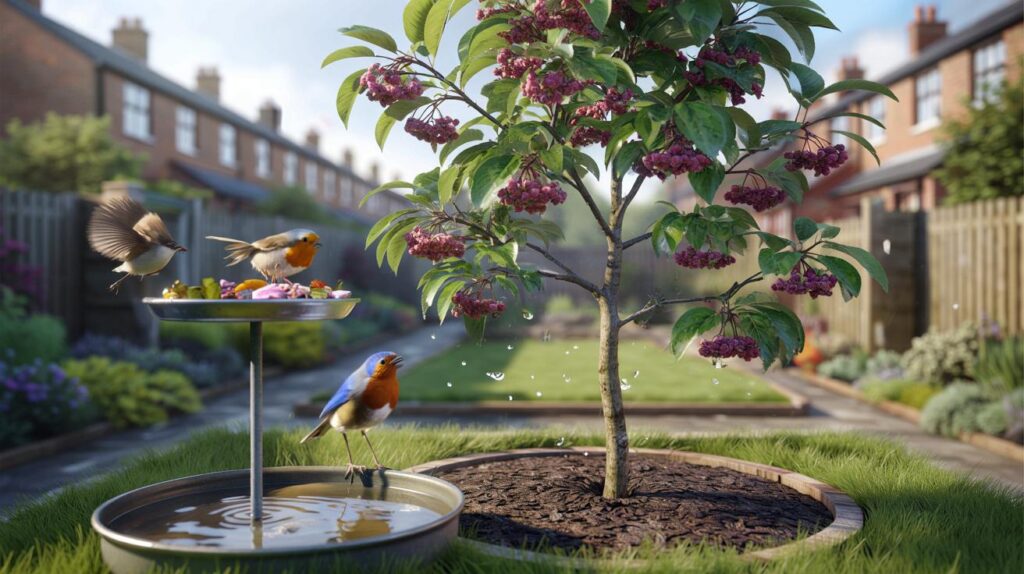
Gardeners say a single, affordable tree can turn your patch into a year-round robin stopover, even when worms vanish underground.
Across Britain, people are trialling an easy fix to keep robins visiting in every season. One compact tree supplies blossom, berries and cover when nature turns lean, and it fits into small gardens without fuss.
One tree, twelve months of visits
The serviceberry, known to botanists as Amelanchier, offers what robins need when the ground yields little. Delicate white spring blossom draws insects. Summer berries arrive in clusters. Autumn foliage glows from apricot to bronze. Winter stems give shelter when gardens look bare.
Plant a serviceberry and you stack the seasons in a robin’s favour: blossom for insects, fruit for hunger, cover for safety.
This four-season menu matters. In hot spells, earthworms retreat deeper into the soil. In freezes, turf locks solid. Robins adapt, but a ready source of soft fruit and insect life helps them keep weight on and defend a small territory near your back door.
Why robins need help in summer and winter
British robins do not migrate in large numbers. They hold ground through heat and frost. Summer drought pushes worms out of reach. Winter cuts natural forage to a trickle and shortens feeding windows. Both periods reduce the calories available per hour spent searching.
When heat or ice strikes, the gap between a robin’s energy need and nature’s supply widens. Fill that gap, and the bird stays.
Serviceberry fruit forms as early as June in many parts of the UK, with stragglers into July. That coincides with dry spells when lawns go crisp and worm-hunting slows. Fallen berries also feed ground-feeding birds, which suits the robin’s behaviour.
What to plant, where to plant
Several Amelanchier species suit UK plots. Most cope with sun or light shade, prefer a moisture-retentive soil, and tolerate a slightly acidic to neutral pH. They grow with a tidy habit, often multi-stemmed, and rarely crowd a small garden if pruned after flowering.
- Choose a multi-stem shrub form for small spaces; it tops out around 3–4 metres.
- Plant from late autumn to early spring while the soil is workable and not waterlogged.
- Soak the rootball, set it level with the surrounding ground, and water in well.
- Mulch 5–7 cm deep around the base, keeping mulch off the stems to prevent rot.
- Prune just after blossom fades to maintain shape and encourage next year’s flowers.
| Amelanchier variety | Typical height | Best position | Fruit timing | Garden fit |
|---|---|---|---|---|
| A. lamarckii | 4–6 m (can be kept at 3–4 m) | Sun or light shade; moist, well-drained | June | Small to medium gardens |
| A. alnifolia | 2.5–4 m | Sun; tolerates cooler, exposed sites | June–July | Courtyards and terraces |
| Columnar forms (e.g., ‘Obelisk’) | 2.5–3.5 m | Sun; narrow beds or along fences | June | Very small spaces |
Space the tree at least 1.5–2 metres from walls or dense hedging so light reaches flowers and fruit. In containers, pick a pot 45–50 cm wide with drainage holes, use loam-based compost, and water steadily from April to September.
Feeders, cats and hygiene
A tree alone draws interest, but adding food keeps birds visiting in poor spells. Robins take mealworms, small suet pellets, sunflower hearts and soft fruit. Place feeders with care or the birds will avoid them.
- Site feeders 2 metres from dense cover so robins can spot cats before they strike.
- Hang at 1.5–1.8 metres high to deter prowling pets and foxes.
- Keep feeders away from flowerbeds and veg to reduce droppings and contamination risk.
- Use a shady position to keep food fresh and reduce heat stress in summer.
- Clean weekly with a mild disinfectant, rinse thoroughly, and air-dry before refilling.
Move the feeding station a few steps every fortnight. That limits fouling underfoot and breaks parasite cycles. Sweep husks and droppings into the bin, not the compost.
Costs, timing and quick wins
Most serviceberry saplings in UK garden centres start from about £25–£60, depending on size and form. A multi-stem 60–80 cm plant will establish quickly and fruit within two seasons. Allow 10 minutes a month through the first summer for watering and a spring top-up of mulch each year.
Plant between November and March when rain helps the roots knit into the soil. In the first dry summer, water 10 litres once a week. In heavy clay, split watering into two smaller sessions to prevent waterlogging.
Beyond robins: what else you’ll attract
Spring blossom pulls in solitary bees and hoverflies. Berries tempt blackbirds, thrushes and, in some winters, visiting fieldfares and redwings. The tree’s structure shelters wrens and dunnocks during sudden squalls. Many gardeners also rate the fruit in the kitchen; ripe berries taste reminiscent of blueberry with almond notes.
Only pick from unsprayed plants and wash fruit before eating. Leave the highest clusters for the birds. A ladder-free harvest still gives you a bowl, and the canopy keeps its wildlife value.
Common mistakes and risks
Do not plant too deep. The top of the rootball should sit level with the surrounding soil. Avoid heavy feeding; vigorous growth reduces flowering and fruiting the following year. Some Amelanchier forms sucker from the base. Choose named, grafted selections if you want a neat clump and remove unwanted shoots in late spring.
Skip loose netting. Birds can tangle in it while chasing insects. If you must protect young fruit from pigeons, use rigid mesh cages with 2 cm gaps and remove them once berries begin to colour. Where cats roam, add a prickle barrier—holly clippings or brash—under the feeder to slow ambushes.
A simple plan for a tiny plot
Working with a 3-by-4-metre town garden? Plant a columnar serviceberry 1.5 metres from a fence, underplant with shade-tolerant perennials for cover, and position a pole-mounted tray feeder 2 metres away in open sight. Add a wide water dish, no deeper than 5 cm, and refresh it daily. You now offer food, water and shelter in a footprint little bigger than a picnic rug.
What to feed, and how much
Robins favour live or dried mealworms during cold snaps. A typical pair will clear 20–30 grams a day when temperatures dip. Balance the diet with sunflower hearts and small suet pieces to provide fat and protein. Scatter a small portion on a ground tray at dawn and another before dusk. Those are the busiest feeding windows, and the routine trains birds to check in reliably.
If you only do three things this week
- Order a serviceberry suited to your space and plant it before spring growth surges.
- Move your feeder into open view, at least 2 metres from ambush cover, and raise it to 1.6 metres.
- Start a cleaning rota: once a week for feeders, every two days for the birdbath.
One affordable tree, a safe feeding spot and a clean water dish can turn your garden into a robin stronghold within weeks.
For keen planners, map your garden’s sun and shade across the day. Serviceberries flower best with morning light and afternoon dapple. If roots compete with large trees, install a porous watering pipe at planting and top up in dry spells without flooding flowerbeds. Small steps like these stack the odds in favour of the bird that sings through January and keeps you company while you weed in June.



Just planted an Amelanchier last month and the robins are already casing the joint 🙂 The step-by-step on spacing and pruning after blossom is gold. Cheers for the 1.6 m feeder tip—cats foiled!
Does one tree truly make a year-round difference, or is this survivorship bias? In freezing snaps here (Leeds), my robins ignore fruit and demand mealworms. Any data beyond anecdotes?