
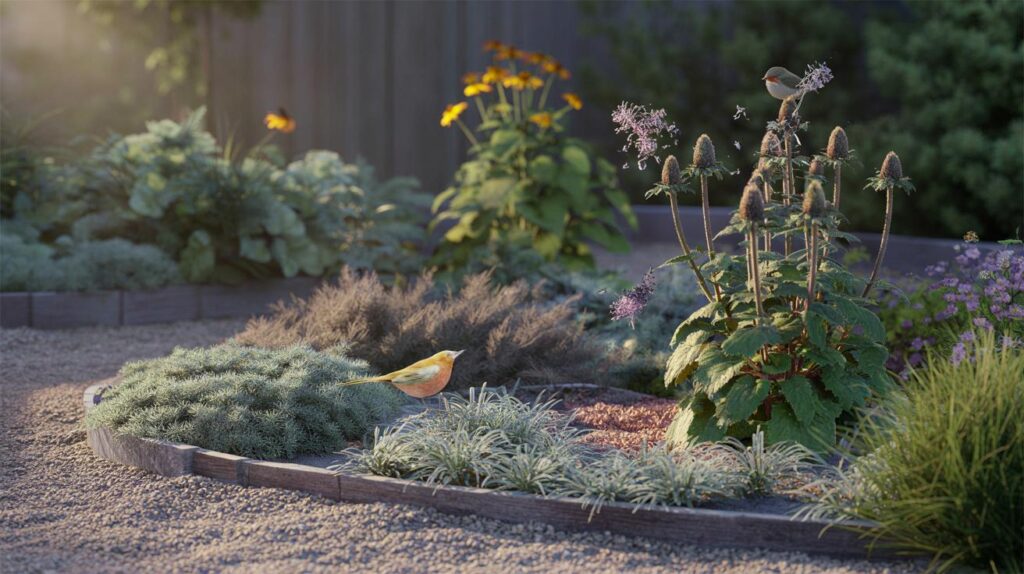
A neglected, sun-baked patch might hold your garden’s liveliest secret. This autumn, small changes could reset winter soundscapes and chores.
With nights drawing in and borders fading, many gardeners resign themselves to a quiet, empty season. Yet a dry, awkward corner can switch into a cold‑weather refuge for birds if you slip three hard‑working perennials into the soil before the first proper frost.
Why october is the moment to act
October gives you warm soil, cooling air and fewer thirsty weeds. Roots settle before deep winter, then power away in spring. That head start matters on dry ground where moisture is scarce and summer heat bites.
Plant once while the soil is still warm, then let seedheads feed finches and shelter insects until March.
Choose a spot with sharp drainage and plenty of sun from the south or west. Avoid frost pockets and any area that stays soggy after rain. Work the soil 20 cm deep, mixing in grit or coarse sand if it clumps. Aim for free‑draining, not rich and wet.
The three plants that turn dryness into a winter asset
Rudbeckia for bold late colour and winter seedheads
Rudbeckia brings golden daisies right up to the first frosts. Leave the dark, domed centres standing when petals drop. Those domes dry into seed buffets that draw tits and robins on bright winter mornings. Strong stems also slow the wind at ground level, helping small birds duck out of gusts.
Echinacea for sturdy cones that feed finches
Echinacea carries pastel petals in late summer, then hardens into bristly cones packed with seeds. Goldfinches and greenfinches cling to them with ease. The upright skeletons trap fallen leaves and make micro‑nooks for overwintering insects that, in turn, become snacks when a mild spell wakes the garden.
Nepeta for aromatic cover and long seasons of life
Nepeta forms a low, silvery cushion that shrugs off drought and light frosts. Its aromatic foliage resists nibbling and holds structure through winter. While flowers peak earlier, the mound offers shelter in bleak weather and supports late pollinators in a warm autumn, keeping activity going at the edge of beds and paths.
| Plant | Height | Spread | Bloom window | Drought rating | Bird value |
|---|---|---|---|---|---|
| Rudbeckia (e.g., fulgida ‘Goldsturm’) | 60–80 cm | 45–60 cm | August–October | Moderate once established | Seedheads and shelter |
| Echinacea (e.g., purpurea) | 80–100 cm | 45–60 cm | July–October | Moderate–high | Heavy, accessible seeds |
| Nepeta (e.g., × faassenii) | 30–45 cm | 60–90 cm | May–September, with repeats | High | Low cover, insect support |
How to set out a small bed that birds will use repeatedly
Think in tiers. Back row: rudbeckia in a sunny arc. Middle: clumps of echinacea in odd numbers for rhythm. Front: a flowing edge of nepeta to soften the line and give cover close to the ground. Space plants so mature leaves just meet, which protects soil and reduces watering.
- Soil prep: loosen 20 cm deep; add grit in heavy soils; do not add rich compost.
- Planting depths: set crowns level with the surface; firm gently, no air pockets.
- Watering: one deep soak at planting, roughly 8–10 litres per plant, then leave to dry between waterings.
- Mulch: a 5 cm ring of leafmould or bark chips to lock in moisture and limit winter heave.
- Aftercare: keep dead stalks standing; remove weeds by hand in spring; cut back old stems in March.
Stop deadheading now. The seedheads are your winter bird feeder, free and refillable by nature.
What you will see once the frosts arrive
Robins skitter between nepeta mounds, ducking out of the wind. Blue and great tits patrol the echoing cones of echinacea, cracking seeds and shaking loose crumbs for dunnocks below. On clear afternoons, goldfinches cling to the spiky tops and quarrel in soft trills. Movement returns exactly when the rest of the garden turns still.
The mix does more than feed. Upright stems and low cushions break the wind, cast dry pockets on the soil and trap leaves that hide beetles and lacewings. That insect store becomes vital protein during brief thaws, giving birds reason to visit daily.
Common pitfalls and easy fixes
Drainage, not fertiliser, drives success
Rich, wet soil weakens crowns and shortens life. If you have clay, add sharp grit throughout the planting zone, not just the hole. Raise the bed by 5–10 cm if water lingers after rain.
Choose the right species within each group
For longevity, rudbeckia fulgida types outlast short‑lived R. hirta in cold winters. Echinacea loves sun and hates winter wet; avoid watering from above once settled. Nepeta can sprawl by midsummer; shear lightly after the first flush to keep a dense, weather‑resistant mound.
Expect visitors on four legs
Nepeta can attract neighbourhood cats. In small spaces, start with × faassenii forms rather than catmint grown for cat appeal, and lay twiggy sticks between young plants until they bulk up.
A quick plan for a 4 m² patch
On a rectangle 2 m by 2 m: plant three rudbeckias along the back, five echinaceas offset through the centre and seven nepeta at the front and sides. Allow 45–60 cm between crowns. Budget for two bags of mulch and one bag of horticultural grit. With decent autumn rain, extra watering may be unnecessary after the first week.
Care through the seasons
Leave everything standing through winter. The silhouettes look sharp against frost and still host seeds by late February. In March, cut stems to the base and spread the breakdown as a light mulch. In April, top up gaps with divisions or another nepeta to thicken edges. By June, you can shear nepeta to restart flowers, then let late blooms fade into winter feed again.
Additions that layer value without more watering
A low hawthorn hedge, a small crab apple or a drift of ornamental grasses can lift structure and extend cover without spoiling the dry‑garden theme. Wind‑rattled grass plumes trap snow and add perches. If space allows, tuck a shallow water dish in a sheltered spot; even in cold snaps, liquid water beats any feeder for drawing life.
What this shift gives you beyond birds
You reduce hose time, cut mowing around a tricky corner and build a patch that rides heatwaves better than lawn. Seedheads feed birds; stems feed the soil as they break down; insects overwinter and boost spring pest control. One autumn afternoon of planting changes the soundtrack and the workload for months.



Brilliant, actionable guide—thank you! I’ve been ignoring a baked corner by the shed; the tiering (rudbeckia back, echinacea mid, nepeta front) makes total sense. Love the “stop deadheading” bit; seedheads as feeders is the kind of lazy gardening I can definitley get behind. Quick Q: when you say one deep soak, is that 8–10 litres even on sandy soil, or bump it a touch?