
Shorter days return, and many of you want warmth, style and calm light without watching the bank balance bleed.
A compact, metallic touch lamp priced at 16 euros has sparked a bigger question for households: how close can affordable design get to the high-end look that fills glossy catalogues?
A 16-euro curveball that unsettles premium players
Why the look fools the eye
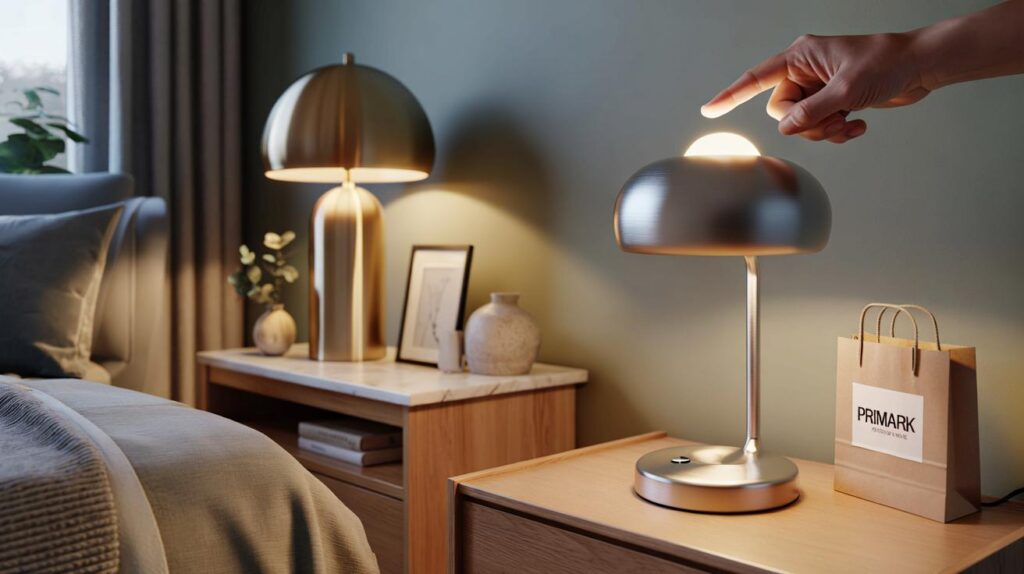
Few products at this price manage sleek lines, a small footprint and tidy finishing. This one does. The satin metal effect reads clean rather than flashy. The silhouette sits low and rounded, with a neat stem and a stable base. On a pale oak sideboard it adds polish. On twin bedside tables it delivers that subtle, boutique-hotel moment.
Price tag: 16 euros. Finish: soft metallic sheen. Control: touch on/off. Job: ambient accent, not task light.
The scale matters. A compact lamp avoids visual clutter and gives you options. It softens a reading nook. It lands on a window ledge without blocking light. It slots into a work-from-home corner where a ceiling pendant feels harsh.
Touch control for everyday ease
Touch activation removes fiddly switches. A light tap brings the glow, and another sends the room back to dusk. That simplicity brings a little theatre to evening routines. It also reduces cable wrestling on tightly packed shelves.
- By the bed: a low, warm glow that won’t jolt you awake.
- On a hallway console: a welcoming pool of light for late returns.
- Next to the TV: softer contrast so screens feel less stark.
- On a desk: a mood layer to counter cold overhead illumination.
Expect gentle brightness. Accent lamps like this usually sit around the 80–200 lumen mark with low-wattage LEDs. That level flatters texture and colour. It will not flood a room, and it should not try to.
How it stacks up against designer favourites
The inspiration is not accidental
The cues are familiar: rounded cap, slender base, satin or softly brushed metal tones. Similar shapes appear from established studios working in aluminium or brass. Here the materials feel lighter and the weight lower, yet the visual effect scratches the same itch: crisp outlines, a calm profile and a modern, reflective accent that plays nicely with wood, linen and boucle.
You notice the saving in materials, not in mood. The silhouette and finish carry the room at a glance.
| Feature | Primark touch lamp | Designer table lamp |
|---|---|---|
| Typical price | €16 (about £14) | £200–£450 |
| Finish | Satin metallic effect | Solid aluminium or brass |
| Control | Touch on/off | Touch, dimmer or app control |
| Brightness role | Ambient accent | Accent to mid-task |
| Perceived heft | Lightweight | Substantial |
Where it fits in real homes
The lamp lands well across styles. In a pared-back Scandinavian scheme it adds a metallic glint to pale timber and chalky walls. In boho rooms it offsets rattan and woven throws. In industrial spaces it balances concrete and black frames with a softer sheen. The small footprint makes pairs easy, which often matters more than absolute quality when you want symmetry by a bed or sofa.
Should you buy it now?
Pros and trade-offs
- Price stretches the budget further. Two or three units cost less than one designer shade.
- Touch control keeps surfaces clean and neat.
- Compact size suits tight shelves and narrow bedside tables.
- Gentle light flatters textiles and wall colour at night.
- Materials feel thinner than premium metalwork, so long-term scuffs may show sooner.
- Brightness supports mood and wayfinding, not needlework or paperwork.
Best used as a mood-setter or night-time marker, not as the main source of light in any room.
Stock, price and what to check in store
Availability shifts by branch, and finishes can vary by batch. Check for even coating on the shade, a stable base and a smooth touch response. If it is battery powered, ask about the cell type and replacement cost. If it is mains powered, examine cable length and plug position to avoid messy routing. Look for CE or UKCA marks, and keep the receipt; budget lights sometimes sell through quickly before a second drop arrives.
What this craze says about home lighting now
Small lamps, big impact
Rising energy awareness pushes households towards layers of low-watt light rather than single, bright central fittings. A small lamp with a low-power LED sips electricity. It also shifts the atmosphere without forcing a full rewire. Shoppers want that effect, and they want it without spending triple digits on a table-top statement.
Design influence flows faster than before. The same curves seen at trade fairs appear in high street aisles within months. When the scale is right and the finish competent, the feel of the room moves closer to premium, even if the materials sit a rung lower.
How to build a better scheme with one budget piece
Think in layers. Aim for three to five small light sources in a typical living room. Mix directions: one low by the sofa, one higher behind a plant, one on a sideboard, one near a window. Keep colour temperatures warm for evening spaces. Most people prefer 2700–3000K for comfort. If the lamp does not specify lumens, treat it as accent and set expectations accordingly.
- Quick test at home: switch on the lamp, then turn off overheads. If corners still feel gloomy, add a second accent rather than a brighter bulb.
- Colour rendering matters for art and textiles. Look for a CRI of 80 or higher when possible; budget pieces often meet this.
- If glare bothers you, angle the shade away from sightlines or place the lamp behind textured objects to diffuse the beam.
A few numbers to guide your choice
A typical accent lamp with an integrated LED uses around 2–4 watts. Run one for four hours nightly and you add roughly 1–2 kWh per month, depending on the exact LED and usage. That sits comfortably below many task lamps. If the unit accepts replaceable bulbs, choose a warm, low-lumen LED capsule to maintain the cosy effect.
Spend on placement, not just price. Where you set a 16-euro lamp can matter more than what you pay for it.
If you like the look but want more control, consider pairing it with a smart plug. A timed evening fade-in can make small rooms feel calmer. If you need higher output for reading, place a brighter task light nearby and let this lamp do the soft framing work. The combination gives you flexibility with minimal cost and no renovation.



Looks nice on paper, but 80–200 lumens is basically mood-only. Are we trading sturdiness for sheen again? My last budget lamp scuffed in 2 weeks, so I’m a tad sceptical.