
Gardens sound quieter in September, yet life teems under hedges and shrubs. The trick is knowing what to offer, and when.
As the breeding season fades and autumn edges in, many people notice fewer birds flitting to the feeder. Robins don’t disappear; they hunker down, conserve energy and forage closer to cover. With one simple food and a steady routine, you can bring them back to the open — and keep them returning, day after day.
September’s hush and what it means
Adult birds replace worn feathers in late summer. Moulting drains energy, so they stay quiet and avoid risks in the open. Natural food also peaks now. Hips, haws, ripening seeds and late insects provide easy pickings away from busy feeders. Summer migrants begin to leave. Young birds disperse to find their own territories.
Silence doesn’t mean absence. Birds are still nearby, keeping low while they refuel and rebuild.
That’s why consistent feeding matters. Short, predictable visits for dense calories help a moulting robin hold condition and claim its autumn patch.
The one food robins come back for
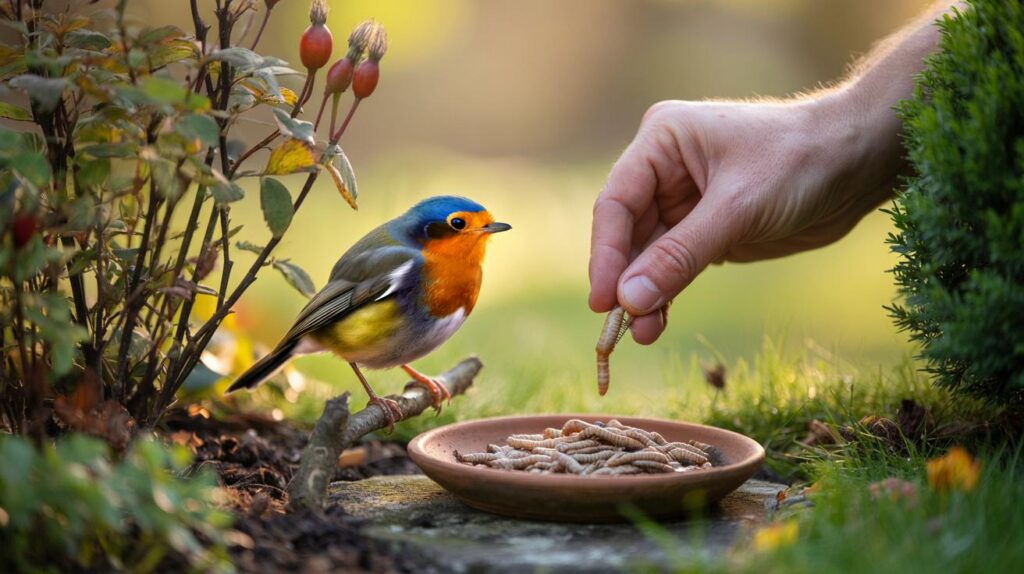
Mealworms. Dried or live, they pack protein and fat into a bite-sized package that robins spot and grab quickly. They resemble natural prey, digest easily and provide the concentrated fuel a small bird needs during cooler mornings.
Put a small handful of mealworms down at the same time and place each day and a robin will learn your timetable.
Choose dried mealworms if you want fuss-free storage. Rehydrate them in warm water for 10 minutes to soften the shell and add moisture. Live mealworms trigger instant interest but need a ventilated tub and a cool, dark shelf.
- Start with one heaped tablespoon (about 10g) each morning.
- Scatter on a ground tray or low, open dish near cover, not in the middle of a lawn.
- Wait nearby and keep still; robins tolerate people more than most garden birds.
- Top up in late afternoon if the dish is empty. Remove leftovers at dusk.
Costs stack up well. A 100g bag of dried mealworms often starts around £2.50–£3.00. At roughly 10g per serving, that’s 10 portions for about 25–30p each. Most gardens only need one portion daily to set a routine.
Other high-energy stand-ins
You can rotate mealworms with sunflower hearts, suet pellets and crushed peanuts. Variety spreads risk of disease and draws in more species, but keep portions modest to avoid waste. Fruit halves, such as apple or pear, also tempt robins and thrushes later in the season.
| Food | Why robins like it | Best way to serve | Approx price |
|---|---|---|---|
| Mealworms (dried) | Protein-rich, quick to eat | Rehydrate; offer in a shallow dish by cover | £2.50–£3.00 per 100g |
| Mealworms (live) | Natural prey, high uptake | Escape-proof tray; small amounts | £1.50–£2.50 per 40–50g |
| Sunflower hearts | Oil-dense, husk-free | Ground tray; mix with a few mealworms | £2–£3 per 250g |
| Suet pellets | Fast calories in cool weather | Scatter sparingly; avoid warm afternoons | £1–£2 per 250g |
| Crushed peanuts | Energy-dense, easy to grab | Crushed only; never whole | £2–£3 per 250g |
Set the stage for close, repeat visits
Robins prefer low perches, leaf litter and a quick dash to safety. Place the feeding spot near a dense shrub, not next to a busy feeder where larger birds dominate. Keep traffic — and cats — away during the first week as the robin learns the routine.
- Pick a sheltered corner with a view of a hedge, rose, or evergreen clump.
- Feed early, between first light and 9am, and again an hour before dusk if needed.
- Use a ground tray with drainage holes to keep food dry.
- Leave seed heads on perennials; they hide insects robins probe for between snacks.
Little and often beats heaped and soggy. Aim for clean dishes and empty plates.
Hygiene and safety that protect your robin
Disease spreads where food and droppings build up. Rotate feeding spots weekly and scrub trays with hot, soapy water. Rinse and air-dry fully. Change bird-bath water daily. If you notice lethargic birds or swollen eyes, pause feeding for a few days and clean everything before restarting.
- Discard uneaten food each evening; don’t top up over old remnants.
- Rinse rehydrated mealworms before serving; never leave them soaking outside.
- Avoid salty foods, whole peanuts on the ground, and sticky kitchen scraps.
- Raise water basins off the ground and keep them shallow with a non-slip stone.
What to expect and when
Robins are bold once they feel safe. Many start visiting within two to three days of a regular schedule, with peak confidence after a week. Early mornings bring the best chance of close views. A robin may perch within a metre as you place the dish if you move calmly and keep to the timetable.
Consistency builds trust. Same time, same place, small portions — that’s the winning pattern.
Extra gains for you and your garden
Mealworm feeding pays back in natural pest control. Robins hunt leatherjackets, small slugs and beetle larvae around borders. By anchoring a robin to your patch with a reliable snack, you reduce the need for pellets and sprays. A few minutes a day delivers visible results in healthier plants and livelier mornings.
Here’s a simple budget check. One 100g bag of dried mealworms used at 10g per day gives 10 days of feeding. At £2.70 per bag, that’s 27p per day, £1.89 per week. Add sunflower hearts twice a week for variety and you still stay near £3–£4 for seven days of prime robin theatre.
Make it a family project
Choose a window view, set a notebook by the sill and record times, weather and visits. Count how quickly the dish empties and adjust the portion the next day. Children can sketch the robin’s red breast, spot the flick of the tail and learn the difference between a soft “tik” alarm and a gentle sub-song in the hedge.
Two final tips widen your chances. Keep a low branch or bamboo cane as a “waiting post” beside the dish; robins like to scan and drop. And if cats roam, place brash piles or prickly clippings under likely ambush spots to cut surprise attacks. A small change in layout can save a bird’s life.



Tried the 10g at first light and again before dusk for three days — worked a treat. Our robin now waits on the “post” by the dish and hops in as soon as I step back. The £2.70 bag lasted a week, just as you said. Great, practical guide; kids defintely loved logging visits.