
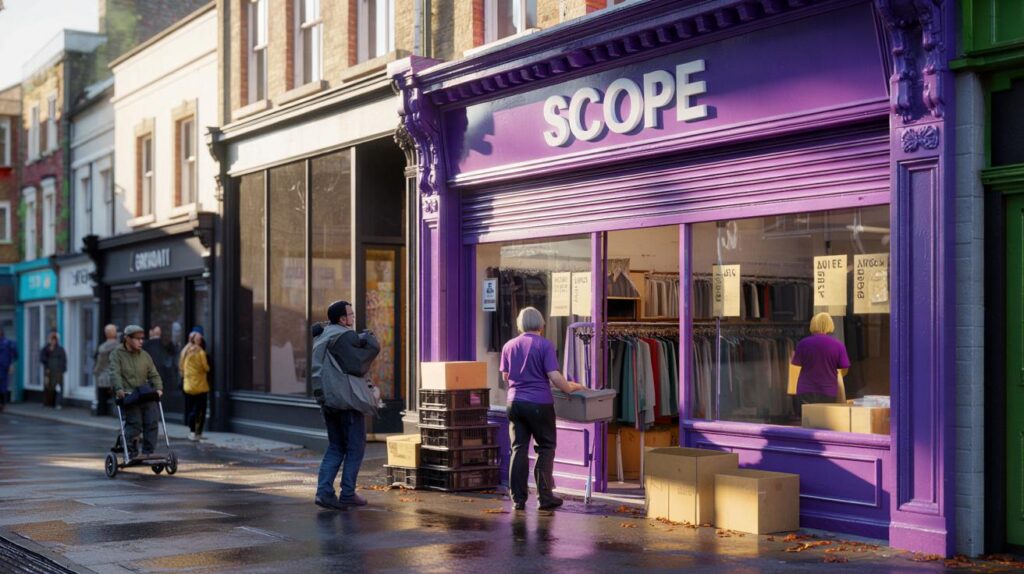
Shoppers, donors and volunteers face fresh uncertainty as a familiar charity brand trims costs and rethinks where it belongs next.
Scope, the national disability equality charity with 138 shops across England and Wales, has confirmed six further closures by late September after months of cuts and a formal consultation. The retailer says its high street presence will continue, yet the footprint is shrinking as costs outpace sales and more sites face review.
Six more closures in september
The latest round tightens the squeeze on local high streets already hit by empty units and rising costs. One branch has closed already, with five more to follow on set dates. That timetable will matter to donors planning drop-offs and to bargain hunters eyeing final markdowns.
Six sites will cease trading by 27 September, adding to a year of rapid contraction across the chain.
Which towns are affected next
- Alton – 30 August
- Bishop’s Stortford – 6 September
- Huntingdon – 6 September
- Newmarket – 6 September
- Beverley – 27 September
- Fleet – 27 September
These dates arrive after a fast sequence of earlier closures. Close to 50 stores went this year before summer’s end, with waves of shutdowns in March, May and the warmer months. Notices posted in windows typically confirm last trading days and discount periods ahead of final stock clearances.
Why scope is cutting back
Scope has been candid about the financial strain. Its annual report for the year to March 2024 records £24 million generated from trading, against £24.7 million spent running the shops. The charity has also forecast a £1.5 million loss for the current year from the retail arm following consultation.
£24m in shop income versus £24.7m in operating costs last year — a gap that now drives closures.
Management says the decision does not reflect the efforts of shop staff and volunteers. Instead, it points to rising energy bills, rent pressures and wage increases that have reshaped retail economics. Charity shops receive business rates relief, but many still face higher fixed costs, thinner donations in some areas and stiff competition from online reselling platforms.
77 of 138 stores remain under review, signalling a potentially deeper reshuffle of the charity’s network.
What the cuts mean for communities
Store closures hit in three places. Local fundraising falls when tills go quiet. Volunteers lose a weekly routine and a social hub. Town centres lose footfall, which can hurt neighbouring small businesses.
Scope maintains that its remaining shops still anchor its presence on the high street, acting as hubs for conversations with disabled people and supporters. The charity will aim to channel donations to nearby branches, and to keep community links alive through events, volunteering and services outside retail.
How the trend fits the wider high street picture
The closures echo a broader shift. Many retailers, including charities, report weaker midweek footfall, higher utility costs and pricier leases. Donated stock also fluctuates. Some areas receive plenty of clothing but far fewer small electricals and homeware, which usually command higher margins.
Analysts say charity retailers that thrive now do three things well. They curate better-quality stock, they list standout items online, and they keep occupancy costs under tight control by renegotiating leases or relocating to smaller units. Even then, some locations no longer stack up.
Key numbers at a glance
| Measure | Amount | Period |
|---|---|---|
| Shops nationwide | 138 | Current network |
| Sites under review | 77 | Ongoing |
| Forecast shop loss | £1.5m | This year |
| Trading income | £24m | Year to March 2024 |
| Shop operating costs | £24.7m | Year to March 2024 |
What you can do if your local shop is closing
Shoppers and donors still have options that make a difference. Small actions add up when a branch shuts.
- Check closing dates in-store before donating; some sites stop accepting stock a few days early.
- Use Gift Aid on donations where eligible; it can add 25% to the value at no extra cost to you.
- Redirect donations to the nearest open branch; staff will usually advise on alternative drop-off points.
- Keep receipts for closing-down purchases; many stores switch to final-sale terms with no returns.
- Ask about volunteer transfers; teams often help regular volunteers move to neighbouring shops.
- Look for online listings; high-value items may appear on the charity’s web store or marketplace accounts.
For staff and volunteers
Employees should receive consultation information detailing redundancy options, timelines and vacancies elsewhere in the network. Volunteers can request references and ask about roles at nearby shops or in non-retail activities, such as fundraising events or community outreach.
How closures may unfold in your town
Expect a final fortnight of price reductions, fewer new donations on the last days, and a rapid lift-out of fixtures once the doors close. Landlords will then seek new tenants, often with short-term pop-ups filling the gap. Some councils offer meanwhile-use schemes that keep units active while long leases are negotiated.
If a neighbouring branch remains open, it will usually broaden its catchment. That can bring a stronger stream of donations to one location, helping staff curate better rails and quicker turnover. Supporters who travel a little further can help that transition land smoothly.
Looking ahead
A leaner shop estate could free up cash for Scope’s core mission. If the charity stabilises trading, it can invest in digital fundraising, targeted donation drives and better logistics, including faster movement of premium goods to the right markets. The challenge lies in balancing fewer storefronts with a need to stay visible where disabled people and their families live.
Households can still stretch budgets and back a cause at the same time. Plan donations seasonally so shops receive coats before cold snaps and garden goods before spring. Pair that with Gift Aid and occasional cash donations at the till. Those choices keep the remaining stores viable and maintain a valued public presence on the high street.



Tough reading that 77 of 138 shops are under review. What criterias decide who stays—rent per sq ft, donation volumes, volunteer hours? If we knew the levers, locals could rally more stock and Gift Aid to keep a branch viable. Please be transparent so communities can act, not just read a notice on the window.
If trading brought in £24m and costs were £24.7m, why not renegociate leases or move to smaller units earlier instead of closing en masse? Strategy feels a bit late.