
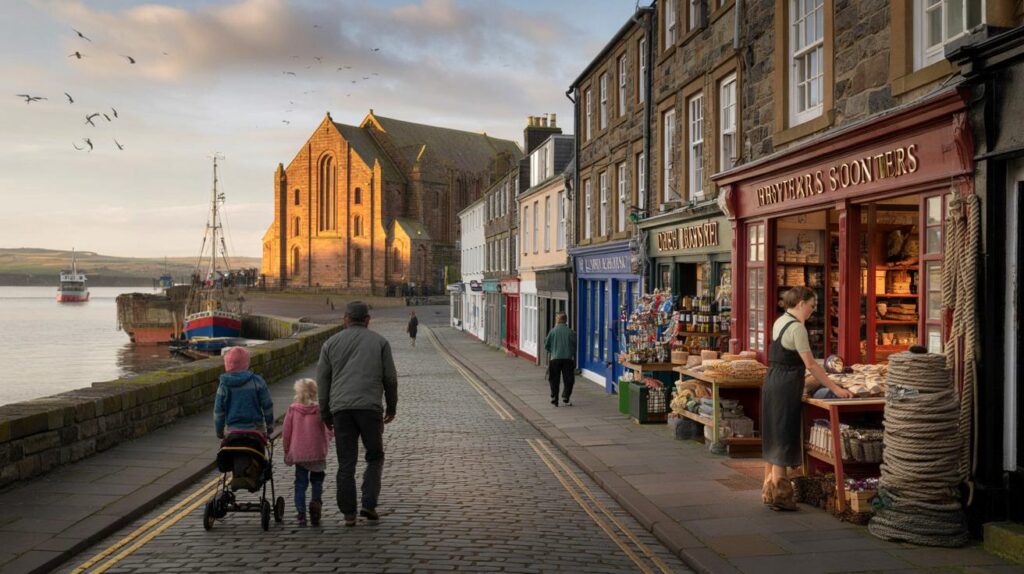
Salt on the breeze, stone underfoot, and shop windows that still change with the seasons: this town moves at human speed.
On Orkney’s largest island, a single street slips south from a colourful harbour, threading past cafés, galleries and centuries of trade. It is where island life meets everyday errands, and where visitors often realise a high street can be both practical and poetic.
A title earned by people, not prizes
Kirkwall’s main thoroughfare topped a nationwide poll in 2019, drawing the biggest share of public votes in Scotland. The recognition did not arrive by accident. Residents, traders and local groups have spent years tending buildings, curating shopfronts and pushing for streets where pedestrians feel welcome.
In 2019, the town’s high street captured 21% of a public vote, sealing its status as Scotland’s most beautiful.
The appeal runs deeper than looks. The high street still serves the community that keeps it alive. Schools, offices and ferry timetables shape the daily rhythm. Cruise calls bring bursts of footfall. Winter darkness brings quiet, rather than closure. That continuity gives visitors a snapshot of a working island capital rather than a stage set.
Fifty independents and a 170-year anchor
About 50 independent businesses trade in Kirkwall today. Many sit within historic buildings, and several have built reputations over generations. The best known is William Shearer, a family-run institution that has supplied islanders for roughly 170 years. It acts as grocer, hardware store and garden supplier, with an unexpected gun room tucked away inside. The message is clear: serve local needs and you endure.
The rest of the high street offers a careful mix. You find contemporary craft next to traditional knitwear. A butcher sits a few doors from a bookshop. Coffee is roasted, scones are baked, and the window displays change with the ferry schedule. Visitors often comment on how many owners stand behind their own counters, an increasingly rare sight on British high streets.
- Around 50 independent traders line the centre, many in family hands.
- William Shearer has traded for roughly 170 years as a multi-purpose store.
- Local food and craft producers supply shelves and shopfronts year-round.
- Seasonal hours flex with ferry arrivals and darker winter months.
Kirkwall’s shops feel lived-in rather than curated. The emphasis is on utility, quality and continuity.
St Magnus Cathedral and living Norse roots
Culture sits only a few strides from commerce. Saint Magnus Cathedral rises in banded red and yellow sandstone, a Romanesque landmark that took about three centuries to complete. Pilgrims once crossed the North Sea to visit. Today, school parties count the steps and visitors trace their fingers over the stone.
The town’s very name, Kirkwall, comes from the Old Norse “Kirkjuvagr”, the church on the bay. That origin still makes sense when you stand at Broad Street and look seawards. The cathedral anchors the view, yet the harbour remains the heartbeat.
Family-friendly stops a short stroll apart
The Orkney Museum sits nearby with artefacts spanning prehistory to the present. Finds from world‑renowned digs share space with fishing gear, wartime stories and everyday objects. Children spot carved stones and Viking chessmen. Adults linger over maps and letters that chart how islands adapt.
If your interests lean to spirits, two names matter. Scapa Distillery overlooks Scapa Bay. The distillery dates to 1885, with most buildings from the mid‑20th century, and it has welcomed visitors for tours for several years. The Orkney Distillery, a younger gin operation from 2018, adds a modern counterpoint. Together they make the town an easy place to taste the islands’ take on whisky and gin.
A harbour that keeps the town moving
Kirkwall’s harbour has shaped the high street’s fortunes for centuries. The historic basin once reached into the Peerie Sea. Engineering works in 1811 began a long process of improvement. Major updates in the late 1990s and in 2003 deepened berths and extended capacity, including new deep‑water facilities at Hatston.
Today, NorthLink Ferries connect Kirkwall to Aberdeen and Lerwick, while cruise ships call in season. That traffic sustains cafés in shoulder months and fills dining rooms on bright summer nights. It also creates a delicate balancing act. Traders plan staffing, stock and opening hours around daily sailings and the weather that rules them.
| Kirkwall at a glance | Key number |
|---|---|
| Public vote for Scotland’s most beautiful high street | 2019 (21% share) |
| Independent businesses in town centre | About 50 |
| Oldest long‑running retailer | ~170 years (William Shearer) |
| Cathedral construction period | ~300 years |
| Scapa Distillery established | 1885 (visitor access since mid‑2010s) |
| Harbour upgrades | 1811, late 1990s, 2003 |
What makes this high street feel different
Scale matters. Kirkwall concentrates a third of Orkney’s population within walking distance of the centre, so the high street must serve real life. You can buy a spade, a sandwich and a birthday card without leaving Broad Street. The result feels less like a visitor strip and more like a town that happens to welcome visitors.
Architecture helps too. Narrow closes, weathered stone and restrained signage create a coherent look. The seabreeze keeps the pavements fresh. Shopkeepers still sweep doorways. The cathedral bells set the rhythm. It looks good in photographs, but the experience is tactile. You notice the grain of wood in a door, the smell of baked goods drifting from a café, the weight of a knit jumper on a hanger.
Planning your visit
Ferries and flights dictate timing. Sailings can change with wind and swell, so build slack into your schedule. If you arrive by ferry, you can walk from the terminal to the centre or use local buses. The main sights cluster around the harbour and Broad Street, so you can see a lot without a car.
Weather shifts fast. A day can move from bright sun to sea‑haar in minutes. Pack for layers and keep a waterproof handy. Cobbles get slick in rain, so sensible footwear pays off. Many doorways sit flush with the pavement, and several attractions offer step‑free access, but older buildings can have narrow entries.
For a simple route, start at the harbour and follow the street south. Pause for coffee, visit the cathedral, then drift to the museum. Browse knitwear and books. Finish with a tasting at one of the distilleries. You can stretch that to a full day or fold it into a few well‑spent hours.
Making the most of a short stay
Pair the high street with a coastal walk to Scapa Bay for views and a change of pace. Seek out local produce at butcher and baker counters for a picnic. Ask shopkeepers about island-made goods; many can explain the maker’s story and materials. That conversation often becomes a highlight in itself.
If you have extra time, consider a day trip to Mainland’s archaeological sites after your town stroll. The contrast between Neolithic stone and a living high street adds depth to any visit. Balance your plans with the ferry timetable and daylight hours, which stretch long in summer and shrink quickly in winter.
Kirkwall rewards unhurried steps. The numbers impress; the moments between them linger.



Visited last summer; the street felt “practical and poetic” indeed. William Shearer blew my mind—groceries, garden tools, and a gun room? Only in Orkney. Loved owners behind the counters and the cathedral bells between coffee stops.
21% of a 2019 poll makes it “prettiest”? Sounds a bit thin—how many voters, what shortlist, what criteria? Not doubting Kirkwall is lovely, just wary of headline math.