
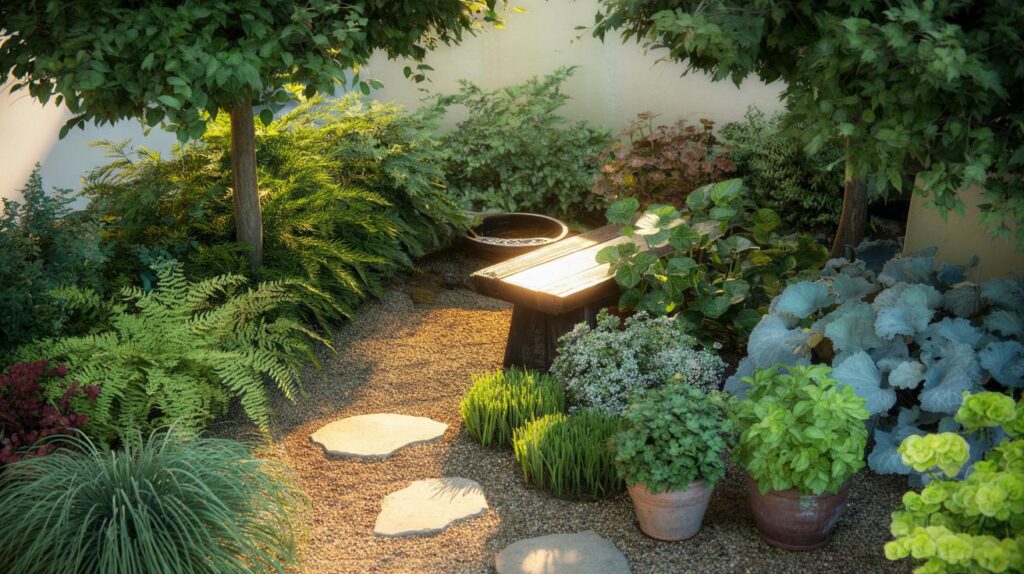
October’s soft light hits the quiet corners of your garden. Shade stops sulking and starts serving calm, low-cost drama.
Landscapers know those dim patches are not dead space. Cooler soil, steadier moisture and filtered sun suit a surprising cast of plants. With the ground still warm, late October gives roots a head start and gives you a graceful area that asks for less water and less fuss.
What landscapers plant when the sun fades
Designers lean on structure, scent and reliable foliage in shade. The goal is a quiet scene that stays legible from autumn to spring. Forget brittle bedding. Think layered greens, velvety leaves and small flowers that glow in low light.
Aromatics that cope with light shade
You can harvest under trees and along north-facing fences. These herbs stay flavourful and add texture where sun is scarce.
- Mint (in a buried pot to curb spread): loves moist, cool soil; pick until the first hard frost.
- Chives: clump neatly; purple spring heads feed pollinators and your omelettes.
- Parsley (flat-leaf): tolerates short, dim days; keeps its shape through mild winters.
- Coriander: sows and grows in cool spells; less likely to bolt than in July heat.
Plant culinary workhorses in dappled shade for easy harvests into early winter and fresh edges along paths.
Textured stalwarts for deep shade
Foliage carries the show when light drops. Contrasting shapes and sheens make a small corner read like a curated room.
- Hosta: broad leaves in waxy blues or limes; protect young growth from slugs.
- Ferns (dryopteris, athyrium): fine fronds soften hard lines and give height without bulk.
- Brunnera: heart-shaped leaves, often silvered; tiny blue flowers in spring feel luminous.
- Epimedium: wiry stems and evergreen leaflets; tolerates dry shade under thirsty trees.
- Bergenia: glossy paddles that blush in the cold; a tough front-of-border anchor.
- Heuchera and tiarella: scalloped foliage in plums, limes and silvers; neat mounds for rhythm.
- Carex and Hakonechloa: arching grasses for movement and fine contrast.
Mix three leaf sizes and three finishes—matte, glossy and silvery—to make shade look deliberate, not left over.
How to plant in late October without fuss
Soil holds warmth now, which helps roots knit before winter. You can plant small pots fast and with little kit.
Quick planting checklist
- Loosen the top 20 cm of soil; blend in 1 bucket of compost per square metre.
- Improve drainage where water lingers: add 2–3 litres of horticultural grit per planting hole.
- Soak each pot before planting; set crowns level with the soil surface.
- Water in at 10 litres per square metre to settle roots and remove air pockets.
- Mulch 5–7 cm with leafmould or chipped bark, keeping a 3 cm gap around stems.
- Space small clumpers at 30–40 cm; groundcover at 25–30 cm; grasses at 45–60 cm.
Shade beds usually need less water than open borders. Roots stay cooler and evaporation drops. As a result, you can cut irrigation by a third compared with sun-baked areas.
Expect roughly 30–40% less watering than a comparable sunny bed, and fewer scorch marks on leaves.
Build a small meditation nook under the canopy
Plants set the tone, but small details turn shade into a retreat. Think path texture, seat comfort and gentle scent.
Materials that thrive in damp shade
- Crushed gravel with a honey tone brightens gloom and drains quickly.
- Chunky stepping stones stop mud and frame planting pockets.
- Weathered timber or a cedar bench stays warm to the touch and looks calm.
- A shallow bowl of water doubles as a quiet mirror and wildlife drinker.
A simple 6 m² layout you can copy
Mark out a 2 m by 3 m patch under a tree with high canopy. Lay a narrow curve of stepping stones to a small bench. Plant in drifts of 3–5 for a calm rhythm.
- Back: 3 ferns, 3 hostas, 2 brunneras for height and mass.
- Mid: 5 heucheras, 5 epimediums for evergreen cover and spring sparkle.
- Front: 7 carex, 5 bergenias for edging and winter colour shifts.
- Pockets: mint in a sunk pot, 2 clumps of chives, a row of parsley along the path.
Buy 9 cm pots at £4–£6 each and you will spend about £110–£140. From year two, the same space avoids seasonal bedding costs and trims watering—this is where savings stack up.
Care through winter and early spring
Water, light and airflow
Water only when the top 5 cm of soil dries. Shade plants resent soggy roots in cold spells. Trim low branches if the canopy blocks all airflow. Even dim light helps winter photosynthesis on evergreen leaves.
Feeding and mulching
Feed lightly in March with an organic, slow-release fertiliser. Renew mulch to 5 cm as worms pull last year’s layer down. In windy sites, peg down breathable jute mats to keep mulch in place until it settles.
Lift heavy mats of fallen leaves off small rosettes by hand; leave a thin layer to act as free mulch and habitat.
Risks and gains you should weigh
Common pitfalls in shade
- Slugs on hostas: ring crowns with 6 mm gravel, use wildlife-friendly ferric phosphate pellets, and water early in the day.
- Mint creeping everywhere: corral it in a pot with the rim 2 cm above soil level.
- Waterlogging in clay: add grit to holes and raise the bed edge by 5–8 cm with composted bark.
- Starved plants under thirsty trees: add compost every autumn and water deeply, less often.
Benefits that show up fast
- Less irrigation: cooler soil saves time and water, and roots suffer fewer stress swings.
- Quieter views: layered leaves dampen noise and give winter structure.
- Wildlife boost: ferns and grasses shelter insects; seed heads feed birds.
- Lower spend: perennials return each year, cutting the annual dash for bedding plants.
A well-planned 6 m² shade bed can replace £150 of annual bedding and cut 1,500–2,000 litres of irrigation per season.
Numbers that make the case
Run a quick scenario. Say you used to replant 60 bedding plants in a gloomy side bed each spring at £2.50 each. That is £150 every year, plus roughly 40 litres of water a week through hot spells. Switch to 28 shade perennials at an upfront £120–£150. From year two, you skip most of that bedding bill and reduce watering by a third. Even with a £20 top-up of compost and mulch, you are around £120 better off each year, with time saved on daily hose work.
Water meters vary, but shaving 1,500 litres from a season in a small area eases bills and restrictions when dry spells bite. The plants also shield soil, cutting weed germination, which trims maintenance minutes on busy weekends.
Small tweaks that shift the mood
Colour, scent and contrast
- Use silvered brunnera and variegated carex to bounce weak light back.
- Add one fragrant touch near the seat: a pot of wintergreen or a bowl of crushed bay leaves.
- Stage contrasts: glossy bergenia against feathery ferns; fine grasses next to bold hosta paddles.
Keep tools light. A hand fork, a bucket of compost and a watering can will carry most of the work. The rest comes from the site itself: steady moisture, muted sun and a calmer pace through the colder months. That is why landscapers treat shade as a gift, not a gap.
If you want to test your layout, sketch planting ovals to scale on cardboard and set them on the ground. Walk the path you intend. Sit where the bench would go at 4 p.m. and listen. Adjust spacing until each plant gets room to grow, and you still enjoy a clear line of sight. This small rehearsal avoids crowding, saves money on replacements and keeps that October promise alive when spring returns.



I followed a similar shade plan last October—hostas, dryopteris ferns, brunnera—and it definately paid off. Cooler soil meant I watered far less, and the bergenia blushed beautifully by December. The 5–7 cm mulch layer was the game‑changer for me. Only hiccup: slugs had a field day until I switched to ferric phosphate pellets. Solid, practical advice.