
Rooms feel colder while bills climb? Hidden dust can sabotage warmth long before you touch the thermostat on autumn nights.
As the chill sets in, attention turns to why some rooms never quite warm up. Engineers point to an overlooked culprit: dust baked onto radiators. One everyday bedroom device, used smartly, can free that trapped warmth and nudge comfort back up.
Why dust is stealing your heat
Radiators warm rooms by drawing cooler air in at the bottom and pushing warmer air out at the top. A film of fluff and grey dust interrupts that cycle. Heat stays stuck against metal rather than moving through the room. The surface can feel hot to the touch while the space remains oddly cool.
Dust acts like a blanket on the metal: it slows airflow and locks warmth where you least need it — inside the radiator.
Every time warm air rises and cool air sinks, tiny particles spiral toward the fins and grooves. Over weeks, that debris scorches on, hardens and clings. Leaving it there means longer boiler run-times, sluggish warm‑up, and extra noise from pumps working harder.
The £0 bedroom item that shifts hidden grime
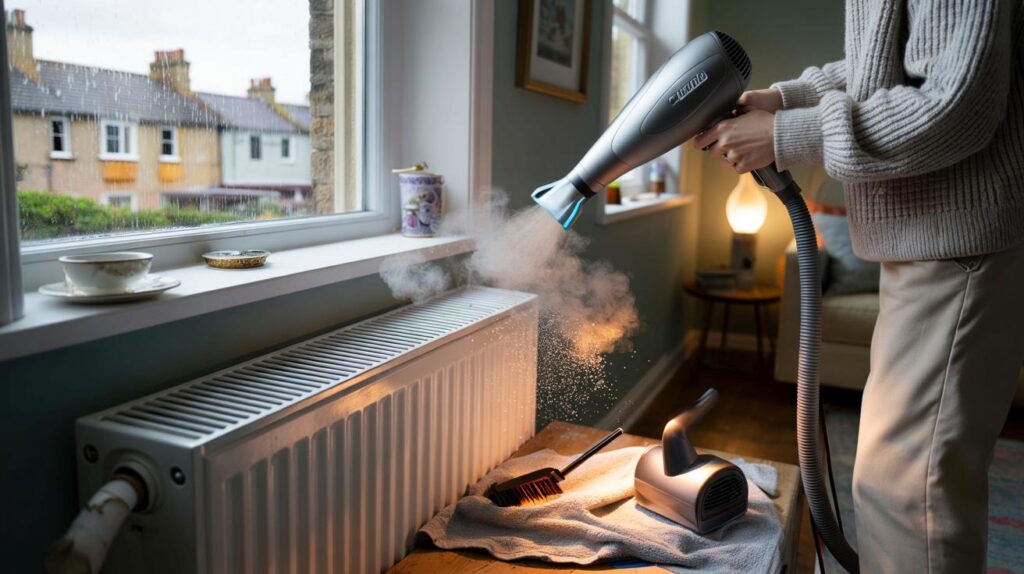
Specialists at UK cast‑iron radiator makers say a hairdryer, used on a cool or low setting, can blow out stubborn dust from the back, top vents and between columns. You already own the tool, so the outlay is nothing. The method targets the bits a cloth cannot reach, and it takes minutes.
Keep the heat off, let the metal go cold, set your hairdryer to cool, and aim the airflow down through the vents.
Set-up in 10 minutes
- Hairdryer with a cool or low setting
- Vacuum cleaner with nozzle attachment
- Long, thin brush or flexible duster
- Bucket with warm water and a little washing‑up liquid
- Old towel or sheet to catch debris
- Sponge and a soft cloth for drying
Step-by-step: make your radiator breathe again
Work methodically. You want dust to travel one way: down to your towel and into the vacuum, not back into the air you breathe.
Aim down, not out. Cool air pushes debris to the floor where your vacuum waits. Hot air just spreads it around the room.
Safety first and common mistakes
- Never work on a hot radiator. Heat attracts dust and increases burn risk.
- Use the cool setting. Warm blasts lift dust into the air and undo your work.
- Keep the hairdryer and plug away from water. Dry your hands between wipe and blow stages.
- Do not poke nozzles inside narrow slots. Keep at least a hand’s width away to avoid damage.
- Unplug the hairdryer as soon as you finish the blowing stage.
Will this cut bills and how often should you do it?
A clean radiator moves air more freely, so rooms reach set temperature sooner. That can shorten boiler firing times and reduce how high you turn the thermostat. The gain depends on how dusty your home gets, the type of radiator and furniture placement. Many households find a light wipe monthly and a deeper clean at the start and midpoint of the heating season keeps performance steady.
If you can see a grey layer in the top grill or dust bunnies at the back, you are leaving heat on the table.
Beyond the hairdryer: quick wins for warmer rooms
- Bleed radiators that gurgle or have cool tops. Use a radiator key, catch drips, and stop as soon as water flows steadily.
- Balance the system so distant rooms heat evenly. Slightly close lockshield valves on radiators that warm too fast.
- Clear a 20–30 cm gap in front of radiators. Sofas and heavy curtains block circulation.
- Add reflective panels behind external‑wall radiators to reduce heat lost to the wall.
- Shut doors and seal draughts under them with a simple excluder. Warm air then stays where you need it.
- Set thermostatic radiator valves sensibly: bedrooms lower than living rooms, spare rooms lower still.
Example timetable you can copy this weekend
| Task | Time | Tools | Payoff |
|---|---|---|---|
| Quick wipe and vacuum | 5 min | Sponge, vacuum | Removes loose dust and fluff |
| Hairdryer blast on cool | 5–10 min | Hairdryer, towel | Clears hidden lint from vents and back |
| Soapy wipe and dry | 5 min | Bucket, cloth | Leaves metal clean and reduces rust risk |
| Bleed noisy radiator | 3–4 min | Radiator key, cup | Restores hot top and steady flow |
When a clean is not enough
Cold patches at the bottom point to sludge, not dust. That needs a system flush or at least targeted radiator removal and rinse. Frequent pressure drops, black water from bleed valves, or leaks around valves also require a heating engineer. Do not keep forcing the boiler to compensate for a blocked circuit.
A couple of extra pointers before you switch back on
Check the towel is clear, the floor is dry and air paths around the radiator are open. Set thermostatic valves to a sensible number and run the heating for 10–15 minutes. Feel for even warmth from bottom to top and listen for quiet, steady operation. If you share the home with an allergy sufferer, repeat the hairdryer‑and‑vacuum routine more often during peak pollen or pet‑shedding periods.
One last thought for renters and flat‑dwellers: if you cannot access the rear easily, a slim radiator brush and a careful cool‑air blast from above still shift a surprising amount of compacted lint. Small gains stack up. A few minutes with a bedroom hairdryer can restore airflow, shorten warm‑up time, and make that next cup of tea feel a lot cosier.



I just did this on my old double panel rad: heating off, long brush, then hairdryer on cool over the top vents. The amount of grey fluff that came out was disgusting, but the room warmed faster on the next cycle. It’s not magic, but defintely helped airflow. Pro tip: vacuum as you go or you’ll chase dust bunnies around the room.