
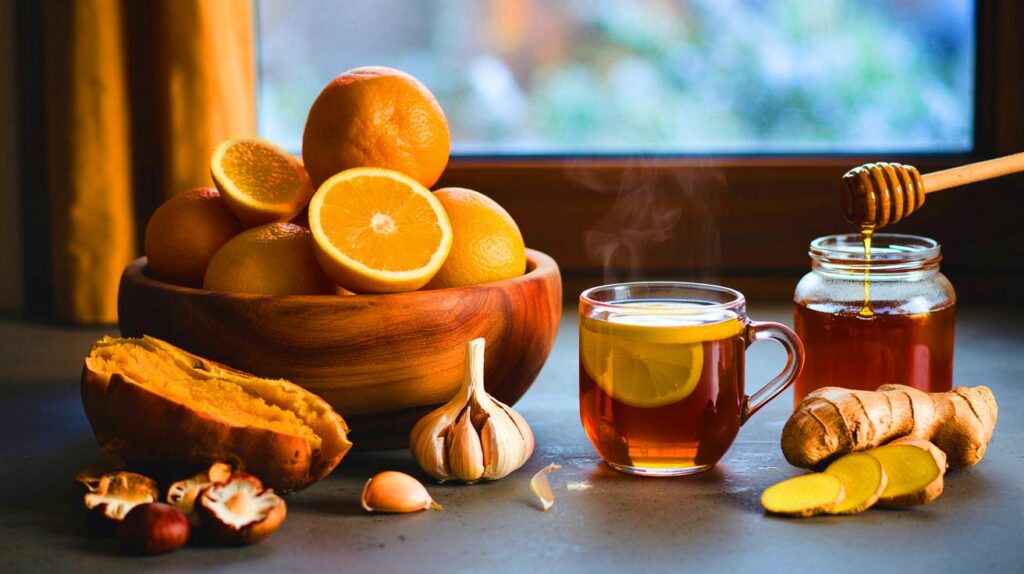
Cold mornings return. Let your kitchen shield you this season with simple, smart choices that keep energy steady and sniffles away.
Seasonal viruses rise when days shorten and radiators click on. Dry indoor air and fewer daylight hours can drain resilience. Food will not replace sleep, movement or vaccines, but the right basket can support immune cells, steady energy and gut balance. Here are six autumn staples—affordable, easy to find, and flexible—to put back on your table today.
Why food matters when temperatures drop
Immune cells need vitamins, minerals and amino acids to function. Antioxidants limit damage from everyday stress. Fibre feeds gut microbes that train immunity. Warm, hydrating meals also soothe airways irritated by cold air. Autumn produce happens to pack many of these boxes at once.
Build each plate with colour, fibre and warmth. Think citrus for vitamin C, roots for carotenoids, fungi for beta‑glucans.
The six autumn picks you can count on
Citrus fruits
Oranges, clementines, lemons and grapefruit return to peak flavour now. They deliver vitamin C, which supports the normal function of immune cells and helps iron absorption. In the UK, adults need about 40 mg of vitamin C daily; one medium orange can cover that in one go, while two clementines come close.
Try segments in a fennel salad, lemon in hot water after a cold commute, or grapefruit with a drizzle of honey for a quick dessert.
Target: 1 orange or 2 small clementines a day to meet typical vitamin C needs and ease tiredness.
Garlic
Garlic brings flavour and useful sulphur compounds such as allicin. These compounds have been studied for antimicrobial activity in lab settings. In the kitchen, garlic also nudges savoury dishes to need less salt. Lightly crushed and rested for a minute before cooking, it keeps more of its aroma.
Stir into soups, rub on toast with ripe tomatoes, or whisk into a lemony vinaigrette for roasted vegetables.
Practical dose: 1–2 cloves a day, raw or lightly cooked, blended into meals you already make.
Ginger
Fresh ginger offers gingerols and shogaols with anti‑inflammatory and warming properties. A mug of ginger infusion helps when you feel chilled after a wet school run. It also pairs well with citrus and honey for a soothing evening drink.
Grate a 2–3 cm piece into stir‑fries, porridge with pears, or a pan of carrot and lentil soup. It can ease digestion after richer autumn roasts.
Mushrooms
Button, chestnut or shiitake mushrooms supply beta‑glucans, a type of fibre linked to immune modulation. They also bring B vitamins and selenium. Some UK retailers offer mushrooms exposed to ultraviolet light; 100 g of those can provide around 5–10 µg of vitamin D, close to the daily 10 µg suggested in autumn and winter.
Pan‑fry with thyme, garlic and a splash of cream for toast, or tumble into risotto. If you forage, use expert verification. When unsure, leave it on the forest floor.
Keep it safe: only eat mushrooms you buy or those confirmed edible by a qualified expert.
Sweet potato
Sweet potatoes are rich in beta‑carotene, which the body converts to vitamin A, supporting mucous membranes in the nose, throat and lungs. A medium baked sweet potato (about 200 g) can provide more than your daily vitamin A requirement. It also adds fibre for a steadier appetite and gut health.
Roast wedges with paprika, mash with a splash of milk and nutmeg, or cube into a traybake with onions and mushrooms.
Honey
Honey brings a soothing texture and natural antimicrobials. A spoon in warm lemon water can calm a cough and encourage fluid intake. It also offers polyphenols, which act as antioxidants, and a quick energy lift for late‑afternoon slumps.
Swirl a teaspoon into yoghurt, glaze carrots, or balance a ginger and soy dressing.
Safety first: never give honey to children under one year. Store in a cool cupboard; it keeps for months.
Your two‑minute plan for a tougher week
- Breakfast: yoghurt with orange segments and a drizzle of honey.
- Lunch: mushroom and garlic omelette with a green salad.
- Snack: hot ginger and lemon infusion.
- Dinner: baked sweet potato with roast chicken and pan‑fried mushrooms.
- Before bed: warm water with lemon; keep hydrated to soothe airways.
At‑a‑glance guide
| Food | Why it helps | Suggested serving | Quick use |
|---|---|---|---|
| Citrus fruits | Vitamin C for normal immune function; aids iron absorption | 1 orange or 2 clementines daily | Segments in salad; hot water with lemon |
| Garlic | Sulphur compounds studied for antimicrobial activity | 1–2 cloves a day | Crush into vinaigrette; rub on toast |
| Ginger | Warming spices with anti‑inflammatory properties | 2–3 cm root (~10 g) | Brew tea; grate into soups or stir‑fries |
| Mushrooms | Beta‑glucans; B vitamins; vitamin D if UV‑exposed | 80–100 g cooked | Pan‑fry with thyme; add to risotto |
| Sweet potato | Beta‑carotene for vitamin A; fibre for gut health | 1 medium (about 200 g) | Roast wedges; mash with nutmeg |
| Honey | Soothe cough; antioxidants; quick energy | 1–2 tsp as needed | Stir into yoghurt or dressings |
Small details that make a big difference
Preparation boosts the benefits
Crush garlic and wait a minute before cooking to form allicin. Keep citrus peels for zest; the outer zest carries fragrant oils. When brewing ginger, slice thinly to increase surface area. With mushrooms, avoid soaking; brush clean and cook on a hot pan to keep texture.
Storage and seasonality
Garlic keeps for weeks in a cool, dry place. Sweet potatoes prefer the cupboard, not the fridge, and last about a week. Mushrooms are best within three days; store in paper, not plastic, to avoid sogginess. Honey crystallises over time; stand the jar in warm water to liquefy. Citrus holds well in the fridge crisper.
Who should take care
People on blood‑thinning medication should speak to a clinician before taking large amounts of garlic or ginger. Those with diabetes can use honey sparingly, as it counts as free sugar. Children under one must not have honey. If you have pollen or bee product allergies, avoid honey. For mushroom foraging, only eat what a qualified expert confirms.
When in doubt, keep portions modest and let variety do the heavy lifting.
Extra ways to build seasonal resilience
Hydration supports the body’s first lines of defence. Aim for warm liquids through the day: broths, herbal infusions, lemon water. Add a pinch of salt to soups if you sweat during exercise, as sodium helps maintain fluid balance.
Protein helps the body build antibodies. Pair these foods with eggs, beans, lentils, fish or lean meat. A mushroom and bean stew with garlic, ginger and sweet potato covers both protein and fibre in one pot.
From October to March, sunlight is limited in the UK. Public health guidance suggests 10 µg of vitamin D daily during this period. UV‑exposed mushrooms contribute, and fortified milks or drops can top up the rest.
Finally, map these staples to a budget. Buy a 1 kg bag of sweet potatoes for trays and mash through the week. Choose a net of clementines for lunchboxes. A bulb of garlic, a thumb of ginger and a punnet of mushrooms cost little, yet flavour many meals. That mix gives variety, colour and the steady support your immune system appreciates when the wind turns cold.



Clear, practical and actually doable. I love the ‘1 orange / 1–2 cloves / ~80–100 g mushrooms’ cheat notes and the two‑minute plan. Printing this for the fridge—thanks for keeping the claims balanced (food support, not magic) and the tips budget‑friendly.