
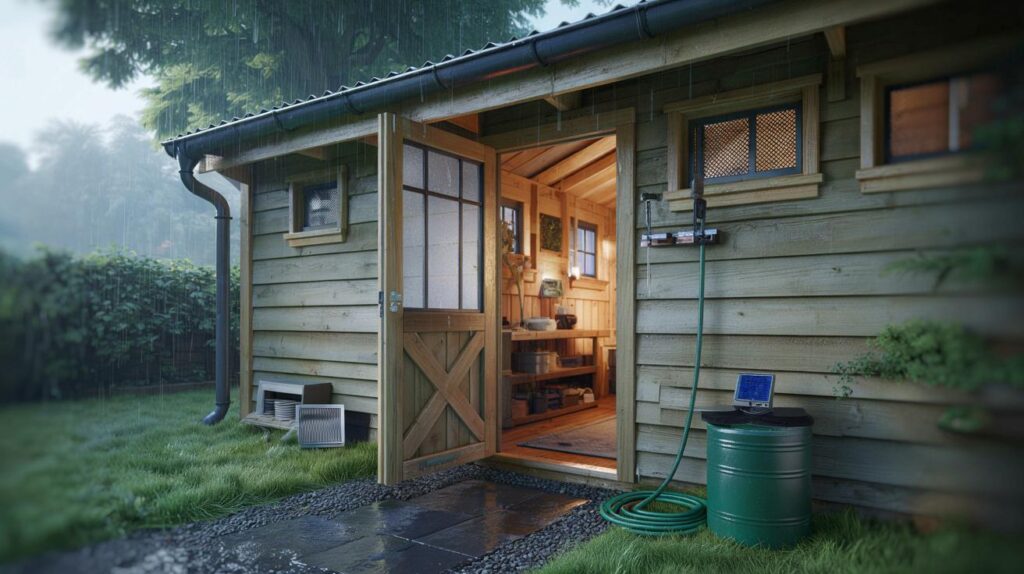
Rain taps the roof, the light goes early, and your shed turns clammy. Spades spot with rust, the mower smells sour, screws cake with white fuzz. We’ve all had that moment when a once-proud toolkit feels soft round the edges. Winter isn’t just cold. It’s wet in ways you don’t always see.
I stepped into a neighbour’s shed just after dawn, breath hanging like a cloud. The padlock was cold enough to bite. Inside, a sparkle of condensation ran from the rafters to the bench, dropping onto a coil of extension lead. The metal shelf felt greasy with damp, and a trowel left a brown print on my palm. The radio cracked as I clicked it on, then died with a sigh. There was a slug track along the skirting like a silver ribbon. Something had clearly moved in. The cure starts before the frost.
Why winter eats sheds — and tools — from the inside
Your shed is a thin box of air with a cold hat on. When outside air chills and gets wetter, your shed follows, huffing out any warmth at night. Then the metal bites back. Moist air hits cold steel, aluminium, even screw heads, and turns to beads. That’s your enemy: tiny drops, every night, for months. They sit quietly until a hinge freezes, or a saw blade blooms orange.
Last January, a reader in Leeds sent me a photo of a chisel set—beautiful once—now furry with rust. He’d oiled them in summer and left them in their timber case. Two weeks of grey drizzle later, the hinges bloomed, then the edges. In much of the UK, winter humidity hovers near 80% on dull days, which is basically a slow bath for metal. The shed didn’t leak. It sweated. That’s the difference that catches people out.
Think of it as a dew point story. Warm air holds more vapour; cold surfaces force it out. If your roof felt is thin, the underside is like a fridge door. You need two things that seem opposites: less air swapping and better air swapping. You cut draughts at the edges so rain and fog don’t blow through. You add gentle, deliberate ventilation so moist air can leave in a controlled way. That balance saves tools. It also keeps musty smells from settling in.
Smart fixes you can do in a weekend
Stop the leaks first. Walk the shed in daylight with the door closed and phone torch on. Any light at joints is a damp invitation. Fit closed-cell weatherstrip around the door. Replace roof felt that’s cracked with a single sheet of EPDM rubber; glue, roll, trim. Add a gutter to the drip edge and run a short hose into a water butt or a shingle-filled trench. Keep ground splash off the base with a gravel skirt, 30–40 cm wide. Small changes. Big difference.
Now lift the floor out of harm’s way. Lay a damp-proof membrane on the base and set treated 50 mm battens on it as bearers. Drop the floor back on top, or add a sheet of 18 mm ply if the old boards are tired. Create airflow underneath with spacers at the perimeter. Raise heavy kit—mower, compressor—on pallets or rubber feet. Let’s be honest: no one moves everything before every forecast. Build in the safety margin so you don’t have to.
Let the shed breathe. Drill two trickle vents high up on opposing walls, soffit level if you can. Fit louvred covers with insect mesh. On the warmest wall, use a slimline passive vent; on the cooler wall, a slightly larger round vent to draw the crossflow. If you line the shed, staple a breathable membrane to studs, then add 25–50 mm insulation and thin ply. Leave a tiny gap at the top for air to slide out. A small solar fan on the sunward wall gives a nudge on bright days. Winter always finds the weak spot.
“Insulate lightly, ventilate always. The moment you trap moist air, you’re making soup for steel,” says Kate Morris, a joiner who keeps chisels older than most sheds.
- Quick wins: silica gel in tool drawers, a VCI strip in the saw cabinet, a light oil wipe on blades.
- Avoid: sealing every crack without adding vents, bubble wrap as your only lining, cardboard boxes on the floor.
- Upgrade next: EPDM roof, guttering into a butt, a raised rack for timber.
Keep tools dry, happy, and ready — without faff
Build a “dry zone” on one wall. Screw a French cleat strip at eye level and hang pegboards or plywood panels. Put all metal hand tools here, away from the floor and from exterior walls. Line drawers with waxed paper, tuck in vapour corrosion inhibitor tabs, and label a tiny spray bottle of light machine oil. After use, one wipe, one spritz, done. A cheap shed-safe dehumidifier tub under the bench mops up the rest.
Protect the metal. Mix two teaspoons of baking soda with a mug of warm water and give rust-specked tools a soft brush. Dry with a hairdryer on low. Wipe with a rag charged with camellia oil or a light mineral oil. For garden kit—spades, shears—use boiled linseed on wooden handles and a smear of grease on blades. Park the wheelbarrow upside down so rain drains away. Store string, seeds, and sandpaper in clip-top boxes. Moisture loves paper more than you think.
Watch the condensation triggers. Big swings make big drips—sun on a cold roof is the villain. If you’ve lined the roof with a thin layer of PIR or multi-foil, tape the seams and keep a 20 mm air gap beneath the deck. Consider a tiny tubular heater with a thermostat for the coldest snaps, just to lift the temperature a degree and dodge the dew point. Protect the routine as much as the gear.
“I want to grab a spanner and go, not babysit it,” a cyclist told me, pointing at his wall rack, tools gleaming under a vented eave.
- Routine: wipe, hang, close; crack the vents; empty the dehumidifier tub each fortnight.
- Once-a-season: roof scan, gutter clear, oil top-up, check for earth-touching timber.
- When it rains sideways: door strip check, threshold brush, mat swapped for rubber.
Make winter-proofing a simple rhythm
Think of your shed like a small boat on a grey sea. It doesn’t need luxury, just a tight skin, a way for air to move, and a habit you can keep. Swap one thing at a time. Roof this month. Vents next. Then the floor lift. Each change shrinks the damp window and gives your tools a longer life than their packaging ever promised.
There’s a quiet pride in opening the door on a wet Tuesday and breathing clean, dry air. Shelves that don’t film over. Hinges that stop complaining. Timber that smells like timber. It’s not about perfection. It’s about directing the weather rather than enduring it.
Set it up so the basics happen without you thinking. The vent is always open. The rack keeps metal off cold walls. The gutter sends water away to a butt you’ll be glad of in June. You’ve nudged the odds in your favour. The shed notices.
| Key points | Details | Interest for reader |
|---|---|---|
| Seal and shed water | EPDM roof, gutter to butt, gravel skirt, door weatherstrip | Stops leaks before they start and reduces splash-back rot |
| Control condensation | High/low vents, light insulation, small solar fan, avoid cold bridges | Less night-time sweating, fewer rusty surprises |
| Protect tools smartly | Wall rack “dry zone”, VCI tabs, light oil, raised storage | Ready-to-use kit with minimal upkeep |
FAQ :
- Can I heat a shed to stop damp?A tiny tubular heater with a thermostat can nudge temperatures above the dew point. Pair it with vents, or you’ll just make warm, wet air.
- What’s the cheapest quick fix?Door weatherstrip, two louvred vents, and a raised pallet platform. Under £40 if you shop smart, and a big jump in dryness.
- Why are my windows dripping?Cold glass is a condensation magnet. Fit trickle vents, add a thin acrylic secondary pane with a gap, and keep metal tools away from that wall.
li>Is a metal shed worse than timber?Metal sheds cool fast and sweat more, but they’re fine with vents and a lined roof. Timber breathes, which helps, yet rots if splash-back and soil contact aren’t managed.
- What oil should I use on tools?Light mineral oil or camellia oil for steel; boiled linseed for wooden handles. A thin film beats goopy layers that attract dust.



Great read — my chisels thank you!
Does EPDM really beat torch‑on felt in a gale? My shed faces the Irish Sea and glue/adhesives seem to peel when it howls. Any long‑term experience, or am I better off with corrugated + proper flashing?