
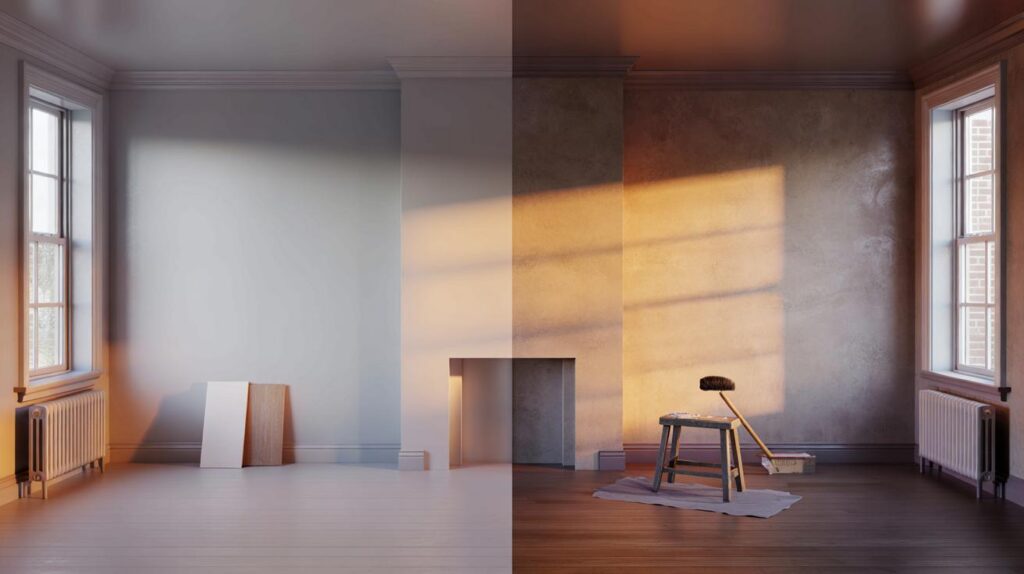
You stare at flawless paint yet the room feels colder as daylight thins. The new season asks different things of walls.
Across Britain, designers are walking away from glass-smooth finishes and towards surfaces that catch light, soften acoustics and tame winter dryness. The shift looks aesthetic. It also reads practical, hygienic and surprisingly affordable when you compare it with a full refit.
When smooth walls lose their shine
Flat paint gave homes a clean, minimal look for a decade. By 2025, many homes feel sterile under it. As the sun sits lower, smooth walls bounce light harshly and show every scuff. Rooms look bigger, yet they sound sharper. The mood cools instead of soothing.
Texture solves those problems by shifting how light and sound behave. Micro-shadows break glare. Tiny ridges scatter reflections. Drier winter air feels less severe when walls breathe instead of sealing moisture in or out. People notice the change before they can name it.
Texture is not clutter. It is light control, warmth and quieter rooms, all for less than most furniture swaps.
Light, shadow and the autumn test
October light exposes the truth of your paintwork. Smooth emulsion highlights roller lines and patched repairs. Lime plasters, mineral washes and soft patinas mask repairs by design. Their variation looks intentional. A single north-facing wall gains depth without darkening the scheme.
Air, humidity and comfort
Lime-based materials absorb and release moisture. That buffering reduces condensation on cold mornings and curbs stale odours after the heating clicks on. Kitchens and halls benefit most. Bathrooms gain too when you choose tadelakt or microcement in splash zones.
What decorators are choosing instead
Designers favour materials that work hard, age gracefully and cost less than ripping out kitchens or buying new sofas. Here’s how popular options compare in late 2025.
| Finish | Typical cost (UK, per m²) | Look and feel | Best for |
|---|---|---|---|
| Lime plaster | £28–£50 | Soft movement, matte, breathable | Living rooms, bedrooms, hallways |
| Venetian stucco | £45–£90 | Silky depth, subtle sheen, layered | Feature walls, formal dining spaces |
| Tadelakt | £80–£120 | Polished stone feel, waterproof | Showers, splashbacks, cloakrooms |
| Mineral wash (limewash/badigeon) | £8–£18 | Cloudy movement, heritage vibe | Bedrooms, calm living spaces |
| Microcement | £60–£95 | Contemporary concrete look, wipeable | Kitchens, utility rooms, entries |
| Textured paint (rolled) | £6–£12 | Subtle grain, fast upgrade | Rentals, quick weekend refresh |
Most households only need one textured wall per room. Aim for 2–3 tactile surfaces across a space to balance rhythm.
Why people are switching in 2025
Money drives part of the turn. A textured feature can start under £200 in a small bedroom, including paint and tools. That same money rarely buys a quality lamp, let alone a chair. Maintenance also tilts the argument. Matte mineral finishes touch up invisibly. Standard emulsions often flash or streak when patched.
Health and sustainability matter too. Lime and mineral paints carry low odour and low VOCs. They support older walls by letting them breathe. That reduces peeling and mould risk on cold corners. Families report quieter rooms and warmer vibes without adding clutter.
Colour that behaves
Textured finishes hold pigment differently. Earth tones sit rich without looking flat. Deep greens and rusts feel layered, not heavy. Even whites gain character under raking light. For rentals, a bone or oatmeal limewash lifts value while keeping a neutral brief.
How to choose the right texture for your room
- Match texture to light. North rooms suit warmer, cloudier washes. South rooms can take cooler, finer plasters.
- Test at scale. Paint two A2 boards, add a light skim of filler on one, and view at 8am, 1pm and 7pm.
- Decide the cleaning need. Busy halls prefer wipeable microcement or harder stucco. Bedrooms favour soft mineral washes.
- Balance materials. Pair textured walls with plain curtains and simple timber. Avoid heavy grain on every surface.
- Keep sheens low. A matte or eggshell on woodwork avoids clashing with the wall’s natural movement.
Before committing, shine a torch across your sample at a shallow angle. If you like the shadows, you’ll love the wall.
Fast routes to richer walls
You can lift a room in a weekend with small, targeted moves. Start with a single chimney breast or the bedhead wall. Pick a tone you already use in textiles. Stay within two shades to keep the room calm.
- Mineral wash over existing matte emulsion after a light sand and dust-off.
- Skim-coat a 1 m strip as a tester, then extend if you like the light play.
- Wax and buff a tadelakt niche instead of retiling an entire cloakroom.
- Roll a subtle sanded paint in an entry where bags and coats mark the wall.
Common pitfalls and how to avoid them
Don’t chase heavy texture on weak plaster. Hairline cracks will telegraph. Repair and prime first. Resist mixing too many techniques in one view. One hero wall, one supporting texture and calm joinery works best. Watch drying times. Mineral products need patience and thin coats. Rushing invites patchiness.
Mind the substrate. Glossy acrylics resist mineral coats. A grip primer bridges that gap. Bathrooms demand the right spec: tadelakt or microcement in wet zones, mineral wash only in dry, ventilated areas.
What decorators say clients feel after switching
Clients talk about comfort first. Softer echoes. Warmer evenings. Fewer visible marks by the door. Several studios report that textured jobs now account for a clear majority of autumn projects, with interest peaking as clocks change and homes pull inward.
The goal is calm, not noise. Let texture handle the mood so furniture can stay simple and purposeful.
If you want numbers before you paint
Set a budget per wall and compare outcomes:
- Under £150: textured paint and a quality roller, plus filler for light skim.
- £200–£350: DIY mineral wash on a feature wall with sample pots and sealer.
- £400–£900: pro-applied lime plaster on a chimney breast or bed wall.
- £1,200–£2,000: tadelakt or microcement for a compact bathroom or utility splash zone.
Extra notes that save time and money
Terminology trips many people. Limewash and badigeon are mineral paints; they colour and add movement without building thickness. Lime plaster is a thicker, trowelled layer that changes the wall’s profile. Venetian stucco sits between those, layered thinly and often burnished to a soft sheen.
Think about the whole sensory mix. Texture pairs well with quiet textiles and natural floors. A wool rug, linen curtains and a single ceramic lamp let the walls do the heavy lifting. If you rent, sample boards can travel with you. Mount them on picture hooks and take the mood to your next place.
If you worry about commitment, start with an accent recess, a hallway return or the inside of a bookcase. You will read the light in a week of weather. If the room feels calmer at dusk and brighter at noon, you picked the right finish. If not, adjust grain and colour rather than scrapping the idea. Texture offers dials to turn, not a single switch.



Love the ‘October light’ point. I swapped one smooth north wall for a limewash and suddenly the glare vanished and the room sounded softer. The micro-shadows thing is real. Also appreciate the budget breakdown—cheaper than the lamp I was eyeing. Might try a tadelakt niche next.
£25/m²? Source pls—sounds optimisitc. Your table shows lime plaster from £28.