
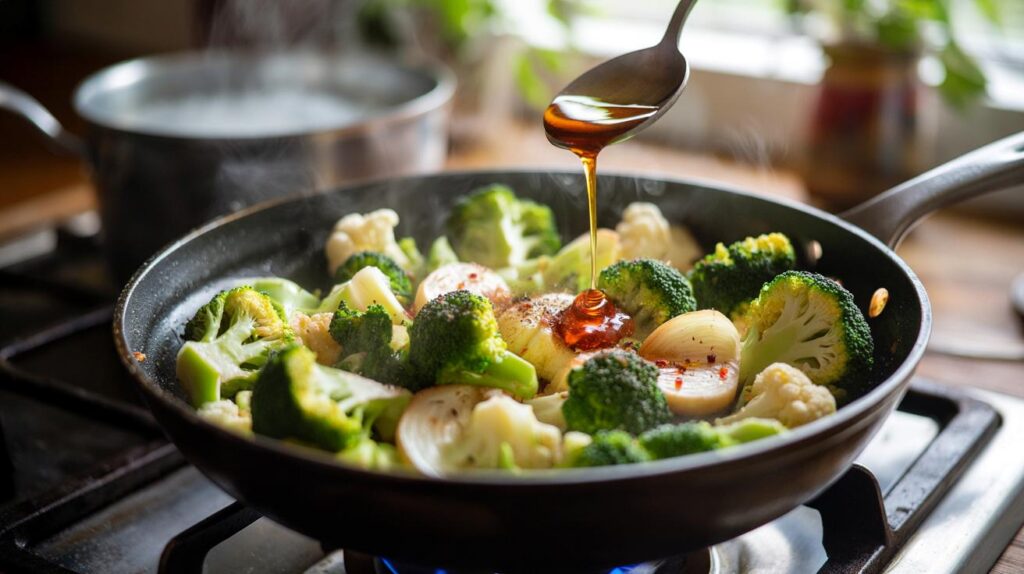
Fed up with weeknight greens turning limp and grey? There’s a quicker route to flavour that keeps everything bright and crisp.
Across Britain, pans still bubble with broccoli and cauliflower until they surrender to mush. A different approach, shared by Mary Berry, swaps the saucepan for a hot pan and unlocks the vegetables’ sweetness, crunch and aroma in minutes.
What Mary Berry suggests
The baking icon’s everyday method is disarmingly simple: cut the veg small, use a large pan, crank up the heat, and stir-fry in olive oil so the edges caramelise while the centres stay tender. A quick finish with honey, seasoning and a flicker of chilli brings balance and bite.
High heat plus short time equals flavour: you keep the crunch, wake up natural sugars and avoid that school-dinner sogginess.
Why boiling lets you down
Boiling keeps everything at 100C and bathes delicate florets in water. Water-soluble nutrients drift into the pan, the texture slumps, and the aroma skews towards sulphurous. Stir-frying changes the chemistry: hotter surfaces trigger browning on the cut faces, building nutty notes while the stalks remain firm. The result is livelier colour, clearer brassica flavour and a plate that invites a second forkful.
Boil, steam, stir-fry or roast: what changes on your plate
| Method | Texture | Flavour | Typical time | Best for |
|---|---|---|---|---|
| Boiling | Soft, easily waterlogged | Mild, can turn bland | 5–8 minutes | Mashed veg, soups |
| Steaming | Tender with some bite | Clean, subtle | 4–6 minutes | Diet-friendly sides |
| Stir-frying | Crisp edges, juicy stems | Toasty, slightly sweet | 5–7 minutes | Quick weeknight meals |
| Roasting/air-frying | Deeply caramelised | Intense, nutty | 12–20 minutes | Trays and batch cooking |
How to try it tonight in six minutes
What you need
- About 250g broccoli, broken into small florets
- About 350g cauliflower, small florets
- 2 banana shallots, finely sliced
- 2 garlic cloves, crushed
- 2 tbsp olive oil
- 2 tbsp runny honey
- Sea salt, black pepper, chilli flakes to taste
Method at a glance
Prep everything before you heat the pan. Small, even florets cook quickly and stay crunchy. Slice any tender stems thinly; reserve leaves for a quick stir-in at the end or save for stock.
Set a wide frying pan or wok over high heat. Add the olive oil and, when it shimmers, drop in the shallots. Stir for 2–3 minutes until lightly golden.
Add the broccoli, cauliflower and garlic. Keep the pieces moving for 2–3 minutes so the cut faces pick up colour without burning.
Clamp on a lid, turn the heat down a notch and let the trapped steam soften the cores for about 3 minutes. Lid off, heat back up, and fry briefly to crisp the edges.
Finish with honey, salt, pepper and a pinch of chilli flakes. Toss once more and serve immediately while the florets are still snappy.
Don’t overcrowd the pan. If the veg steams instead of sears, you lose the char that makes this method sing.
The flavour and nutrition gains
Broccoli and cauliflower both carry natural sugars and sulphur compounds. Quick searing tilts that balance towards toastiness and away from bitterness. Because there’s no boiling water to drain, more of the vitamins you paid for end up on the plate. You also control the fat and seasoning precisely, avoiding heavy sauces while still getting satisfying depth.
Olive oil handles this job well. If your bottle is extra virgin and smokes at high heat, switch to light olive or cold-pressed rapeseed oil for a steadier sizzle. Either way, the key is a hot pan and constant movement.
Make it yours: five fast twists
- Lemon and caper: finish with zest, juice and a spoon of capers for brightness.
- Sesame and soy: swap the honey for a teaspoon of brown sugar, add a splash of soy and toasted sesame seeds.
- Chilli and garlic butter: melt a small knob of butter at the end with extra chilli for richness.
- Anchovy and parsley: sizzle a minced anchovy in the oil, then finish with fresh herbs.
- Parmesan crumbs: toss through toasted breadcrumbs and grated parmesan just before serving.
Common mistakes to avoid
- Pieces too big: large florets burn outside before the stalks soften. Keep them bite-sized.
- Pan too small: work in two batches if needed; space equals browning.
- Oil too cool: wait for a shimmer before vegetables go in.
- Seasoning too late: salt at the end plus on the table keeps the crunch intact.
- Forgetting acidity: a squeeze of lemon balances the honey and lifts the brassica notes.
Serving ideas that make a meal
Turn the pan into dinner by adding cooked grains during the final toss, or by folding through flaked hot-smoked salmon. For a meat-free option, spoon the veg over hummus with warm flatbreads. Leftovers keep well: reheat quickly in a hot pan so the edges recover their snap.
What’s happening in the pan
Those golden dots are caramelisation of natural sugars on the surface, plus a little Maillard browning where proteins meet heat. Because brassicas are relatively low in protein, you’ll see more caramel notes than meaty flavours. The lid-on phase briefly traps steam to soften the core; the lid-off finish evaporates surface moisture so you regain crispness.
A quick note on health and balance
Honey brings a gloss and a gentle sweetness that flatters brassicas, yet you can reduce it to a teaspoon if you’re cutting back on sugar. Chilli flakes add intensity without extra calories. If you need to manage fat, start with 1 tbsp oil in a non-stick pan and add a splash of water during the lid-on stage to help the steam along.
Five to seven focused minutes, 2 tbsp oil, and everyday seasonings: that’s all it takes to turn “eat your greens” into “save me some”.



Five minutes, zero mush. Sold.