
Autumn layers are back, cupboards feel tighter, and morning searches turn frantic. Your winter jumpers are not the problem.
Across busy homes, the real culprit sits in plain sight. The way you fold clothes eats space, hides favourites, and crushes fibres. A £0 tweak changes that rhythm and calms the daily rush.
Britain’s bulging drawers: why the seasonal switch strains storage
Cooler weather brings thicker fabrics and taller piles. Deep drawers fill quickly when clothes lie flat. Stacks collapse when one item is pulled. A single rummage disrupts every layer. The hunt adds stress to early starts. Ironing follows when hard creases set in. Households adapt by spreading into more drawers. That shift costs time, order and peace.
The simple switch from flat folding to rolling can free up to 40% of usable drawer space.
What the rolling method is and how it works
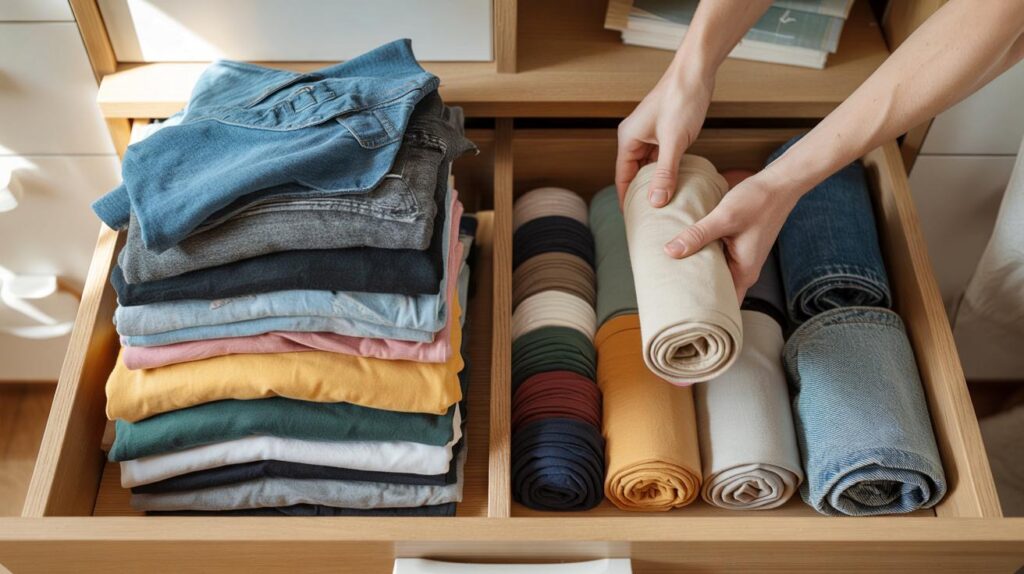
Rolling turns each garment into a compact cylinder. The shape fills gaps that flat stacks leave empty. It prevents towers from toppling when you take one piece. It keeps every item visible at a glance. It reduces pressure lines along sharp folds. It suits drawers, baskets and shelves alike. It costs nothing and needs no tools.
Step-by-step: from crumpled piles to tidy rows in minutes
- Lay the garment flat and smooth seams with your hands.
- Fold sleeves or legs inwards to form a neat rectangle.
- Fold lengthwise if the piece is wide, keeping edges aligned.
- Roll from the hem towards the neckline with steady tension.
- Aim for a firm, not crushing, cylinder that keeps its shape.
- Place rolls upright in the drawer for full visibility.
- Group by type or colour to cut search time in the morning.
Storing rolls upright turns a drawer into a catalogue where every choice sits in clear view.
Crease control: why rolls treat fabrics more kindly
Sharp folds act like presses on woven fibres. They lock in lines that show through a day’s wear. Rolling distributes pressure across a wider surface. The fabric relaxes rather than creases at angles. Knits keep their bounce when tension stays even. Denim avoids the white stress marks that hard folds create. Light cottons come out fresh enough for repeat wear. Ironing time falls because deep lines form less often.
What to roll and what to hang
- Best to roll: t-shirts, gym kits, jumpers, jeans, leggings, pyjamas, scarves, children’s outfits.
- Roll with care: fine merino, silk blends, viscose. Use a looser roll to protect drape.
- Do not roll: tailored jackets, structured dresses, heavily embellished garments. Hang these to keep shape.
- Seasonal bedding and towels: roll tightly and store in bins to open shelf space.
Rolling versus flat folding: a quick comparison
| Aspect | Rolling | Flat folding |
|---|---|---|
| Space use | High density with fewer voids | Air gaps between stacks |
| Visibility | Every item visible upright | Top layer only visible |
| Creasing | Softer pressure, fewer sharp lines | Hard folds create set-in creases |
| Access | Take one roll without disruption | Pull one, disturb the rest |
| Speed | Fast once practised | Familiar but collapses under use |
Why families and flat-sharers adopt it fast
Shared drawers benefit from clear lanes of rolled items. Children find outfits quicker when choices stand upright. Morning routines shorten because nothing hides underneath. Laundry days feel lighter with fewer piles to rebuild. The method fits small rentals where every centimetre counts. It helps carers organise clothing for weekday schedules. It supports people with limited mobility through easier reach and clearer sorting.
Set-up tips that make the habit stick
- Use simple boxes or shoe cartons to create lanes inside drawers.
- Divide by category and label the front edge for quick cues.
- Keep a small space free for new rolls so rows do not buckle.
- Do a five-minute reset each Sunday to keep the system tight.
- Rotate front to back each wash so every piece gets fair wear.
You do not need a full declutter to gain space; the fold change alone unlocks order and calm.
Common mistakes and how to avoid them
- Overtight rolling stretches knits. Aim for tension that holds but does not strain.
- Overfilling drawers crushes cylinders. Leave a finger’s width at the top.
- Mixing heavy jeans with silks causes slippage. Group by weight to keep rows stable.
- Rolling damp items invites musty smells. Dry fully before storage to protect fibres.
Beyond drawers: where rolling pays off again
Suitcases fit more outfits when rolls stack end to end. Gym bags stay fresh when clean and used kits sit in separate rolls. Camper vans gain flexible storage in narrow cubbies. Linen cupboards hold more towels with tighter, uniform rolls. Guest rooms feel tidier when spare sets sit organised and ready.
How to measure your gain and keep it real
Pick one drawer you use daily. Photograph it before and after a careful roll. Count how many pieces fit without force. Note how long it takes to find a top each morning. Track ironing minutes over two weeks. The numbers will guide where to roll next. The aim is smoother routines, not perfection.
Fabric care notes you can trust at home
Delicate weaves prefer a soft roll with tissue along the fold line. Heavier knits benefit from a medium roll that resists sag. Avoid elastic waistbands facing outwards to reduce stretch. Keep cedar blocks or sachets near wool to deter moths. Add a breathable drawer liner to support airflow around rolls.
Extra guidance for tight spaces and busy weeks
Small flats gain most from vertical rows and modular boxes. Large households can assign one lane per person to prevent crossovers. School uniforms roll well in outfit bundles to speed mornings. Winter accessories store neatly in half-depth boxes with mini rolls. Travellers can pre-pack rolls for quick suitcase drops on Friday nights.
Risks, trade-offs and simple fixes
Rolling hides stains if inspection is rushed. Check fronts and cuffs before storage. Very smooth fabrics can unfurl inside deep drawers. Use light ties or elastic bands for stability where needed. Some wardrobes lack drawer depth. Place rolls side-on on shelves with bookends to stop drift. If your hands tire, switch to a hybrid: roll tees and fold bulkier knits.
A low-cost upgrade that compounds over time
Space saved today supports calmer habits tomorrow. Fewer creases cut energy used by frequent ironing. Faster choices reduce morning tension for families. The method bends to your wardrobe, not the other way round. Start with one drawer, log the gain, and let that success guide the rest.



Just tried this on my chaotic tee drawer and I’m honestly amazed—everything stands up like little fabric soldiers 🙂 Bonus: fewer iron marks this morning. Thanks!
40% sounds… optimistic. Are there studies or is it anecdata? In my medium IKEA drawer I got ~18% more with jeans but less with hoodies. Still useful, but headline feels a bit clickbait-y.