
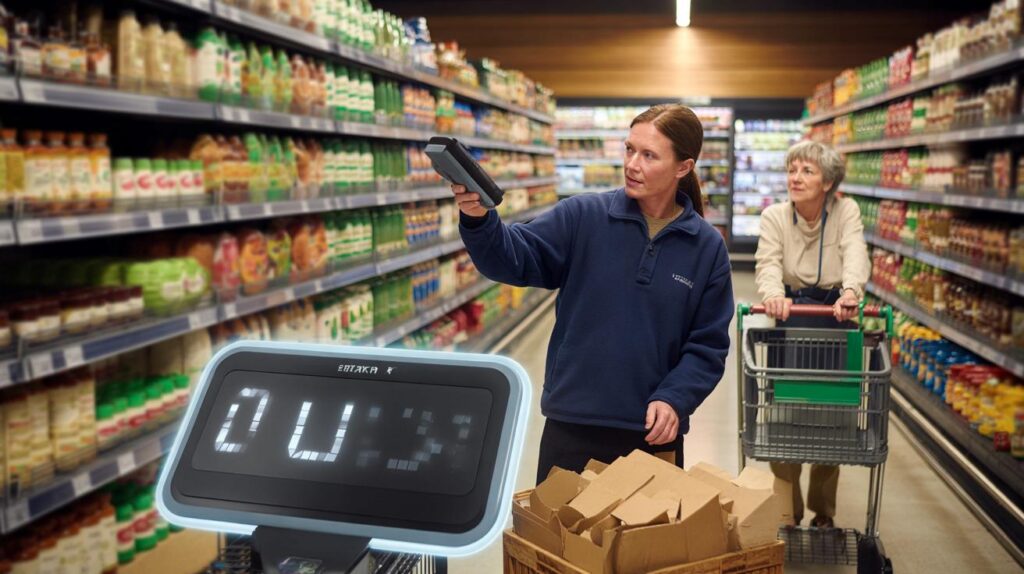
A major UK supermarket is quietly swapping paper price stickers for digital ones across hundreds of aisles. The little e-ink screens look unremarkable, yet they can change a price in seconds, push a promo live at lunchtime, and trim hours of staff label-faff. For shoppers, it could mean sharper deals, fewer misprices — and a new game to learn.
The beep of a handset cut through the cereal aisle just as a shelf of oats flickered. 1.35 became 1.29. No fanfare, no yellow ticket. A colleague in a navy fleece nodded to a manager, tapped again, and three more labels blinked into line like tiny sentries.
I stood beside a pensioner peering at milk. She blinked back at the shelf, as if it had winked first. We’ve all had that moment where a price catches us off-guard; this time the shelf moved first. *Prices now move at the speed of a tap.*
What’s actually changing on the shelf
Those neat black-and-white rectangles are electronic shelf labels (ESLs), synced to the store’s pricing system via radio. When head office updates a product, the label can refresh within minutes, sometimes seconds. No more paper tickets piling up in the back room. The aisle feels calmer, oddly tidy, like someone ironed the shelves.
On a weekday lunchtime, you might see sandwich prices rotate into a meal deal, then settle back by mid-afternoon. Evening brings bakery markdowns without a staff member sprinting down the aisle with a sticker gun. In industry pilots, error rates between shelf and till have reportedly fallen sharply, and colleagues say label changes that once took hours happen in a handful of taps. Time saved is real, and you can see it in how staff drift toward helping, not hunting labels.
For shoppers, the big shift is consistency and speed. The price you see should match the till because both come from the same brain. That opens the door to **real-time markdowns** on short-dated food and cleaner “with loyalty” pricing that flips on instantly. It also means micro-changes — 5p here, 10p there — can ripple through a store midday. Not sinister, just software doing what software does. And that’s the part people grapple with.
How to shop smart with digital price tags
Use the unit price as your anchor. When a label changes from £2.20 to £2.10, check the per-100g or per-litre line beneath the main price. It’s your steady compass amid flickers. If your supermarket app shows the same product, refresh it on the spot and watch for loyalty badges — those often mirror what the shelf is whispering.
Time your shop around fresh markdown windows. Late afternoon and early evening are still prime for bakery, meat, and produce, just faster and tidier now. Look for small clocks or “valid until” text on labels; those tell you when a promo drops away. Let’s be honest: no one checks every price on every aisle. Keep one or two staples in your head — milk, pasta, bananas — and you’ll sense a change quickly without turning your trolley into a calculator.
Don’t read the flicker as trickery. It’s usually a sync, not a trap. If you think something jumped unexpectedly, snap a quick photo of the label and ask at the till. Many stores will still honour the shelf price as goodwill even if they’re not legally bound to. And if you’re worried about **surge pricing**, listen to what retail tech folk keep repeating:
“This isn’t Uber for baked beans. It’s fast, but it’s scheduled. Think morning promos, end-of-day markdowns, and cleaner loyalty offers — not price spikes by the minute.”
- Scan for a loyalty icon: the price might be with a card.
- Check “unit price” first; it’s the fairest comparison tool.
- Look for “valid until” or “updated” timestamps.
- End-caps often flip first; compare with the main aisle.
- If in doubt, ask — staff can see the change log on handhelds.
What it means next
Here’s the wider story lurking behind the tiny screens. Stores spend thousands of hours each year printing, cutting, and pinning paper tickets. Digital labels clear that backlog in a tap, and they cut paper waste dramatically. The batteries in ESLs last years, and while nothing is impact-free, retailers argue the footprint beats weekly paper churn. **Paper-free savings** aren’t just PR; they’re payroll and printer ink, too.
Prices will feel more alive. That might sting for anyone who loves a printed ticket as a promise carved in stone. Yet it also invites smarter deals: cleaner lunchtime bundles, sharper price-matching, faster end-of-day reductions that rescue good food from the bin. If the supermarkets keep dynamic changes within clear rules — posted times, visible timestamps, loyalty badges that actually help — the shelf can be more transparent, not less. That’s the bet.
There’s a human piece as well. Fewer paper tickets means colleagues can spend more time on stock, advice, and the messy, real work of running a busy store on a rainy Thursday. On the flip, bargain hunters may miss the buzz of yellow stickers. Prices will still fall; they’ll just flicker into place rather than arrive with a slap. If you shop with your eyes open, you’ll catch more of those quiet wins. And your trolley will tell you the truth at the till.
Something else lingers after you watch a shelf change in front of you: trust. People don’t want prices playing hopscotch while they’re halfway down the aisle. The good stores will show their workings — timestamps, clear wording, the same numbers in the app and on the shelf — and they’ll keep price moves tied to simple rhythms we can learn. If that happens, we’ll adapt fast. If it doesn’t, shoppers will call it out, loudly. The labels may be digital, but the conversation is old as the high street.
| Key points | Details | Interest for reader |
|---|---|---|
| Digital price tags are rolling out | E-ink labels update from head office in minutes | Fewer misprices, cleaner promos, faster markdowns |
| Not “surge pricing” in the scary sense | Scheduled changes around promos and waste reduction | Better deals at predictable times, not random spikes |
| New shopping habits help | Watch unit prices, timestamps, and loyalty badges | Keep your bill down without micromanaging every shelf |
FAQ :
- Will prices change while I’m standing there?They can, but big swings mid-shop are rare. Most updates are scheduled windows — lunch, evening markdowns, or start/end of weekly promos.
- Is this the start of surge pricing in supermarkets?Retailers say no. ESLs enable speed, not chaos. Expect faster loyalty offers and waste-cutting discounts, not minute-by-minute spikes tied to footfall.
- What if the till price is higher than the shelf?Ask a colleague to check. UK law doesn’t force a store to sell at the displayed price, yet many will honour it as goodwill. With ESLs, mismatches should drop sharply.
- Are digital tags greener than paper labels?Over time, yes in many cases. ESLs cut daily paper and printer waste; batteries last years. The full footprint depends on supplier and recycling, but paper churn falls hard.
- How can I still find the best deals?Anchor on unit price, shop near markdown times, and check loyalty badge pricing. Keep a short mental “price list” of staples. You don’t need to track everything to save real money.



So prices can change ‘within seconds’ — what’s to stop mid-shop jumps that make my reciept higher than the shelf? This definately feels like soft surge pricing, even if it’s ‘scheduled’.
End of yellow stickers? Boo.