
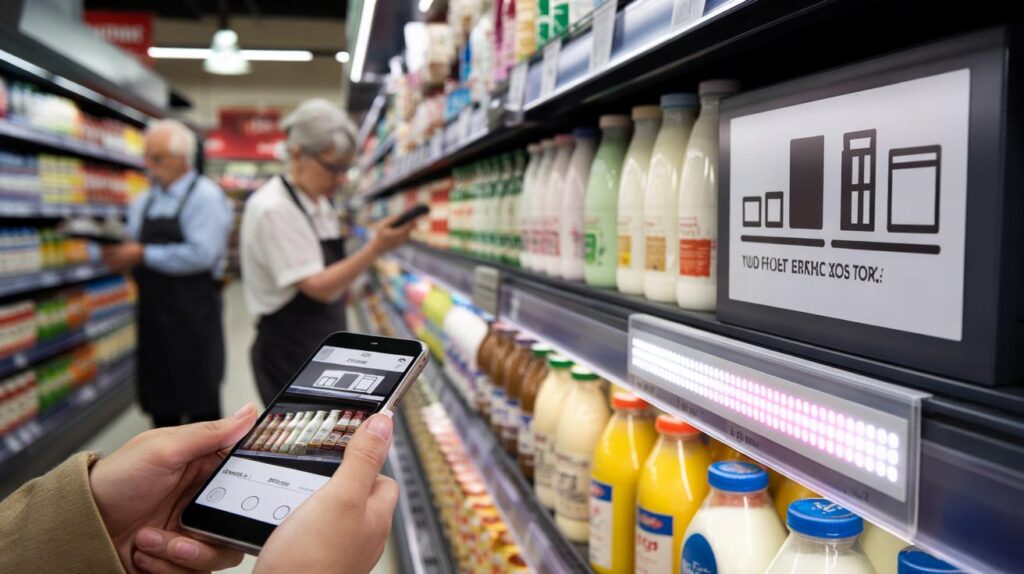
A major UK supermarket is rolling out digital price tags across hundreds of aisles, with rivals eyeing the same move. The promise is speed, accuracy and fewer paper stickers; the fear is prices shifting while you shop. Here’s what this quiet tech change really means for your basket, your bill and your habits.
I watched it happen by the yoghurts — a tiny e‑ink screen blinked, a number refreshed, and a shelf-edge LED pulsed like a heartbeat. A colleague with a handheld scanner nodded as the new price took, while an older shopper frowned at the neat black-and-white display that had replaced paper. I could almost hear the shelf breathing. We’ve all had that moment when the rules of a familiar place feel different. On this aisle, it wasn’t a dramatic revolution. It was a subtle click. The kind that changes how we shop.
Digital price tags are arriving — quietly, everywhere
Across the UK, electronic shelf labels are slipping into place, one rail at a time. They look calm and almost old-fashioned, but they update in seconds and can show unit prices, loyalty rates and promo countdowns without a staff member touching a roll of stickers. Prices could move in minutes, not days.
On a midweek lunch break, I saw milk show a “Clubcard price” that wasn’t there that morning, then switch back after the rush. Later, the “yellow sticker” corner cut its dance of paper and pens; digital tags handled markdowns at 7pm with a clean 30% and a soft blink. Retail pilots talk about cutting ticketing time by half or more.
Why the push? Cost and accuracy, yes, but also flexibility. Digital tags let stores change hundreds of items at once, reduce mistakes, and sync online orders with in-store stock. For shoppers, that means fewer mislabels and faster promos — it also means more frequent micro-adjustments. The line between “offer” and “normal” gets thinner when the shelf can update on the fly.
How to shop smart when the shelf can change
Start with the unit price — that small “per 100g” or “per litre” figure — not the big number. With digital labels, it’s clearer and consistent across a range, which makes like-for-like easier. Snap a quick photo of the shelf label when you pick the item if you’re worried it might change before checkout. That image is proof if you need it.
Don’t chase flashing LEDs; they’re often for staff picking online orders or stock checks. Focus on your list, then compare two or three products on unit price, not the headline. Loyalty prices can be great, but they’re not always cheapest per kilo, especially on bigger packs. Let’s be honest: nobody really does that every day. So pick two categories where it matters most to you — coffee, detergent — and make it a habit there.
Watch how markdowns behave. With paper, reductions were messy but slow; with digital, they can be cleaner and timed. If you like “last-hour” bargains, learn your store’s pattern for evening cuts and swing by during that window. Let the unit price, not the headline, be your north star.
“Digital doesn’t automatically mean sneaky. It can be fairer — the trick is knowing your baseline and spotting when the system nudges you off it.”
- Look for the unit price every time — it’s your quickest truth check.
- Photograph the label if you’re unsure; you can query at checkout.
- Don’t assume bigger packs save money — verify per 100g.
- Loyalty prices aren’t always best; compare across brands.
- If the shelf changes mid-shop, you can ask for the price you saw.
What it really means for your bill — and what comes next
Here’s the rub: dynamic labels don’t guarantee surges; they make changes easier. Stores say they’ll use that power for smoother promotions, fewer errors and better stock flow. It also unlocks personalised deals via apps and clearer unit pricing — both good for shoppers who like to plan. Dynamic doesn’t have to mean sneaky. But flexibility cuts both ways. You might see more frequent nips and tucks in price, and sharper time-bound offers that nudge you to buy now. If you’re sensitive to those cues, pace yourself. Scan the shelf with your eyes, not your pulse. If something feels off, step back and check the unit price. *Your budget is a better signal than any blinking LED.*
Some shoppers will love the neatness and speed; others will miss the comfort of paper. Staff, freed from reels of labels, can spend more time on service — or on picking online orders. Sustainability matters too: fewer paper tags, less waste, small e‑ink screens sipping power rather than guzzling it. Regulators are watching unit pricing and clarity, and that’s healthy. The best outcome? A shelf that’s honest, legible, and fair — even when it changes fast. If you feel rushed, pause — your money, your call.
| Key points | Details | Interest for reader |
|---|---|---|
| Digital labels update fast | E‑ink screens can change multiple times a day and show unit prices, loyalty rates and timed promos | Know that prices and offers may shift during your shop, and how to lock in deals |
| Pros and cons for shoppers | Fewer errors and clearer units, but more frequent micro-adjustments and time-bound nudges | Spot real value by using per‑100g/ per‑litre comparisons, not headlines |
| Practical protections | Photo proof, price queries at checkout, and CMA focus on unit pricing clarity | Confidence to challenge mismatches and avoid being steered by flashing tags |
FAQ :
- Will digital price tags mean “surge pricing” like taxis?Not in the wild-west sense. Retailers say the aim is quicker promotions and fewer mistakes, not live bidding. Prices can change more often, but they still operate within store pricing policies and consumer law.
- Can a price change while I’m walking to the till?It can. If that happens, show your photo or mention the shelf price you saw. Many stores will honour the displayed price, especially if the change happened minutes before checkout.
- How do I spot a genuine deal?Ignore the big number first. Check the unit price and compare two alternatives. If a loyalty deal beats a non‑loyalty item per 100g, it’s likely solid. If not, it’s a nudge, not a bargain.
- What if the digital label is wrong?Errors still happen. Flag it to staff, and you can ask for the price shown at the time of selection. Keep your receipt and, if needed, escalate via customer service.
- Are digital labels accessible?E‑ink is high‑contrast and often easier to read than faded paper. Some stores pair labels with app scans for larger text or voiceover. If readability is an issue, ask for support at the service desk.



Honestly, I’m here for this. Paper stickers were a mess, and e‑ink labels look clean and actually show unit prices clearly. If stores honour the price you saw when you picked the item (photo as proof), this could mean fewer disputes and faster promos. My only worry is subtle “nudge” timing at lunch rushes. Keep the unit price prominent, make change logs available on request, and it’s a win. Also, please standardise font sizes across aisles — some dairy labels feel tiny next to cereals.
So prices can change while I walk to the till? That feels like surge-pricing lite, definately not consumer-friendly. Will you honour the shelf price if I show a photo, or is it “computer says no”?