
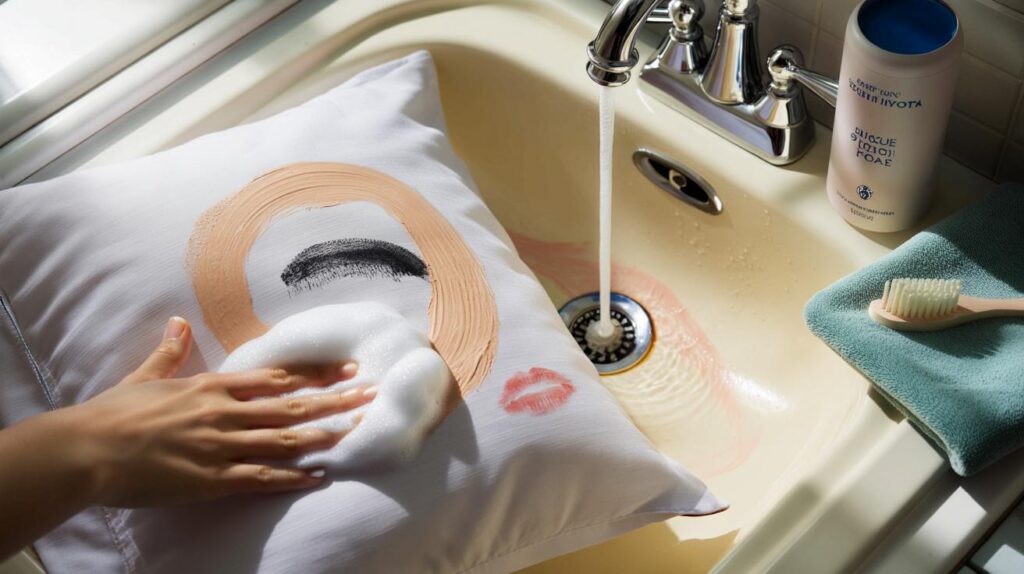
Your face is clean, your pillowcase isn’t. Foundation halos, mascara half-moons, that faint peach smear that laughs at every wash cycle. You could hide the pillow or flip it to the cool side, but it always comes back. The truth is, makeup is made to cling — and ordinary detergent often shrugs. There is, though, a tiny hack sitting in most bathrooms that snaps stains right out, even if they’ve dried overnight.
The first time I saw it was at 7:12am on a Tuesday, in that hazy space between alarm and coffee. A friend dabbed something fluffy onto a beige ring on her pillowcase, rubbed it with two fingers, and rinsed. The mark slid away like it had never happened. No drama. No panic about a ruined set of sheets. It was the kind of domestic magic that makes you grin into your mug. You feel in control again. One pound does it.
The £1 bathroom staple that beats foundation stains
Here’s the twist: it’s plain old **shaving foam**. The cheap, airy kind you can grab for £1 on the high street. Not a fancy laundry potion or a specialist solvent, just the stuff meant for cheeks and chins. It melts through oil-based pigments because it’s packed with surfactants — the same kind of cleansing agents that go into stain removers. Once you see it lift a foundation print in seconds, you stop thinking of it as grooming foam and start treating it as laundry first aid.
I watched a cousin test it after a wedding party, when her pillowcase looked like a makeup chart. She dampened the spot, covered it with a puff of foam, and massaged gently. Within moments the beige turned milky and bled out towards the drain. She laughed, then did the lipstick ghost on the edge — gone again. It felt a bit like a tiny lab experiment in the sink. The pillowcase hit the wash on a cool cycle and came out bright. No special programme. No drama.
Why it works is simple chemistry. Makeup clings because it blends oils, waxes and pigments that bond to fibres. Shaving foam carries emulsifiers and surfactants that wrap around those oils and push them off the fabric, the way dish soap cuts grease from pans. There’s often a touch of glycerin too, which helps keep things slippery and mobile. The foam structure spreads the active agents evenly, so you cover the stain fully without soaking the whole case. In short, it loosens the grip, then the rinse carries the mess away.
How to use it in under three minutes
Act fast if you can. Blot any fresh makeup with a dry tissue, no rubbing. Rinse the stained area with **cold water** to stop pigments from setting. Shake the can and lay a small mound of shaving foam over the mark, about the size of a 50p. Massage with two fingers in tiny circles for 20–30 seconds. Let it sit for two minutes. Rinse under cold running water and watch the colour drain. Repeat once for stubborn spots, then launder as normal on a cool or warm cycle.
We’ve all had that moment when you clock a smeared pillow right before running out the door. If you can only do one thing, foam it and rinse — the quick pre-treat alone prevents a long-term stain. Go gently on delicate weaves, and spot test if your pillowcase is silk or linen. Skip hot water at the start; heat sets oil-based colour. Soyons honnêtes : personne ne fait vraiment ça tous les jours. So build a tiny ritual you’ll actually keep: foam, swirl, rinse, go.
“Shaving foam is basically pre-whipped detergent with better manners,” says a London textile-care specialist. “It breaks the oil-pigment bond without roughing up the fibres, which is why cotton and polycotton respond so quickly.”
Keep a mini kit near the sink so you’re not hunting around at 7am. Add a teaspoon of washing-up liquid to the foam for long-wear foundation, and a dab of micellar water for waterproof mascara tracks. For old, set-in patches, let the foam sit five minutes before the rinse.
- £1 white shaving foam (not gel)
- Soft toothbrush for seams and piping
- Microfibre cloth for blotting
- Mild, colour-safe **oxygen stain remover** for last resorts
Clean sheets, calmer mornings
There’s a wider peace here: small fixes that give you time back. Pillowcases take the brunt of real life — late nights, a half-removed base, the quick cleanse that wasn’t quite enough. You don’t need a lecture, you need a shortcut that works even when you’re tired. Shaving foam lets you keep your favourite set in rotation and stops the slow, grey creep of set-in makeup. It’s cheap, it’s common, and it doesn’t smell like a chemistry set. Once you’ve seen the trick a few times, you’ll start noticing other little wins too. Less fretting. More mornings that start clean. And maybe a quiet nudge to share the hack with the next person staring at a peach ring on a white pillow, wondering if it’s ruined forever.
| Point clé | Détail | Intérêt pour le lecteur |
|---|---|---|
| The £1 ingredient | Budget shaving foam, white formula, foam not gel | Instant access, low cost, high payoff |
| Two-minute method | Blot, dampen, foam, massage, wait 2 min, rinse cold, launder | Works fast before work or school |
| Avoid these traps | No hot water first, no harsh scrubbing, be careful with silk | Protects fabric and prevents stains from setting |
FAQ :
- Does it work on lipstick and mascara too?Yes. Foam lifts waxy lipstick well; for waterproof mascara, massage a little longer or add a drop of washing-up liquid or micellar water.
- Can I use shaving gel instead of foam?Gel can work, but it needs to be lathered thoroughly to mimic the spread of foam. The airy texture of foam makes coverage and rinsing easier.
- What about coloured pillowcases?Test on a hidden seam first. Foam is generally gentle on dyes, but always check for colourfastness with a quick dab and rinse.
- Is hot water ever a good idea?Start cold to prevent setting. Use warm only after the stain has visibly broken down, and skip heat altogether on delicate fibres like silk.
- What if the stain is old and dry?Pre-wet, apply foam, let it dwell for 5 minutes, then rinse and repeat. For very stubborn marks, follow with a short soak in a colour-safe oxygen solution before washing.



I honestly thought this was clickbait, but the £1 shaving foam trick worked on a dried foundation halo from last night. Vanished in seconds, then washed out clean on a cool cycle. I’m genuinly impressed—thank you for the step-by-step!
Has anyone tried this on silk or satin pillowcases? Will the surfactants cause a dull patch, or is a quick spot test enough? I don’t want to wreck my nice set.