
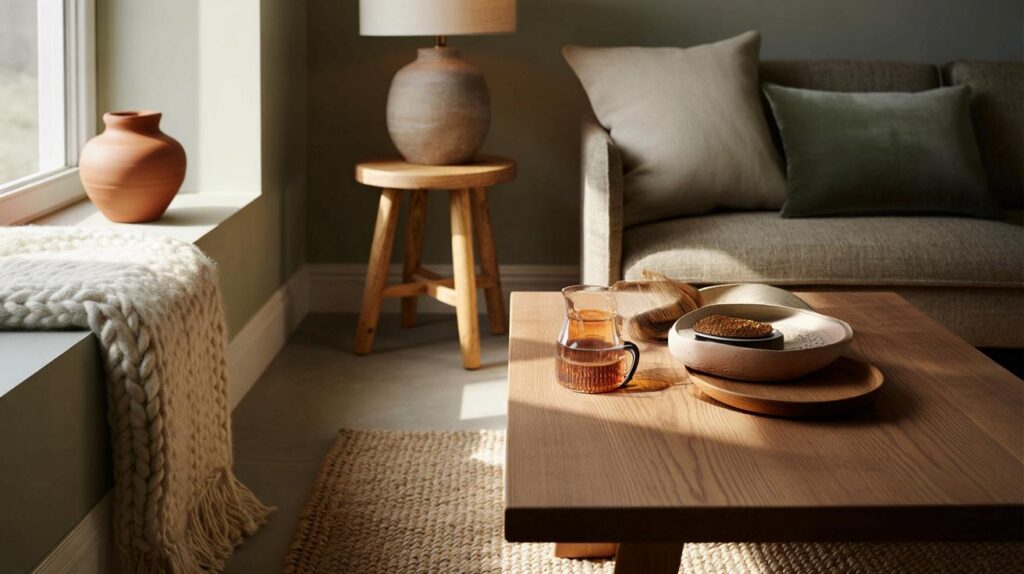
Outside, the sky hung the colour of wet pavements. Inside my friend’s flat, the radiators hissed, trying their best, yet the room still felt… chilly. Not cold in temperature, cold in spirit. Then my eyes found the heavy ash table catching a stripe of winter light, the thick wool throw slumped on the arm of a sofa, and a terracotta pot warming on the window ledge like a small sun. The air softened. Conversations slowed. Tea tasted fuller. We’ve all had that moment where a space flips from hard to human in the time it takes to notice a material. You don’t measure it with a thermostat. You feel it in your shoulders, which drop two centimetres when the room says, stay. The secret isn’t scent or soundtrack or clever tech. It’s what the surfaces are made of, and how they touch light and skin. Warmth isn’t just heat.
Wood: the living glow under your fingertips
Walk into a room with exposed timber and your brain does something primal. Colour deepens, edges soften, and you get that quiet sense of shelter. **Wood** brings the golden notes of a late afternoon even on a grey Tuesday, because grain breaks up glare and bounces light warmly. A small oak stool by a radiator becomes a tiny hearth. A beech frame turns a face into a focal point. Even a humble pine shelf changes how a wall breathes, giving it rhythm instead of a blank stare.
In a rented studio near King’s Cross, a reader swapped a glass coffee table for a battered elm one from a charity shop. The room instantly looked taller, richer, calmer. They added a slatted cedar bath mat and two walnut chopping boards propped like art. Touch told the rest of the story: glass is cool and unforgiving; timber is forgiving to the hand. Wood doesn’t snatch heat from your skin the way metal or stone can, so it always reads warmer in daily life.
There’s a physics layer behind the poetry. Timber has low thermal conductivity and diffusivity, so it doesn’t wick warmth from you. Its mid-tone colour temperature sits in the “amber” family, which our eyes interpret as cosy. Grain scatters light, reducing harsh reflections that make rooms feel clinical. It’s also a natural sound softener, knocking back the tinny echo that makes hard spaces feel chilly. The net effect is simple: wood stabilises a room’s mood, even when the weather won’t play nice.
Wool: the soft heat you can feel
Start with a single heavy throw—500 to 700 gsm—and fold it in thirds along the sofa back like a café banquette. Add a dense wool rug under the coffee table, large enough that front legs of the sofa sit on it. Drop a sheepskin over a dining chair you actually use, not the spare one. Mix textures: a chunky cable knit next to a tight herringbone, both in the same colour family. Two cushions with zip covers for easy airing. That’s a five-minute kit that turns a room warm by touch.
Common pitfalls? Going scratchy or shiny. Cheap acrylic pitched as “wool look” adds static and none of the weight that makes a room feel grounded. Overwashing is another trap: wool wants a brush, a shake, and fresh air more than a spin cycle. Let’s be honest: nobody does that every day. If you share a home with pets, choose a heathered weave that hides fur and lint. When colour-coding, think tea tones—oat, barley, chestnut—then add one deep note like forest or oxblood for depth.
Texture tells a story your thermostat can’t.
“I use **Wool** as a shadow-catcher,” says an interior stylist friend. “It’s the pause between the notes. The eye rests there, and the body follows.”
- Choose weight over pattern for your main throw—heavier equals cosier.
- Layer two knit scales: one chunky, one fine, same hue.
- Park a small wool runner by the bed; mornings change instantly.
- Brush rugs with a soft clothes brush; weekly is gold, monthly is real life.
- If in doubt, go undyed. Natural flecks make rooms feel honest.
Clay and terracotta: the room’s quiet ember
Clay holds a secret most radiators would envy: mass. **Terracotta** planters, clay lamps, even a humble earthenware jug on a table all soak up daylight and release it slowly as the room cools, like the last glow of a campfire. Glazed ceramics reflect a soft gleam; unglazed ones drink light and mute it. That balance—gloss next to matte—makes a space feel human. Place a terracotta pot near a window and you’ll notice how the corner stops looking “cold”. It’s the earth, quietly doing its slow work. Pair clay with timber and wool and you’ve got a trio that looks like it belongs together because it literally does, geologically and historically. The room reads calmer, warmer, kinder. That feeling lingers into the evening, long after the sun has clocked off. This is warmth you can see and touch. And it invites people to stay for one more cup.
Textures are the thermostat you can actually feel.
Clay brings breath to a room in another way too. Unglazed terracotta gently moderates humidity, which keeps air from feeling sharp. It’s why an old tile floor can feel cosy underfoot even before you add a rug. You don’t need a renovation to borrow that effect. A cluster of earthenware bowls, a clay lamp base, or a shallow pan for keys near the door creates little pockets where light lands warm and quiet. Small moves, big mood shift.
Bring the three together and something interesting happens. Wood lays down the warm backbone, wool adds the human scale, clay anchors it with slow heat. Your eyes track across grain, pause on a knit, settle on a terracotta curve. The room starts to breathe in time with you. Try it on a single side table if a full refresh feels out of reach. Swap a shiny tray for a small wooden board, fold a wool square beneath a lamp, add an earthen pot. The corner you pass a dozen times a day will start to greet you back.
What travels from home to home is not a sofa, but a material palette and the way you place it. That’s what warms a room when the electric bill climbs or the weather sulks. Try asking your space a different question: not “What can I buy to make it cosy?” but “What can I touch that will answer me?”. Wood, wool, clay—each one replies with its own tone. One glows, one softens, one steadies. Share them with a friend moving into their first flat. Or test them in a spare corner and let the change spread like a good rumour.
| Point clé | Détail | Intérêt pour le lecteur |
|---|---|---|
| Wood | Low conductivity, warm colour, visible grain | Instant visual cosiness and gentler acoustics |
| Wool | High gsm throws, layered knits, dense rugs | Warmth you feel on skin and underfoot |
| Terracotta | Thermal mass, matte texture, earthy tones | Slow, stable warmth and calmer corners |
FAQ :
- What’s the quickest, cheapest way to add warmth with natural materials?Swap in a wooden tray for a glossy one, drape a real wool throw, and drop a terracotta pot near a window. Three small moves, big mood.
- Can renters do this without drilling or repainting?Yes—use freestanding pieces: stools, chopping boards as art, rugs, throws, and ceramic lamps. All reversible and landlord-friendly.
- Which colours play best with these materials?Think tea palette: oat, barley, toast, chestnut. Then add a deep accent like forest, indigo, or oxblood to ground it.
- How do I care for wool without ruining it?Brush and air more than you wash. Spot-clean with cool water and a tiny bit of gentle soap. Lay flat to dry if you must wash.
- Are terracotta floors too cold in winter?They can feel cool if unheated, but their mass evens out swings. A dense wool rug over key zones makes them feel quietly warm.



This nailed why my flat felt “cold in spirit.” I replaced a glosy glass table with a beat-up oak board and—boom—room exhaled. The wool tip (500–700 gsm) is gold; heavier throw = instant calm. Also loved the note on terracotta’s thermal mass; never thought of my plant pots as tiny radiators. Thanks!
Genuine question: isn’t “warmth” here mostly colour psychology? Wood’s low conductivity matters for touch, sure, but across a room does it really change perceived temp? Any data beyond anecdotes—especially on terracota moderating humidity in small apartments?