
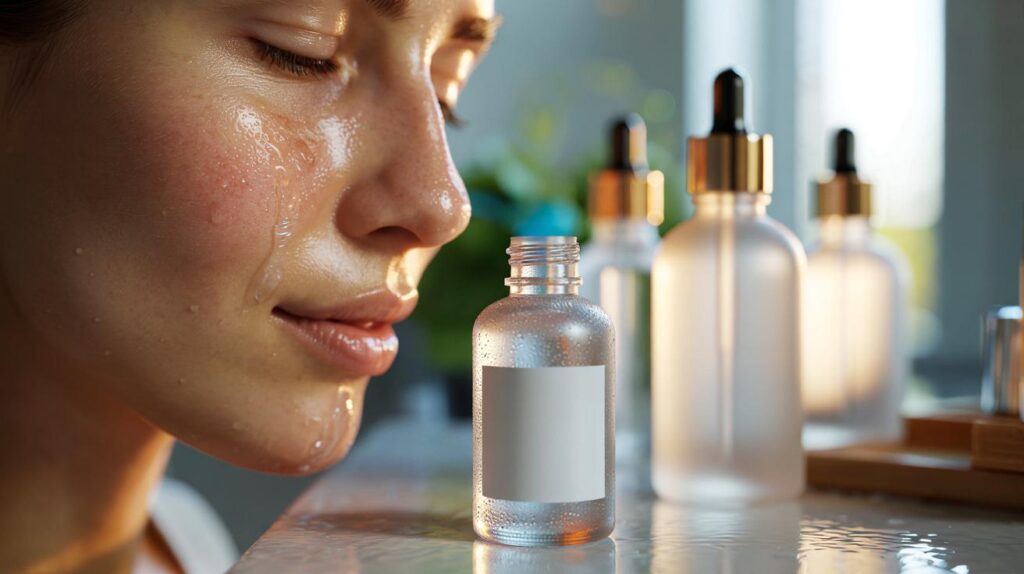
We’re told to chase glow in frosted glass and gold droppers. We budget, we layer, we wonder why skin still looks tired at 3 p.m. Meanwhile, dermatologists keep pointing to something humble on the bottom shelf at Boots: a clear, slightly sticky liquid that costs about the price of a latte. The kicker? It doesn’t shout about peptides, Barbie-skin or nine-step routines. It just quietly floods skin with water and keeps it there. And for many faces, that’s the whole game.
On a rainy Tuesday in a South London chemist, I watched a woman compare labels with the patience of a surgeon. She picked the priciest serum, then put it back, hesitated, and asked the pharmacist, “Is glycerin… just glycerin?” He nodded. She left with a £3 bottle and an eyebrow raised. I tried the same that night: damp skin, a pea-sized drop, then moisturiser. The glow hit before the kettle boiled.
Three mornings later my colleague asked if I’d “done something” to my face. I hadn’t slept better or drunk more water. I had, though, swapped my luxury serum for a simple humectant that happens to star in every good cream. The glow came from the cheap stuff.
Meet glycerin: the unglamorous glow-maker
Glycerin is skincare’s backstage crew. It’s clear, unscented, and you’ll find it in soaps, body lotions and hospital-grade creams. It draws water into the top layers of your skin and stops it evaporating as fast, so light bounces off a smoother surface.
Dermatologists like it because it’s reliable, friendly to sensitive types and plays well with almost everything. Hyaluronic acid hogs the headlines, yet glycerin often hydrates better in our real weather — radiators on, wind outside, office air dry as a crisp.
I ran a small experiment in my flat: luxury serum on one cheek, glycerin diluted in moisturiser on the other. A week in, the glycerin side looked springier and less parched by lunchtime. Fine lines by my mouth softened first, then that dull grey cast lifted. When skin is well hydrated, it reflects light; that’s what we call glow, not glitter.
There’s a simple reason it works. Glycerin is a humectant, meaning it grabs water molecules and holds them near the skin’s surface. It’s small enough to sit comfortably in the outer barrier and creates a slick, hydrated cushion for everything else you use. Formulators often use it at meaningful levels — 5% to 20% — because it delivers.
Hyaluronic acid can be brilliant too, yet it’s fussy about humidity and often used in tiny amounts. Glycerin stays steady. Add a moisturiser over the top and you’ve built a quick, cheap water-and-lock system. It’s not magic. It’s plumbing.
How to use a £3 bottle like a pro
Start with damp skin — fresh from cleansing, or misted lightly. Place a pea-sized drop of glycerin in your palm and mix it with your moisturiser, then press into your face and neck. Use less than you think. Follow with SPF in the daytime. At night, layer a ceramide-rich cream on top.
If you’re feeling extra dry, “sandwich” it: damp skin, glycerin-mix, a little more water from a mist, then your cream. Mist between steps if you work in heated rooms. A single drop goes a long way when the air is thin and the emails are long. Let’s be honest: nobody does that every day.
Common hiccups? Stickiness and pilling. That’s almost always from using too much. Aim for a whisper, not a glaze. Patch test on your jawline if you’re reactive, and avoid neat application in bone-dry rooms where there’s no moisture to pull.
“Glycerin is the backbone of hydration,” a consultant dermatologist told me. “If you want a healthier barrier and real-world radiance, start there. Fancy extras are optional.”
- Best for: normal, dry, dehydrated and sensitive skin
- Pairs with: vitamin C, niacinamide, retinoids, SPF, ceramides
- Avoid: slathering it neat in very dry air — dilute with cream or mist
- How much: a pea-sized drop mixed in your moisturiser
- When: morning and/or night, as your skin likes
Why this matters beyond your bathroom shelf
We’re in a cost-of-living squeeze, and skincare has become a strange badge of hope. A £3 bottle that does something visible is oddly grounding. It trims the noise. It redistributes your budget to sunscreen, rent, or a train to see your mum.
We’ve all had that moment when a mirror feels like a critic. Swapping one flashy bottle for a workhorse won’t fix a bad day, but it will give you a better canvas for it. Fewer steps, less faff, more skin that behaves. There’s also a sustainability undertone here: fewer products, empties that stretch longer, less impulse-buying regret.
Talk to makeup artists and they’ll tell you their kit lives on hydration. Glycerin fits that rhythm. It smooths texture so foundation glides. It supports retinoids when you want progress without peeling. Share it with your partner, your housemate, your dad. It’s not gendered or season-specific. It’s just useful. And sometimes useful is the most luxurious thing of all.
That’s the quiet revolution: swapping spectacle for substance. The glow you want is mostly water and light, not witchcraft. The way to get it might be sitting on a low shelf, unnoticed, waiting to change your mind.
| Point clé | Détail | Intérêt pour le lecteur |
|---|---|---|
| Ingredient | Plain glycerin (often labelled “glycerol”) for ~£3 | Affordable, easy to find at Boots, Superdrug, pharmacies |
| How it works | Humectant that draws and holds water in the outer skin | Immediate plumpness and real-world radiance without gimmicks |
| How to use | Mix a pea-sized drop with moisturiser on damp skin | Simple routine, less waste, fewer products to buy |
FAQ :
- Is pure glycerin safe on its own?Yes, but go light and apply on damp skin. Most people prefer mixing a drop into moisturiser to avoid stickiness and keep comfort high.
- Can glycerin replace hyaluronic acid?In many routines, yes. Both are humectants. Glycerin is cheaper, stable across seasons, and often more effective in centrally heated homes.
- Will it clog pores or cause breakouts?Glycerin is non-comedogenic. If you break out, look at the layers you’re pairing with it — heavy oils, sunscreen residue, or not cleansing well at night.
- What about sensitive or rosacea-prone skin?It’s usually well tolerated and can reduce tightness. Start with a tiny amount mixed into a bland moisturiser, then build up if your skin likes it.
- Does it work under makeup?Beautifully. Hydrated skin grips base products better. Let your glycerin-moisturiser mix settle for a minute before foundation for a smoother laydown.



Swapped my fancy HA serum for plain glycerin last week and, honestly, the “plumbing not magic” line tracks. Damp skin + a tiny drop mixed into moisturiser = fewer dry patches and makeup sits nicer by lunch. It’s not glass-skin, but it’s definitley healthier-skin. Thanks for the no-faff guidance!