
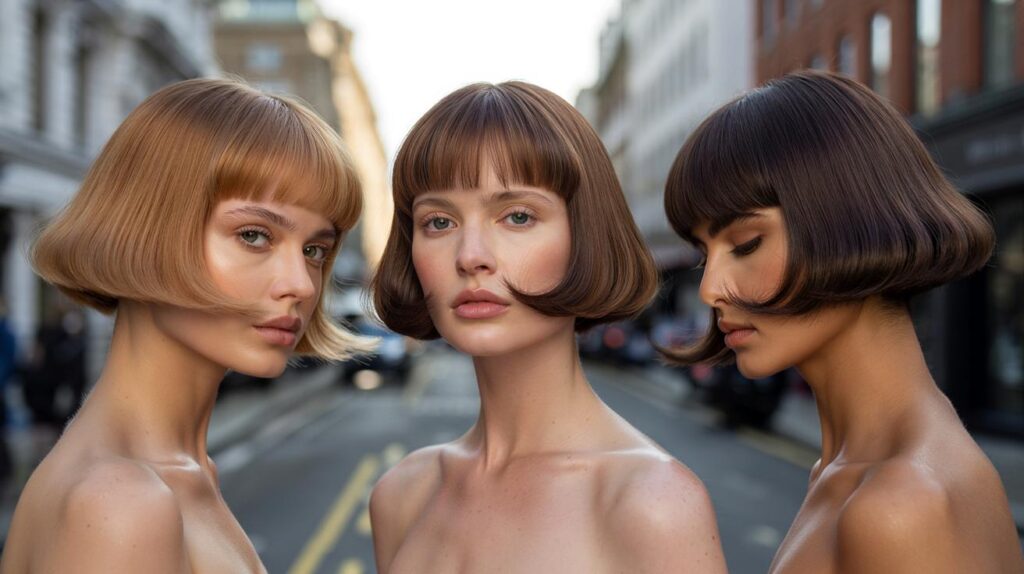
Flat at the roots, flyaway at the ends, and no amount of mousse seems to stick: that’s the daily riddle of fine hair. The silver lining? The right cut can fake density better than any styling cream. UK stylists keep coming back to a handful of shapes that make skinny strands look generous.
The bus steamed up as she peeled off a beanie and shook out her fringe, a little deflated from the drizzle. In the chair, the stylist pinched the ends and squinted at the line: soft, wispy, too many layers that had melted into nothing. A new perimeter, a shift in where the weight sits, a tiny tweak at the fringe — the whole mirror felt different at the first snip. And then there was that hush you get in a salon when a cut suddenly makes sense.
The silhouettes that fake density
Fine hair needs a strong outline more than anything. Think weight where you can see it and lift where you need it. That’s why the Italian bob, the French bob, and the collarbone-length lob keep trending in British salons: they hold a blunt edge while quietly stacking volume underneath.
A London stylist told me about a client who’d lived her life in long, feathered layers. Two cuts later, she had a chin-skimming **box bob** with a bevelled edge and a soft, face-opening fringe. On the Northern line that evening, strangers actually asked where she’d had it done. Not because her hair was bigger, but because it finally read as one shape.
Here’s the logic: blunt perimeters trick the eye into seeing thickness, while hidden, internal graduation pushes hair away from the scalp. Add a slight undercurve at the ends and the line reads denser still. Mid-lengths to collarbone help, as the weight sits at a flattering height. Thicker-looking hair is rarely about more hair; it’s about smarter structure.
Cutting moves and at-home tactics that build body
Ask for internal “invisible layers” rather than wispy surface layers. These micro-sections sit underneath the top layer, so the outline stays solid while the inside gets air. Pair that with a bevel at the baseline and a light, eyebrow-grazing fringe — bottleneck or curtain if you like softness — to break up a flat front.
At home, treat your blow-dry like scaffolding. Rough-dry upside down to 80%, switch to a medium round brush just at the roots, then set three Velcro rollers on the crown while you do your makeup. Mist a light volumising spray under sections, not over the top. Let it cool. Let’s be honest: nobody round-brushes their hair for 20 minutes on a weekday.
Fine hair also hates the wrong kind of enthusiasm. Over-thinning with razors makes ends see-through, and heavy oils collapse all the lift you’ve just built. Colour can help — microscopic highlights around the part add dimension without frying the cuticle.
“The trifecta for fine hair is a blunt perimeter, **invisible layers**, and a soft fringe,” says a UK stylist who spends half her week rescuing over-layered cuts.
- Best lengths: chin to collarbone
- Smart fringes: **bottleneck fringe** or whisper-soft curtain
- Shapes to try: Italian bob, cropped shag-lite, pixie with weight at the front corners
What thicker-looking hair really signals
The cuts that read as plush aren’t always the fanciest; they’re the clearest. They frame the face, hold their line after a rainy commute, and give you a good hair day even when you’re late. They feel modern because the outline is clean and the movement is inside, not frayed across the surface.
We’ve all had that moment when you catch your reflection in a café window and think, that’s not me, that’s my haircut telling my story. A dense-looking bob can suggest calm. A collarbone lob with a swingy edge can feel like momentum. There’s freedom in a cut that does the heavy lifting so your hands don’t have to. That’s why the right silhouette ends up being less about volume and more about you. And that’s why people ask, “Did you do something different?”
| Point clé | Détail | Intérêt pour le lecteur |
|---|---|---|
| Blunt perimeter | Solid edge from ear to ear with a subtle under-bevel | Makes fine hair read thicker at first glance |
| Internal graduation | Tiny hidden layers that lift roots without thinning ends | Creates height and movement while keeping density |
| Fringe strategy | Bottleneck or soft curtain fringe to open the face | Breaks up a flat front and adds visual fullness |
FAQ :
- What’s the best length for fine hair?Chin to collarbone is the sweet spot. It keeps weight where it shows and avoids the limp zone that can happen past the shoulders.
- Should I avoid layers entirely?Skip wispy surface layers, not layers altogether. Ask for internal, hidden layers that lift without thinning the outline.
- Will a pixie make my hair look thicker?Yes, if it keeps weight at the front corners and a clean nape. Over-texturised pixies can go fluffy, so keep the shape crisp.
- Do I need a fringe?Not mandatory, but a soft, face-framing fringe can fake fullness at the front where fine hair often separates. Try a micro bottleneck first.
- What styling products actually help?A lightweight mousse at roots, a root-lift spray under sections, and a fine mist of dry shampoo on day two. Keep oils away from the roots.


