
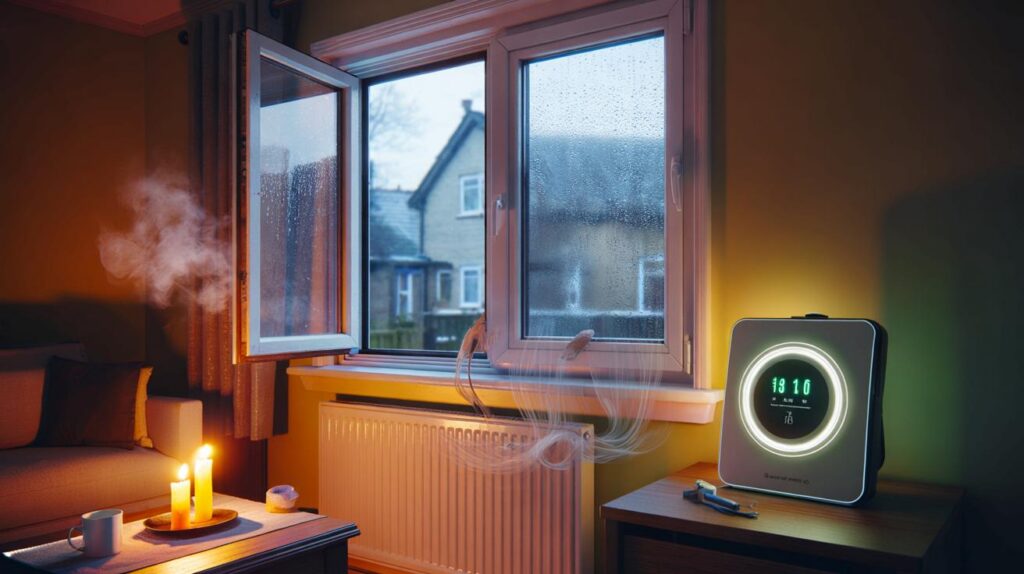
It sounds so harmless: a window tipped open “just a crack” on a cold day. A polite sliver of fresh air, a nod to condensation control, a habit picked up from parents and rented flats. We’ve all had that moment where a room feels stuffy and the easy fix is a tilt of the handle. Then the heating clicks in, and you forget about it. By dinner, your smart meter is sprinting and your toes are still cold. Something doesn’t add up.
The kettle steamed, the radiator murmured, and outside the wind pushed grey drizzle against the glass. In a terraced house in Leeds, I watched the little blue digits on a smart meter climb with each minute of a winter afternoon. The living room felt safe and sealed—except for the window, tipped open at the top like a book left face down. You could barely see the gap, yet you could feel it: the faint thread of cold on your cheek, the draft bending a candle flame. The thermostat nudged higher, obedient and blind. The bill grew. The room didn’t feel warmer. The quiet culprit sat in plain sight. A tilted hinge.
The tilt that drains your heat
Warm air rises and escapes from the tilt at the top, while denser outside air squeezes in down low. That sets up a conveyor belt through your home, a gentle but relentless “stack effect.” Your boiler or heat pump responds like a loyal dog, chasing a moving target that keeps slipping away. The room feels fresher, yes, but you’ve built a shortcut for your heat to leave.
In a London flat last January, my host swore by a 10-minute tilt “to keep mould away.” The CO₂ monitor fell fast, which looked heroic on a graph, yet the room’s temperature fell faster. The thermostat demanded more, and the radiators roared for an hour to claw back the lost degrees. Fresh air is vital. The cost of getting it the wrong way compounds quietly, day after day.
Think about what your heating system sees. It senses colder air, opens the throttle, and burns or whirrs harder. If wind is up, the pressure difference across that small opening grows, pulling even more air through. You’ve created a controlled draught, except it’s not really controlled at all. Your walls and furniture become cold reservoirs that must be reheated, which takes time and money. The opening looks small; the effect is not.
Fresh air, zero waste: the winter playbook
Switch the habit: go for short, sharp “purge ventilation.” Open one or two windows fully for three to five minutes, then close them. Do it when the heating is not firing flat out, ideally after showers or cooking, and aim for cross-breeze if you can. The big opening exchanges air fast without letting the fabric of the room fully chill. The ritual is simple, and it works.
Keep extractor fans honest. Use them for showers and cooking, and leave them running for a few minutes after steam clears. Crack internal doors to move stale air toward those fans. If you have trickle vents, keep them clean and slightly open so background moisture and CO₂ don’t build. Let’s be honest: nobody really does that every day. Start with two moments that fit your routine—breakfast and after dinner—and build from there.
There’s a false sense of “safe ventilation” with a window tipped at night. It feels careful. It’s often the leakiest move. A building physicist once told me, “Vent fast, then stop the loss.” That’s the whole philosophy in five words.
“Tilt-and-turn windows are brilliant for summer and bursts of air, not for winter-long trickles. Think sprints, not jogs.”
- Do this instead: short, full-open bursts; run bathroom/kitchen extractors; use trickle vents; aim for 40–60% indoor humidity.
- Avoid: overnight tilt in cold snaps; blocking vents; long curtains draped over radiators; leaving internal doors gaping when it’s windy.
- Quick wins: draught-proof letterboxes and loft hatches; seal floorboard gaps; fit door seals; bleed radiators; check TRVs aren’t hidden behind furniture.
A small habit with a big ripple
The way we ventilate in winter is about comfort as much as kilowatt-hours. Nobody loves a damp, stale room, yet nobody wants to bankroll the wind. Sharing simple rituals—purge ventilation, mindful extractors, no tilt at night—can save real money without making your home feel sealed or stuffy. It’s a mindset shift: fresh air is a dose, not a drip.
| Key points | Details | Interest for reader |
|---|---|---|
| The tilted window accelerates heat loss | Sets up a warm-out/cold-in conveyor; radiators chase falling temps | Explains why bills rise even with “just a crack” open |
| Ventilate in short, sharp bursts | Full-open 3–5 minutes, then close; use extractors and trickle vents | Fresh air without wasting hours of heating |
| Small fixes stack up | Draught-proofing, smart door use, clear TRVs, humidity sweet spot | Actionable steps for comfort and savings today |
FAQ :
- Should I ever use the tilt in winter?Yes, for brief, targeted moments—like clearing steam after a shower when the extractor is weak. Keep it short and close it once air feels normal.
- Isn’t fresh air worth the energy cost?Absolutely. The trick is timing and technique. Short, full-open bursts deliver the same freshness with far less heat loss.
- Will closing the tilt create mould?Mould is about persistent moisture and cold surfaces. Use extractors, short bursts of ventilation, and aim for 40–60% indoor humidity. Watch for condensation on windows as your early warning.
- How much could a tilted window cost me?It depends on wind, outside temperature, and your system. Leaving a tilt open for an evening can pull many kilowatt-hours of heat out, which shows up as a noticeable jump on a smart meter. The longer it’s open, the steeper the bill.
- Is this worse with a heat pump?Heat pumps work best with steady, low-temperature heat. Drafty air changes force them to run harder and longer, nudging down efficiency. Keep the envelope tight and use short ventilation sprints.
What really happens when you tilt a window in winter
There’s also the feel of it. A room with a tilted window often has one cold corner and one warm chair, a strange microclimate that makes people nudge the thermostat just to feel even again. The air is moving, but not cleaning the room the way you think. You’re ventilating slowly, cooling deeply.
In windy weather, the tilt becomes a pressure valve. The side facing the gusts shoves cold air in, the leeward side of your home sucks warm air out through gaps you didn’t know you had. This can double the effect of that small opening. The draft under doors tells the story more honestly than any number on a screen.
Moisture is tricky. If you drip-vent all day, you cool surfaces and nudge them toward the dew point. That invites condensation on the coldest panes and frames. Short bursts do the opposite: they dump humid air fast, then let surfaces warm back up, keeping the inside of the glass clearer. Fresh air without waste is the balance point we’re all chasing.
Tactics you’ll actually use this week
Pick two daily anchors and make them stick. After breakfast, throw the living room windows wide for four minutes, then shut. After dinner, run the kitchen extractor on a 10-minute overrun and crack the opposite window wide for three. That’s it. Two moves. Repeat.
At night, ditch the tilt and go for comfort cues instead. Close bedroom doors, pull curtains that don’t block radiators, and keep trickle vents lightly open if the room gets stale. If condensation shows up on morning glass, do one quick purge before the heating ramps. If it doesn’t, you’re already winning.
Small gear helps big: a basic humidity monitor, a working extractor, seals that don’t leak like sieves. Borrow a thermal camera for a weekend or use your phone’s breath test on suspect gaps—letterbox, keyholes, loft hatch. You’ll find leaks in minutes.
“Make the fresh air obvious and brief. Make the heat steady and gentle. That’s the whole winter game.”
- Run bathroom fans during and after showers.
- Open opposite windows fully for 3–5 minutes, then close.
- Keep curtains off radiators; don’t bury TRVs behind sofas.
- Seal letterboxes, floorboard gaps, and loft hatches.
- Look for 40–60% indoor humidity as your sweet spot.
The habit that pays you back every evening
Think of the tilt as a summer setting and the full-open burst as your winter move. The house feels calmer, the heating stops yo-yoing, and the bill stops creeping up for reasons you can’t name. The change is almost boring—open wide, count to 180, shut—and it frees you from the quiet tax of that tiny gap. Soyons honnêtes : personne ne fait vraiment ça tous les jours. Yet when you do, you feel it and you see it.



Really clear explainer. The Leeds smart‑meter moment hit home—I’ve been tilting “just a crack” and wondering why my toes stay cold. I’ll switch to 3–5 minute full‑open bursts and use extractors after showers. Love the “vent fast, then stop the loss” mantra. Quick one: on a still day in a 2‑bed flat, is twice daily definitly enough, or should I add a lunchtime purge if cooking?
Interesting, but feels a bit hand‑wavy. Where are the numbers? What ACH do you get from a tilt vs a full‑open purge, and what’s the kWh delta over, say, a 4‑hour evening? Also, wich wind speeds make the tilt worst? Data > anecdotes.