
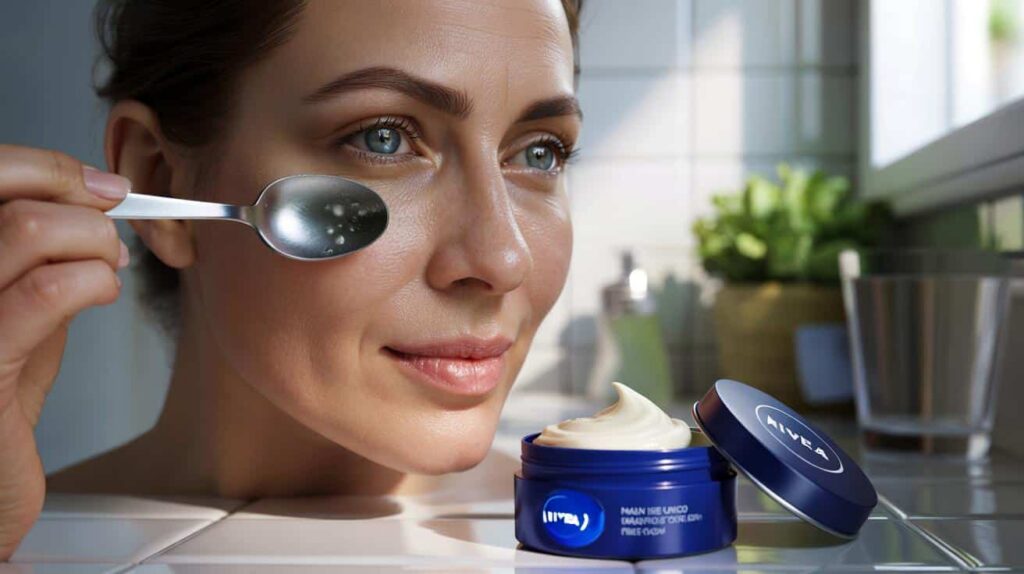
Beauty creators in Europe have revived a cold‑spoon facial massage paired with Nivea’s iconic cream. The mix promises glow, de‑puffed eyes, and a smoother look in minutes. Dermatologists call it low risk for most people, with effects that depend on hydration and gentle massage rather than miracle chemistry.
What the trend is really about
The routine blends two ideas. First, rich hydration softens the top layer of skin, which can blur fine lines. Second, a cool, rounded surface nudges fluid away from puffy areas and boosts microcirculation. The result often looks fresher, especially in the morning.
Hydration plumps the outer skin layer, which can mute the look of lines quickly, while cold helps deflate under‑eye puffiness.
Why Nivea keeps showing up in the videos
Nivea Crème’s blue tin has a cult following because it is dense, occlusive, and affordable. That texture seals in water and gives slip for massage. Variants like Nivea Soft add lighter emollients, including jojoba oil and vitamin E, for a quicker absorb feel.
Formulas vary by market, but the classic tin typically leans on occlusives such as mineral oil and waxes, plus humectants like glycerin. This combination comforts dry or wind‑stressed skin and can support elasticity with consistent use.
How the spoon technique works
The spoon method uses a chilled metal spoon as a simple massage tool. Cold metal constricts superficial vessels, which can calm swelling around the eyes. Gentle strokes guide excess fluid toward lymph nodes, lending a sharper outline to cheeks and jaw for a short time.
Cold plus glide equals smoother movement over skin, less tugging, and a calmer look in puffy zones.
Step‑by‑step guide
- Chill two clean metal teaspoons in the fridge for 10–15 minutes.
- Cleanse your face and pat it damp. Water under cream amplifies hydration.
- Warm a pea‑to‑almond‑sized amount of Nivea between fingers.
- Apply a thin layer over face and neck, avoiding the lash line.
- Hold the spoon bowls against the skin and make outward, upward strokes with light pressure.
- Under eyes: glide from inner corner toward temples; do 5–8 passes per side.
- Cheeks and jaw: sweep from nose to ear; from chin along the jaw to the ear.
- Forehead: move from the center toward the hairline.
- Re‑chill the spoons briefly if they warm up.
- Finish with sunscreen in the daytime.
What to expect, and what not to
This routine does not erase wrinkles permanently. It can reduce their appearance by softening the skin surface and diffusing light. Puffiness often recedes, especially after salty meals, travel, or a short night. With regular use, many people report better texture and a calmer look before makeup.
| Tool | Main effect | Cost | Learning curve |
|---|---|---|---|
| Chilled spoon | De‑puffing, glide for massage | Very low | Easy |
| Gua sha stone | Sculpting, lymphatic drainage | Low to medium | Moderate |
| Facial roller | Cooling, mild circulation boost | Low | Easy |
Why it can work on camera and in person
Fine lines look deeper when the skin barrier is dry. Occlusive creams lock in moisture, so the top layer swells slightly and reflects light more evenly. Cooling shrinks surface vessels and nerves sense less throbbing, which can take down redness. Massage encourages lymph movement toward the ears and neck, so the face looks less puffy.
Short‑term smoothing comes from water and light. Long‑term gains come from a steady routine and sun protection.
Safety notes and smart tweaks
- Patch test first if you have sensitive or acne‑prone skin. Heavy occlusives can clog in some users.
- Keep pressure light, especially under the eyes, where skin is thin.
- Avoid broken skin, active dermatitis, or recent procedures.
- For oilier skin, try a lighter cream or gel, then use the spoons for the cooling step only.
- Store spoons in the fridge, not the freezer, to prevent cold burns.
Who benefits most
People with dehydration lines, morning puffiness, or a dull look after central heating usually see quick wins. Those with deep, static wrinkles will notice subtler changes and may need retinoids, peptides, or professional treatments for structural results.
How to build a routine around it
Use the spoon massage in the morning for de‑puffing, or before events when you need a smoother canvas. At night, pair a richer layer of cream with slower strokes to wind down facial tension from jaw clenching and screen time.
- Morning: cleanse, hydrating serum, Nivea or a lighter variant, spoon massage, SPF.
- Evening: cleanse, retinoid or peptide on alternate nights, Nivea to seal, gentle spoon work for 2–3 minutes.
Ingredient notes that matter
Dense creams provide slip for massage and a seal for hydration. Look for humectants like glycerin, occlusives like mineral oil or waxes, and soothing agents such as panthenol. If you prefer a lighter feel, a cream with jojoba oil and vitamin E can comfort without the heavy film.
Extra angles worth knowing
Face massage pairs well with lifestyle tweaks that curb puffiness. Limit late‑night salt, sleep with a slight pillow elevation, and sip water steadily during the day. For eyes that retain fluid, cool compresses and caffeine‑based gels complement the spoon pass.
For readers chasing stronger anti‑aging moves, think about sunscreen every morning, a gentle retinoid a few nights per week, and periodic exfoliation. The spoon‑and‑cream duo then slots in as a fast, calming step that boosts glow without gadgets or appointments.


