
Millions pick low-fat fruit yoghurt believing it’s the safe choice. A fresh consumer warning suggests the label tells another story.
France’s leading consumer magazine has put a hugely popular 0% strawberry pot under the microscope. The packaging looks light and breezy. The label tells a tighter tale about flavourings, colouring and intense sweeteners that do the heavy lifting where sugar and fat used to sit.
Why a supermarket favourite is under scrutiny
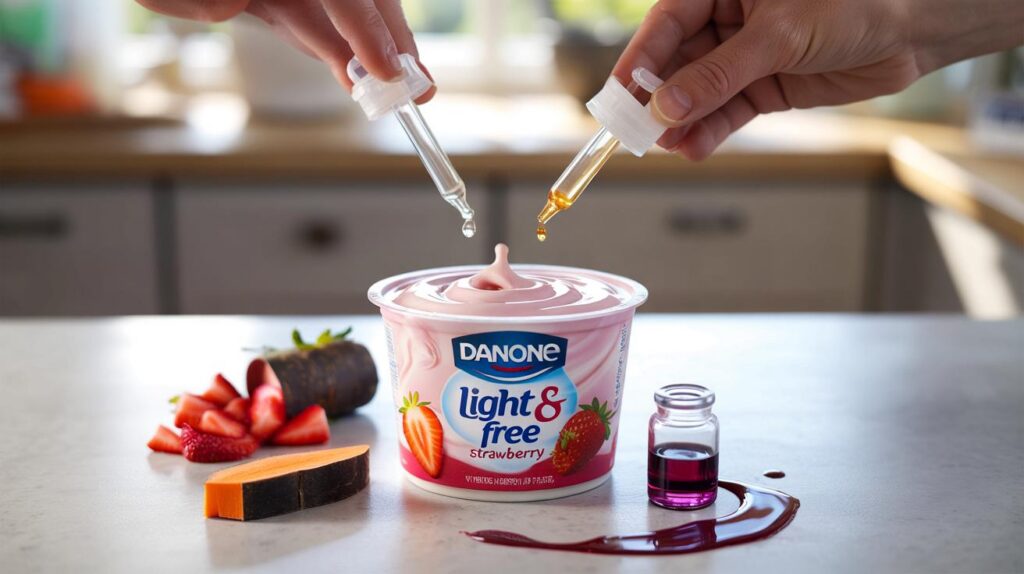
Danone’s Light & Free 0% strawberry yoghurt has been singled out by 60 Millions de Consommateurs, a long-running French consumer title known for stress-testing everyday products. The product highlights strawberry content on the front, yet the ingredient list shows 7.5% fruit alongside “added flavouring” and a colour booster derived from black carrot concentrate. The mix shapes aroma and hue, making the pot smell and look like more fruit than it really contains.
Two non-nutritive sweeteners—acesulfame-K and sucralose—replace part of the sugar load while intensifying perceived sweetness.
Both additives are workhorses of the “0%” trend. Acesulfame-K is around 200 times sweeter than table sugar. Sucralose can reach about 600 times. They help keep calories down while keeping taste profiles familiar. That balance is precisely what now raises questions about whether the healthy image of such products aligns with their formulation reality.
What the label really says
- Fruit content: 7.5% strawberry.
- Flavour: added, not described as “natural”.
- Colour: concentrate from black carrot to stabilise and intensify the strawberry shade.
- Sweetness: delivered by acesulfame-K (E950) and sucralose (E955).
- Fat: 0%—but sugars remain and overall sweetness is maintained via additives.
0% fat does not mean 0 sugar or 0 additives. The trade-off sits in the fine print.
What scientists are debating
These sweeteners are permitted across Europe and the UK, with safety levels defined by regulators. At the same time, research teams have reported associations that keep the debate alive for cautious consumers.
Signals from large cohorts
French public health researchers analysing diet records from tens of thousands of adults have reported a higher overall cancer risk among high consumers of artificial sweeteners compared with non-consumers. The signal was mainly linked to aspartame and acesulfame-K, not sucralose. Such cohort data cannot prove cause and effect, but the pattern has drawn attention and urged more rigorous trials.
Other studies focus on weight control and metabolism. The World Health Organization advised in 2023 that non-sugar sweeteners should not be relied on for long-term weight management because overall benefits appear uncertain when viewed over months and years. This advice ties into evidence that taste adaptation, appetite signalling and gut microbiota may respond in complex ways to sweet taste without calories.
Regulators still allow use within limits
Food-safety bodies assess these additives using toxicology data and set Acceptable Daily Intakes (ADI). For most people, typical intakes sit well below these limits, yet children and frequent drinkers of “light” beverages can approach them more quickly.
| Sweetener | Relative sweetness vs sugar | ADI (mg per kg body weight per day) |
|---|---|---|
| Acesulfame-K | ~200× | 15 |
| Sucralose | ~600× | 15 |
Interpreting those numbers is easier with a quick check. A 70 kg adult would have an ADI of about 1,050 mg for either sweetener. Product labels rarely list exact milligrams, so the practical approach is to scan your daily pattern: multiple “light” yoghurts, diet drinks and flavoured desserts can add up.
The 0% puzzle: what changes, what doesn’t
Low fat removes milk fat, not sugar. In a standard yoghurt, you lose roughly 3 g of fat per 100 g when shifting from whole milk to 0% milk solids. That is meaningful for some diets, but it does not alter intrinsic lactose or any fruit sugars. When formulas also rely on intense sweeteners, the taste can read as sweeter than a plain yoghurt despite lower calories.
A quick calorie sketch helps. Cutting 3 g of fat per 100 g reduces energy by around 27 kcal. In a 125 g pot, that equates to roughly 34 kcal. If the recipe then leans on sweeteners to amplify flavour, the eating experience remains dessert-like, which can shape cravings and sweetness preference over time.
How to shop smarter today
- Read the first five ingredients. They tell you where the bulk of the product comes from.
- Look for “aroma” or “flavour”: if it doesn’t say “natural”, assume it’s not.
- Check fruit percentage. Numbers like 7.5% signal where taste is coming from.
- Scan for E950 (acesulfame-K) and E955 (sucralose) if you wish to limit intense sweeteners.
- Compare sugars per 100 g across brands. Some “regular” yoghurts beat “0%” formulas on total sweetness.
- Prefer short lists: milk, cultures, fruit, and a little sugar often mean fewer surprises.
What 60 Millions de Consommateurs wants you to consider
The consumer message is simple: the health halo of “0%” can mask an engineered sweetness built with additives.
The magazine’s spotlight on Danone’s Light & Free 0% strawberry yoghurt sits within a wider evaluation of flavoured dairy. It urges readers to align health goals with ingredients, not slogans. That does not condemn every low-fat yoghurt. It does invite a stricter reading of what “light” actually means in practice.
Context you can use
If you enjoy fruit yoghurts
Try mixing plain yoghurt with fresh strawberries and a teaspoon of jam. You control the sweetness and can keep sugars under 10 g per 100 g. Greek-style 2% yoghurts offer creaminess with moderate fat, often needing less added sugar to feel satisfying.
If you track sweeteners
Keep a simple diary for three days. Note any product listing acesulfame-K, sucralose, aspartame, saccharin, or stevia glycosides. Many people find sweeteners popping up in places they did not expect: protein yoghurts, diet fizzy drinks, chewing gum and syrups for coffee. Reducing overlap across categories can lower cumulative intake without sacrificing taste entirely.
If you manage weight or blood sugar
Non-sugar sweeteners can help some people trim calories short term. Others report greater hunger later. Pair flavoured dairy with fibre and protein—berries, oats, nuts—to improve satiety. For glycaemic control, unsweetened yoghurt with measured fruit portions often works better than chasing the sweetest “light” pot on the shelf.
The bottom line for readers
Labels beat headlines: 7.5% fruit, added flavouring, colour from black carrot, and two intense sweeteners define the pot.
Yoghurt can still be a solid everyday choice. The safest bet remains varieties with few ingredients and transparent sugar levels. If you like the convenience of a flavoured pot, rotate brands, watch frequency, and keep an eye on how many “light” products land in the same day. Small shifts—like choosing one plain yoghurt and adding real fruit—deliver benefits without drama.



So it’s 0% fat but the sweetness comes from acesulfame-K and sucralose. Does anyone else feel that “light” is doing heavy lifting on the lable? If the fruit is just 7.5%, what am I actually tasting—flavourings + colour?