
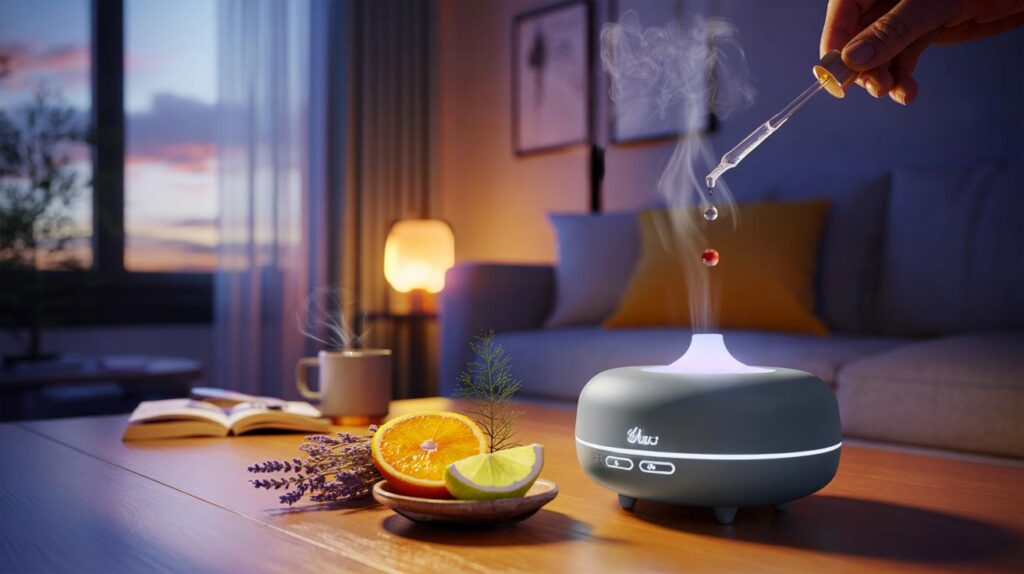
As nights lengthen, small sensory cues gain power. Homes turn quieter. Routines soften. A subtle fragrance sets the tone.
Across Britain, people now reach for diffusers as the kettle boils and the light fades. The aim feels modest: ease the pace without medication, screens or noise. Yet the shift looks larger than a scent trend. It touches mood, sleep readiness and the way households wind down together.
Evening aromas reshape the calm at home
From décor flourish to nightly habit
What began as a styling flourish has crossed into ritual. A few drops at sunset, the quiet hum of a diffuser, and the room seems to breathe differently. The living space signals that the day is closing. Conversation slows. The sofa beckons, not the inbox.
Light the diffuser near dusk, keep the fragrance gentle, and let the room’s tempo slip into evening mode.
People report that a light, natural fragrance feels less distracting than a burning candle and less intrusive than heavy room sprays. The scent does not shout. It frames the evening with softness and invites steadier attention to low‑effort tasks: a book, a film, a chat.
Why scent shifts mood after dark
Smell directly engages brain regions that process emotion and memory. That wiring explains quick mood shifts when a room’s aroma changes. Low light also primes the body for rest, so a soothing scent meets a mind already ready to decelerate. Expectation plays a part as well. Repeat a reliable cue at the same time, and the body learns to pair it with unwinding.
Three drops, 30 minutes, window slightly open: a rule of thumb that suits most rooms and most noses.
Lavender leads the pack
Origins, character and why evenings suit it
Lavender sits at the heart of European aromatics. Fields in Provence built its reputation. The aroma is floral with a gentle herbal thread. It reads as clean without tipping into clinical. Diffusing a small amount creates a clear, soft backdrop that encourages the shoulders to drop and the breath to lengthen.
Studies on aroma and tension show that lavender’s main constituents, such as linalool and linalyl acetate, interact with pathways linked to calm. You do not need to follow the biochemistry to sense the effect. A room that smells faintly of lavender often feels less charged and more comfortable within minutes.
What the brain may be doing
Scientists point to scent signals reaching the limbic system, where the brain handles emotion and stress responses. Laboratory work suggests lavender components may nudge inhibitory signalling, which can translate into a quieter nervous system. Real homes are not labs, yet many users notice lighter rumination and a quicker slide into quiet activity after diffusion.
Most people feel the shift within 10–20 minutes when the fragrance stays subtle and consistent.
Citrus for lift without the jitters
Orange, lemon and grapefruit: timing and finesse
Citrus notes bring light and a hint of cheer to grey evenings. Orange feels round and cosy. Lemon cuts through stale air. Grapefruit adds brightness. Use a small dose early in the evening, then drift towards lavender as bedtime nears. The energy lifts the mood without fighting the body’s need to slow down.
Simple blends that work
- Soft settle: 3 drops lavender fine in 200 ml water, 20 minutes at dusk.
- Calm with a smile: 2 drops lavender fine + 1 drop sweet orange, 25 minutes during supper prep.
- Clear and cosy: 2 drops lavender fine + 1 drop lemon, 15 minutes after a rainy commute.
- Woodland wrap: 2 drops lavender fine + 1 drop cedarwood, 20 minutes on cold nights.
How to diffuse safely and well
Devices, dosage and basic hygiene
Choose an ultrasonic diffuser for quiet, gentle mist or a nebuliser for stronger output without water. Work with pure, single‑origin oils from a reputable supplier. Start low and build only if needed. Keep a window cracked to maintain air quality.
| Room size | Diffuser type | Total drops | Suggested duration | Best timing |
|---|---|---|---|---|
| Up to 10 m² | Ultrasonic | 2–3 | 15–20 min | Early evening |
| 10–20 m² | Ultrasonic | 3–4 | 20–30 min | At dusk |
| 20–30 m² | Nebuliser | 1–2 short bursts | 10–15 min | Before film or reading |
Common mistakes to avoid
- Over‑scenting the air. More drops do not equal more calm. Heavy fragrance can cause headaches.
- Mixing too many oils at once. Two‑note blends feel clearer and more balanced.
- Running the device for hours. Short, timed sessions work better and save oil.
- Using poor‑quality oils. Oxidised or adulterated oils smell harsh and can irritate airways.
Keep sessions under 30 minutes, avoid continuous overnight diffusion, and ventilate the room.
What households say changes after a week
Before and after, in daily life
Before adopting an evening scent, many report scattered routines and restless channel‑hopping. After a week of consistent diffusion, families describe steadier conversations, calmer bedtimes and less scrolling. The change is modest yet noticeable: the room feels kinder, and winding down stops feeling like a task.
Costs, practicalities and small print
What three drops actually cost
A typical drop measures about 0.03 ml. Three drops equal roughly 0.09 ml. A 10 ml bottle holds around 330 drops. If a bottle costs £8, each drop is about 2.4 pence. A three‑drop session costs near 7 pence. Even with two sessions nightly, the monthly outlay stays under £4 for a single oil.
Pets, children and sensitive noses
- Avoid diffusion in rooms with very young infants. Keep devices out of bedrooms for babies and toddlers.
- Pet households need care. Cats can react poorly to certain oils, especially strong citrus and phenol‑rich types. Keep a door open so animals can leave.
- People with asthma or scent sensitivity should patch‑test the space: run the diffuser for 5 minutes, then pause and assess.
- Do not apply oils neat to skin based on a room recipe. Room use and topical use differ.
Why lavender pairs so well with early‑evening life
Routine design that sticks
Anchor the scent to an existing habit. Switch on the diffuser when the lamp goes on, or when the mugs come out. The brain then binds aroma to action, which reinforces the sense of a boundary between day and night. Small anchors build reliable routines faster than grand plans.
When a brighter note helps
Add one drop of sweet orange in the first hour after work if the day left a heavy trace. Keep the lavender as the evening deepens. This glide from lift to lull matches the body’s own curve, so the fragrance stays in sync with fatigue rather than pushing against it.
Going further without overdoing it
Build a simple palette, then rotate
Choose three families only: floral (lavender), citrus (orange or lemon) and wood (cedar). Rotate by weather, company and plans. Save complex blends for weekends. That restraint keeps the nose fresh and prevents scent fatigue.
Those who enjoy data can run a short personal trial. Keep a seven‑night log of diffusion time, blend used, and perceived calm on a 1–10 scale. Adjust drop counts and timing based on the notes. A log often reveals that less fragrance, started a touch earlier, gives a better result than a strong hit near bedtime.



42% calmer – measured how? Was this from a randomized study or just self-reported mood logs? I’m not anti-lavender, just curious about methodology, sample size, and what counted as “calmer”.
Tried “three drops, window slightly open” and my living room stopped arguing with my inbox. Shoulders actually dropped. Is this sorcery or just good habits kicking in? 🙂