
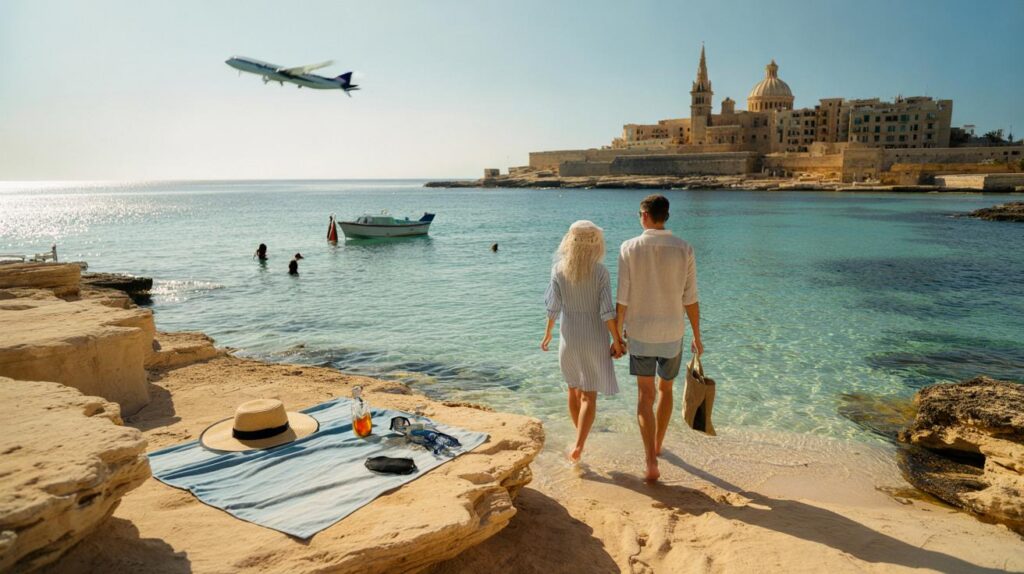
As rain lashes Britain, a pocket-sized Mediterranean nation offers beach-friendly warmth and bright skies, barely three hours from home.
With heating bills rising and days getting shorter, many of you are eyeing one last dose of sun. A compact island between Sicily and North Africa is serving up mid‑20s warmth in October, golden bays, and culture-packed streets, all within a short hop from major UK airports.
Where the heat lingers in October
Valletta, Malta’s diminutive capital, usually sits near 25C in October. Sea temperatures often hover around 24C, which keeps beach days comfortable and evening swims tempting. Sunshine lasts long enough for lazy lunches outdoors and sunset strolls along the bastions.
Malta gives you summer-lite in October: around 25C by day, swimmable seas, and blue-sky afternoons without the crush of high season.
An analysis of European capitals frequently places Valletta at the top for October warmth. Lisbon and Rome typically trail with low‑20s highs, while Madrid lands in a similar range. Farther north the mercury drops sharply, making Malta a rare short-haul bet for genuine T-shirt weather.
Why Malta fits a quick autumn break
The pitch is simple: short flight, small distances, low stress. You can land mid-morning and reach your hotel within the hour. Buses connect most towns, taxis are plentiful, and English is widely spoken. Add the euro for easy spending and British-style plug sockets for fuss-free charging, and weekend logistics start to look painless.
| Metric | Valletta (Malta) | London (UK) |
|---|---|---|
| Average daytime high | 25C | 15–16C |
| Average sea temperature | ~24C | Not swimmable |
| Daylight hours | ~11 hours | ~10.5 hours |
| Typical attire | Shorts, light layers | Coat, knitwear |
From a Friday morning departure to a Monday night return, a three-night Malta dash often delivers two full beach days plus unhurried culture.
Beaches, bays and blue water
Malta and its sister islands pack a surprising range of coves and sands into a tight footprint. You can chase the sun across coasts without losing hours in transit.
Where to lay your towel
- Mellieħa Bay (Għadira): Malta’s longest sandy sweep, shallow and family-friendly.
- Golden Bay: a west-coast curve with fine sand and postcard sunsets.
- Ramla Bay (Gozo): copper-toned sand backed by countryside, ideal for a day trip.
- Blue Lagoon (Comino): luminous shallows; arrive early or late to avoid midday crowds.
- St Peter’s Pool: a natural lido of flat rock shelves and clear, deep water.
- Għar Lapsi: tiny inlet with excellent snorkelling in calm conditions.
Beach clubs remain open through much of October, especially on weekends. Many hotels keep outdoor pools heated, and seaside cafes trade well into autumn, so lunch with a sea view rarely feels like a gamble.
History on every corner
When the sun dips, Malta’s layers of history step in. Valletta compresses grand baroque façades and secret wartime tunnels into a compact grid. Within a short walk you’ll find St John’s Co‑Cathedral with its Caravaggio, the Upper Barrakka Gardens facing the Grand Harbour, and the Lascaris War Rooms carved deep underground.
Beyond the capital, Mdina’s honeyed lanes glow after dark, long after day-trippers leave. On Gozo, the Citadel crowns Victoria with views across fields to the sea. Film fans drift to Popeye Village for a quirky slice of set-turned-attraction, while Fort St Elmo hosts the National War Museum at the tip of Valletta’s peninsula.
How to get there from the UK
Direct flights run from multiple UK cities, typically around the three-hour mark. Schedules swell on Fridays and Mondays, which suits a quick break.
Typical routes and carriers
- London to Malta: multiple daily options on major low-cost and legacy airlines.
- Regional departures: Bristol, Leeds, Glasgow, Manchester and Newcastle often feature seasonal or year-round services.
- Flight time: about 3 hours outbound, a touch longer homebound with winds.
Advance fares for October can look kind, especially midweek. Hand luggage-only deals frequently surface under £100 return if you book early and travel light.
Where to stay without overthinking it
First-timers gravitate to Sliema and St Julian’s for waterfront promenades and frequent buses. Valletta suits culture lovers who like everything on the doorstep. Families often prefer Mellieħa for sandy shores and calmer evenings. Gozo delivers a slower rhythm and farmhouse stays, with frequent ferries across the channel.
What to pack and how to move
- Clothing: light layers, a windbreaker for boat trips, and sandals plus comfy trainers.
- Swim kit: reef-safe sunscreen and a rash vest if you run cool in the water.
- Power: Type G plugs are standard, so your UK chargers fit.
- Transport: buses cover the islands cheaply; taxis and rideshares bridge gaps late at night.
- Driving: left-hand traffic. Roads are short, parking tight in popular zones.
Costs, crowd levels and weather quirks
Hotel rates usually slide after the peak of August and September. You get warmer seas than spring with fewer cruise-day bottlenecks. Weekends remain lively along the promenades, while weekdays feel relaxed. Short bursts of rain do occur, normally clearing fast. Rock shelves can turn slippery after a shower, so pack shoes with grip.
Jellyfish occasionally drift in on certain winds. Local apps and noticeboards flag conditions, and lifeguards mark safer swimming spots when on duty. If a bay looks purple-flagged, move five minutes down the coast and conditions often change.
If Malta is full, consider these warm capitals
Seats gone on your dates? You still have choices within similar flight times, though temperatures generally sit a notch lower.
- Lisbon, Portugal: usually around 22–23C; beaches at Cascais and Costa da Caparica are a short hop.
- Rome, Italy: roughly 21–23C; city breaks feel comfortable for long days out.
- Madrid, Spain: near 21–22C; dry air keeps evenings pleasant on terraces.
A quick plan you can copy this weekend
Day one: morning flight, lunch on the Sliema seafront, afternoon dip at a nearby lido, evening stroll in Valletta and a harbour-view dinner. Day two: early boat to Comino’s Blue Lagoon or Gozo’s Ramla Bay, late return for cocktails in St Julian’s. Day three: culture hit in Valletta—Cathedral, Barrakka, War Rooms—followed by gelato in Mdina before a late flight home.
For families, swap the boat runs for Mellieħa’s shallow sands and a hotel with a heated pool. For food lovers, book a harbour-front table for grilled fish and lampuki when in season. For walkers, trace coastal paths above Dingli Cliffs and time a sunset over Golden Bay.
If you want to gauge value, compare three elements: flight cost, room rate within 30 minutes of Valletta, and transit time from the airport. If all three look favourable, Malta usually beats a longer-haul gamble. You land, you swim, you eat well, and you fly home feeling you squeezed real warmth out of October—without leaving Europe.



Three hours and 25C? Yes please. For a first‑timer, would you base in Valletta or Sliema for a 3‑night stay?
This reads like ad copy. What about jellyfish days, Blue Lagoon crowds at noon, and half‑term fare hikes? Any non‑rose‑tinted caveats?