
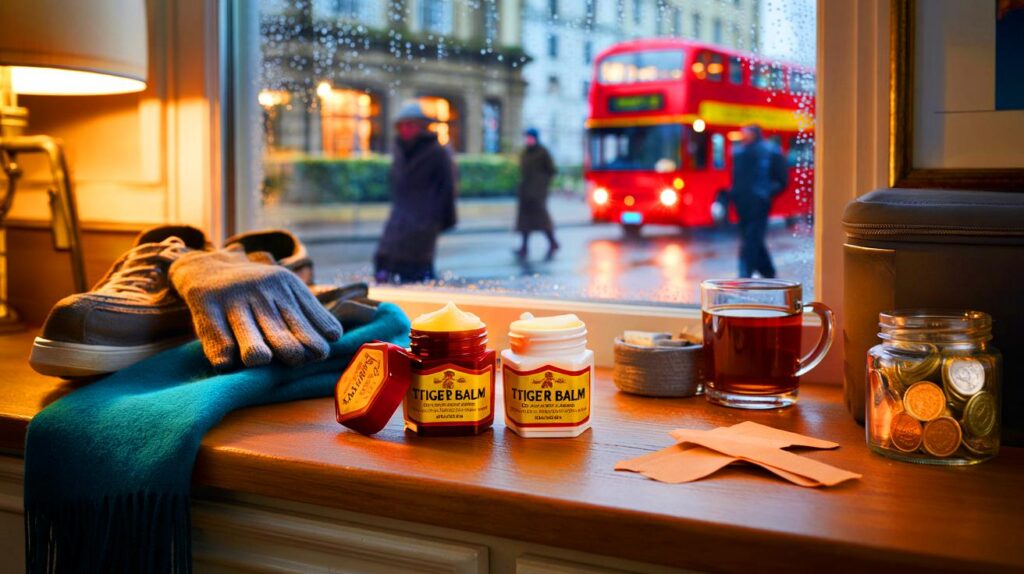
Cold mornings creep in and Britain reaches for old remedies, hunting clever ways to stretch pennies and soothe daily hassles.
As routines toughen with frost and drizzle, a small aromatic tin is back in handbags and hall cupboards. Menthol and camphor lead the charge, and the tricks people use with this balm go far beyond sore calves and sniffles.
What is in the jar
Tiger Balm traces to the 1870s, when Burmese-based herbalist Aw Chu Kin blended essential oils in a petrolatum base. Today’s jars typically pair menthol and camphor with oils such as cajuput, clove, cinnamon or peppermint. The scent is bracing. The feel is cooling to warming, depending on the blend.
The brand most shoppers look for is Haw Par, produced in Singapore. It is widely sold in Britain, usually in compact 19 g to 30 g jars. People like it because a little goes a long way, and it sits neatly beside plasters and paracetamol.
Use a pea-sized amount on clean, intact skin. Avoid eyes, lips, broken skin and mucous membranes. Wash hands after use.
Eleven clever uses before the cold bites
1. Perspiration hot spots
Some fabrics trap moisture and smell. A whisper-thin layer on dry underarm edges or under-bust folds can calm odour build-up. Keep it sparse and skip if skin looks irritated.
2. Trainers and cupboards that pong
Leave an opened jar on a shelf or near shoe racks. The mentholated aroma masks stale odours in closed spaces without sprays or candles.
3. Corns that ache in winter shoes
Massage a small amount into hardened spots once or twice daily. The rub softens the surface feel and eases pressure during long commutes.
4. Blisters trying to form
When chafing starts, smooth a speck around, not on, the tender centre, then add a protective plaster. It reduces friction while you clock steps.
5. Insect bites that itch indoors
A dab stops the urge to scratch. The strong scent may also deter late-season midges lurking near windows.
6. Tension headaches at your desk
Work in a dot at the temples and nape. The cooling tingle distracts from tightness while you hydrate and dim harsh light.
7. Stuffy nose and heavy chest
Rub a little onto the upper chest and throat. Some people trace a faint line along the sides of the nostrils for a sense of clearer airflow.
8. Post-commute muscle tightness
Calves and shoulders stiffen in the cold. A brief massage adds warmth to stretching and helps you ease back into evening tasks.
9. Motion sickness on buses and boats
A small touch under the nostrils, or on a scarf near the collar, offers a bracing scent that many find steadies a queasy turn.
10. Cold fingers before a walk
Rub a little into the backs of hands and over knuckles, then add gloves. The warming feel encourages you out the door.
11. Gym bags and lockers
Slip a closed jar inside. Crack it open for an hour at home to freshen the kit shelf between washes.
Less is more: most people use no more than a pea-sized amount per application, two to three times daily.
How to apply without drama
- Patch test on the inner forearm for 24 hours if you have sensitive skin.
- Apply after a shower once skin is dry, not before heavy sweating.
- Do not bandage tightly or add heat pads over treated areas.
- Keep two separate jars: one for skin, one for odour control in cupboards.
- Check the label each time; formulations and strengths can vary by market.
Which balm when
| Version | Typical feel | Signature oils | Handy for |
|---|---|---|---|
| White | Cooler, mint-forward | Menthol, camphor, cajuput, mint | Head tension, stuffy nose, travel queasiness |
| Red | Warmer, spiced | Menthol, camphor, clove, cinnamon | Muscle tightness, cold hands, shoe chafing |
When to give it a miss
Avoid use on children under 10. Skip during pregnancy and while breastfeeding. Do not apply on eczema, sunburn, open wounds or freshly shaved skin. If you have asthma, very reactive skin, or a history of fragrance allergy, ask a pharmacist before trying aromatic balms. If headache or chest symptoms persist, speak to your GP or call NHS 111.
Stop immediately if burning, redness or wheezing appears. Seek medical advice if symptoms worsen or do not settle.
Fakes and smart buying
Counterfeit jars do circulate online. Look for clear Haw Par branding, tamper-evident seals, crisp printing and a batch number. Buy from established pharmacies or supermarkets. In the UK, a 19 g jar tends to cost around £5–£8; larger sizes scale a little better on price per gram.
Make it work harder for you
Time your applications. For headaches, pair the rub with a glass of water and five minutes with your eyes closed. For chafing, apply before you put on problem footwear. For night congestion, rub the upper chest 20 minutes before bed so the aroma settles.
Avoid layering multiple menthol products at once, such as inhaler sticks and strong chest rubs, which can irritate sensitive noses. Keep the jar tightly closed and away from radiators to preserve its punchy oils through winter.
Useful alternatives if menthol is not your friend
For sweat and odour, try a fragrance-free antiperspirant and rotate shoes to dry fully. For stuffy noses, saline sprays and steam from a hot shower offer relief without fragrance. For motion sickness, acupressure wristbands and sitting over the rear axle on buses can help. For chafing, silicone-based anti-friction sticks work well under waistbands and straps.
Handled with care, that tidy tin can spare you extra purchases and smooth out winter niggles. Plan your use, respect the warnings, and track what genuinely helps you through the cold months.



Brilliant roundup—didn’t realize the red vs white split. Swapping a candle for an opened jar in the shoe cupboard actually saved me a few quid on fresheners. Cheers for the clear ‘pea-sized’ warning, too.
That “whisper-thin” underarm tip sounds useful, but wouldn’t the oils cause irritaiton if you’re a runner and sweat later? Anyone tried it on long runs without ending up stingy?