
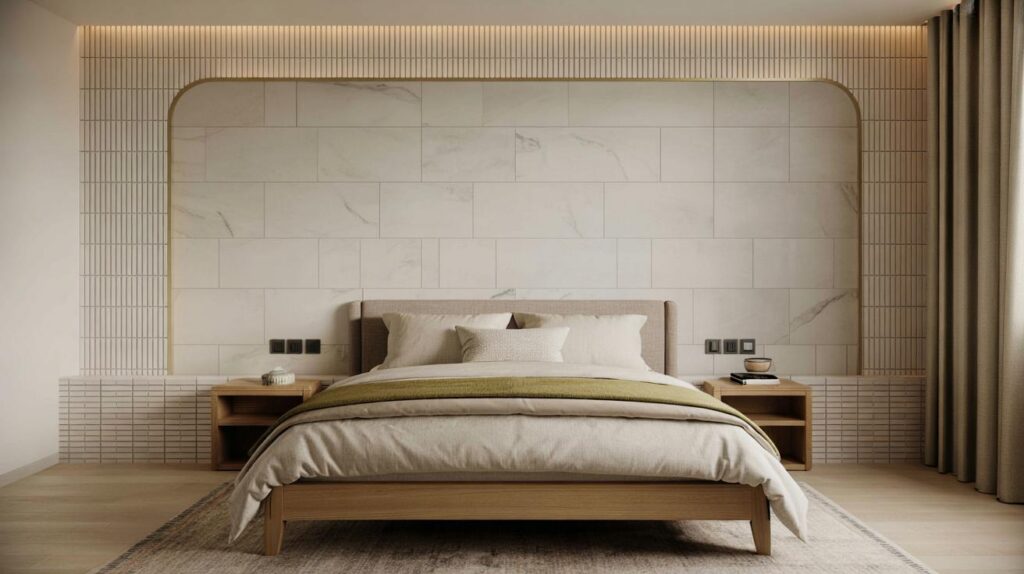
Your bedroom is about to change shape. A cool, hard material from kitchens and bathrooms is edging into soft spaces.
Designers say tiles will leap from splashbacks to bed walls in 2026, trading upholstery for sheens, patterns and crisp lines.
Why tiles are moving into bedrooms
The headboard has long been a padded fixture, anchored by timber or fabric. The new mood is architectural: tiled panels that frame the bed like a feature fireplace. Drivers are practical and aesthetic. Tiles shrug off hair products, hand cream and night-time tea stains. They bring texture without dust, and they carry light in ways a weave cannot.
There’s a hygienic story as well. Allergen-conscious households want surfaces that wipe clean. Post-rattan and boucle, many people crave a fresher look that suits small rooms and rental refreshes. Tiles can be scaled from a simple border to a full-width wall, letting you dial the look up or down.
In 2026, expect a tiled headboard to signal a neat, durable bedroom: more gallery wall than cushion wall.
What you can tile and how it looks
Shapes, colours and layout ideas
- Small square “zellige-style” tiles create a rippled, handcrafted glow behind pillows.
- Finger mosaics (the slim, stacked kind) outline the bed like a graphic picture frame.
- Hexagons or scallops soften a boxy room with curves without resorting to fabric.
- Large-format porcelain slabs reduce grout lines and suit minimalist schemes.
- Terracotta tones warm north-facing rooms; pale marble-look tiles bounce scarce winter light.
- Vertical metro tiles lift low ceilings; a colour-block band acts like a modern dado.
Finish matters. Gloss reflects bedside lamps, satin diffuses glare, and honed surfaces feel calmer. Choose trims such as a rounded edge or brass profile to avoid harsh lines where tile meets paint.
Comfort, warmth and acoustics
Tiles are hard and cool. That can feel sharp if you like to read upright. Add a wall cushion, a removable upholstered bolster or thicker pillows for comfort. Soft curtains and a rug will absorb bounce-back sound so the room doesn’t ring.
Balance cool tile with warm textures: wool throws, linen bedding and timber bedsides tame echo and chill.
If the bed sits on an external wall, consider insulated tile backer boards to avoid condensation forming on a cold surface behind pillows.
Costs, time and who does the work
Budgets vary with size, tile choice and prep. Here are typical UK figures to help you plan a realistic spend.
| Item | Typical price |
|---|---|
| Ceramic/porcelain tiles (standard) | £15–£80 per m² |
| Mosaic sheets or handmade-look tiles | £90–£150 per m² |
| Adhesive (bagged powder) | £20–£35 per 20 kg |
| Grout (cement or epoxy) | £10–£25 per bag/tub |
| Edge trims (metal or tile bullnose) | £6–£12 per metre |
| Tile backer boards (6–10 mm) | £20–£30 per 1200×600 mm sheet |
| Labour (experienced tiler) | £250–£400 per day |
For a 2.4 m² tiled headboard area with mid-range tiles, expect £450–£1,200 all-in, depending on prep, patterns and trims. A straightforward job typically completes in one to two days: day one for setting out and tiling, day two for grouting and finishing.
Installation: a simple roadmap
- Measure and mark: decide the width (often bed width plus 10–20 cm each side) and height (90–130 cm above the mattress works for most rooms).
- Prep the wall: make it flat, dust-free and sound. Over old paint, prime; over uneven plasterboard, fix tile backer boards.
- Set out the grid: dry-lay to avoid slivers. Centre the design on the bed, not the room, and plan trim edges.
- Fix tiles: use powdered adhesive for strength; press firmly with even joints. Insert spacers to keep grout lines true.
- Add trims: mitre corners neatly or choose factory bullnose ends where available.
- Grout and seal: choose epoxy for stain resistance or cement grout with a sealer for easier DIY use.
- Reinstall sockets: plan cut-outs before tiling; use neat tile boxes and comply with safe cable zones.
Risks, mistakes and how to avoid them
- Cold bridging: on external walls, add a thin insulated backer to reduce condensation risk behind pillows.
- Glare: gloss tiles can throw bright hotspots from bedside lamps; choose satin if you’re light-sensitive.
- Sharp edges: specify rounded trims or bullnose near children’s beds.
- Weight on weak walls: heavy porcelain on dot-and-dab plaster can fail. Use mechanical fixings or backer boards.
- Grout shading: coloured grout gives drama but shows toothpaste splashes; go one tone darker than the tile.
- Noise: offset hard surfaces with curtains, rugs and upholstered seating.
- Layout regrets: avoid tiny cuts at the edges by adjusting the start line before you mix adhesive.
Maintenance and longevity
Wipe with a microfibre cloth and a pH-neutral cleaner. Cement grout benefits from a penetrating sealer every 12–24 months in busy homes. Epoxy grout costs more but resists stains and mould. Avoid abrasive pads that dull glazes, and skip bleach on coloured grout to prevent fade lines.
Tiles cope with nightly wear better than many fabrics. If fashion shifts, you can paint the surrounding wall a new colour without ripping out the headboard zone.
Materials to consider right now
The warm-to-cool spectrum
- Terracotta and clay-look porcelain: earthy, forgiving, pairs with oak and boucle throws.
- Zellige-effect ceramics: wavy glaze, artisanal vibe, works with limewash paint and linen.
- Marble-look porcelain: sleek, grown-up, pairs with brass or black trims.
- Finger mosaics: mid-century mood; stack vertically for height or horizontally for calm width.
- Recycled tiles: lower embodied carbon and subtle variation for character.
Beyond the headboard: floors, plinths and niches
To sharpen the look, run a 15–20 cm tiled skirting behind the bed and wrap it around the bedside tables. A shallow tiled niche above the pillows can hold books and a clock. On timber floors, a tiled bed plinth adds definition and protects from spills, but fit anti-slip finishes if you step on it.
A quick planning exercise for your room
Measure a notional headboard zone 200 cm wide by 120 cm high. That’s 2.4 m². Using 10×10 cm tiles, you need 20×12 = 240 pieces. Add 10% waste: 264 tiles. If tiles cost £45 per m², tile spend is about £108. Add adhesive (£25), grout (£15) and trims (~£30) for roughly £180 on materials before labour. Choose mosaics at £120 per m² and the material bill rises to ~£360.
Prefer large slabs? Two 120×60 cm porcelain tiles stacked to 120 cm high reduce grout lines and speed installation. You’ll pay more per tile but save on labour, as cuts and grouting drop sharply.
Who should try this and who should skip it
- Good for allergy sufferers, renters with permissive landlords, and compact rooms that benefit from reflective surfaces.
- Less suited to households that lean against the wall for hours without cushions, or very echoey lofts lacking soft furnishings.
Extra considerations many people miss
Lighting: a dimmable LED strip at the top edge of the tiled panel washes the surface and turns the wall into a gentle night light. Energy use is minimal, and it looks boutique-hotel with almost no bulk.
Power and charging: plan USB-C sockets in the tiled area before you start. A tidy cable plan avoids retrofitted trunking and messy drill holes after the grout cures.



Love the hygienic angle and the idea of reflective surfaces in small rooms. The LED strip tip is gold. As a renter, this feels doable if the landlord’s chill—definitley bookmarking the backer board note to avoid cold spots.