
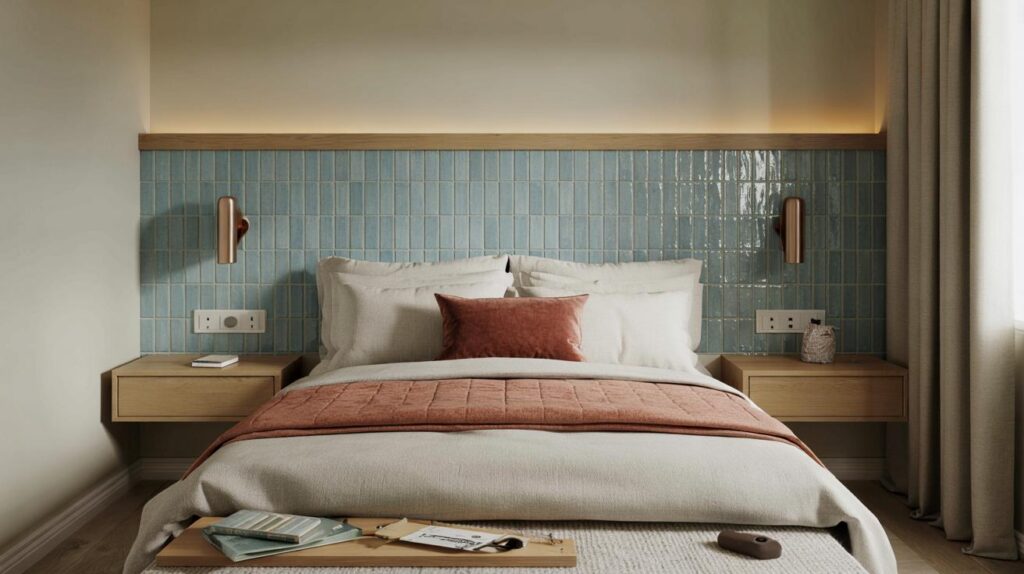
Bedrooms have started to look less like showrooms and more like sanctuaries with durable surfaces, richer textures and calmer colour.
Across the UK, homeowners and renters are quietly swapping padded backrests for tiled surfaces behind the bed. The shift promises cleaner lines, easy maintenance and serious customisation, and it lands just in time for 2026’s appetite for honest materials and crisp detailing.
From fabric to fired clay: why tiles are moving to the bedroom
For years, upholstered headboards signalled comfort. They also trapped dust, stained easily and dated fast. Tiles flip that script. Ceramic, porcelain and handmade clay offer pattern, sheen and rhythm, while shrugging off tea splashes, hand cream and head oil. They create a focal wall, frame the bed and add a built-in look without bulky furniture.
Designers point to three drivers: hygiene, longevity and creative control. Glazed surfaces wipe clean. Grout lines can either disappear with tone-on-tone colour or add graphic punch when contrasted. Formats range from micro-mosaic to slim “kit-kat” fingers and scalloped fish-scale shapes, so you can dial the look from serene to statement.
2026’s bedroom refresh pivots on tiles: durable, wipeable and endlessly configurable, with budgets starting under £150 for a small feature zone.
Looks that work in real homes
- Checkerboard charm: two colours in a 1:1 grid for a crisp hotel vibe.
- Mosaic frame: a tiled rectangle the width of the bed plus 15–20 cm each side.
- Finger tiles vertical: slim strips run up the wall to make ceilings read taller.
- Stone-effect calm: large porcelain slabs with minimal grout for a quiet, spa feel.
- Terracotta warmth: matte clay paired with linen and timber for earthy softness.
Costs, tools and time
Prices vary by material and size. Here’s a realistic snapshot for the UK.
| Tile type | Typical price per m² | Best for | Care |
|---|---|---|---|
| Ceramic (gloss or matte) | £10–£30 | Budget feature zones, easy cutting | Wipe with pH‑neutral cleaner |
| Porcelain | £20–£60 | Low‑porosity, durable finishes | Very low maintenance |
| Zellige / handmade clay | £80–£150 | Artisanal glaze, lively texture | Seal grout; expect variation |
| Marble‑effect porcelain | £25–£70 | Lux look without the upkeep | Easy clean; avoid harsh acids |
| Peel‑and‑stick vinyl tiles | £12–£25 | Renter projects, quick trials | Wipe; may scuff over time |
Budget a little extra for trim, adhesive, grout and tools:
- Adhesive and grout: £25–£45 for a 3 m² area.
- Tile trim or bullnose edges: £10–£20 per length.
- Backer board (if needed): £15–£35 per sheet.
- Basic tool hire (cutter, level, trowel): £20–£40 per day.
A careful DIYer can tile a 2–3 m² headboard zone in a weekend: 4–6 hours of work, plus 24–48 hours of curing time, from roughly £120–£350.
Planning and safety
Measure for proportion
Scale makes or breaks the look. For a double (135 cm wide), aim for a tiled width of 165–180 cm; for a king (150 cm), 180–200 cm; for a super king (180 cm), 210–230 cm. Height usually works at 90–120 cm from the floor, or around 55–65 cm above the mattress top. Extend to the ceiling if you want height drama, or cap with a trim for a crisp stop line.
Weight, fixings and walls
Ceramic and porcelain typically weigh 18–25 kg per m². Check plasterboard condition and fix backer boards to studs for peace of mind, especially on older walls. Use the right adhesive for your substrate, keep tiles 2–3 mm off the skirting, and include a small movement gap at the edges under the trim.
Cold walls and condensation
If the external wall feels chilly, add a thin insulated backer board (6–10 mm) behind the tiles to keep the surface warm and reduce condensation risk. Ventilate the room, and seal cement grout to resist staining. Epoxy grout costs more but resists moisture and marks better, especially behind the pillows.
Comfort, acoustics and lighting
Tiles reflect sound and feel cool to touch. Soften the scheme with a wool rug, heavier curtains and textured throws. Place padded cushions against the wall for lounging. Consider a tiny silicone bead behind the mattress edge to catch dust. For reading, add wall lights with integrated backplates or a slim LED strip tucked under a timber shelf that caps the tiled zone.
For renters and the cautious
- Tile on board: fix tiles to lightweight plywood or cement board, finish the edges, then hang the panel with a French cleat. Take it with you when you move.
- Peel‑and‑stick tiles: create a framed rectangle; removeable in many cases, check the product’s backing and your wall paint.
- Faux panels: use tile‑effect PVC sheets or fabric‑wrapped acoustic panels for the look and better sound absorption.
Styles and colours that feel 2026
Muted sages, chalk whites and clay neutrals keep things restful. Petrol blue and oxblood deliver depth in smaller doses. Match grout to the tile for a calm plane, or run pale grout with dark finger tiles for a refined grid. Slightly uneven, hand‑glazed surfaces catch morning light and add movement without busy pattern.
Three schemes with real‑world numbers
- Soft terracotta calm (2.7 m²): 100 x 100 mm matte ceramic at £22/m², warm white grout, timber shelf cap. Total materials around £120–£180.
- Monochrome grid (2.2 m²): 75 x 150 mm gloss ceramic in black and white, stacked checkerboard, contrast grout. Materials about £160–£240.
- Spa slab (3 m²): 600 x 600 mm marble‑effect porcelain at £45/m², minimal grout lines. Materials £220–£320.
Sustainability and health
Look for recycled‑content ceramic or recycled glass mosaic. Pick low‑VOC adhesives and sealers. Keep a spare box of tiles on hand for future repairs, rather than replacing a whole wall. Tiles are non‑combustible, which raises safety compared with fabric when you burn candles or use plug‑in heaters.
Quick jargon buster
- Rectified: machine‑cut edges for tight, even grout lines.
- Epoxy grout: two‑part, stain‑resistant grout; pricier, tougher.
- Bullnose: rounded edge tile to finish exposed sides neatly.
- Kit‑kat tile: slim, finger‑like mosaic strip, great for vertical emphasis.
- Trim: metal or PVC edging that caps and protects tile borders.
Maintenance and small fixes
Use pH‑neutral cleaner and a soft cloth weekly. Seal cement grout every 12–18 months, or sooner in oily contact zones. If a tile chips, score the grout around it, pry carefully, and replace with one from your stored spares. Keep a colour‑matched touch‑up pen for tiny chips on trims.
Extra tips before you buy
- Order 10–15% extra tiles for cuts and future repairs.
- Mock up the layout on the floor; photograph and label rows to speed installation.
- Round any sharp edges near the pillow line; children and sleepy heads appreciate the care.
- Add a USB/plug module within reach and plan cable routes before tiling.



Tiles > dust‑trap headboards. Sold.