
Cold nights arrive, weekends shrink, and watering cans gather dust. Yet your beds could still brighten, harden up, and quietly spread.
As November settles in, time-pressed gardeners look for plants that hold their own through wind, drought and shade. A trio of hardy perennials now tops shopping lists because they root fast in cool soil, need little attention, and keep borders vivid when lawns fade.
A quiet shift in British gardens
Rising hosepipe restrictions, busier schedules and smaller plots have changed what people plant. Garden centres report steady demand for shade-tolerant, low-input choices that still deliver colour. Three names stand out for balconies, town patios and awkward beds: heucheras, epimediums and pulmonarias. Each offers foliage drama, spring lift and year-round ground cover that keeps soil cool and weeds at bay.
Plant in November while the soil stays warm and the rain does most of the watering. Roots settle fast, growth starts early, and spring colour arrives without a rush.
The trio doing the heavy lifting
Heucheras: colour with no faff
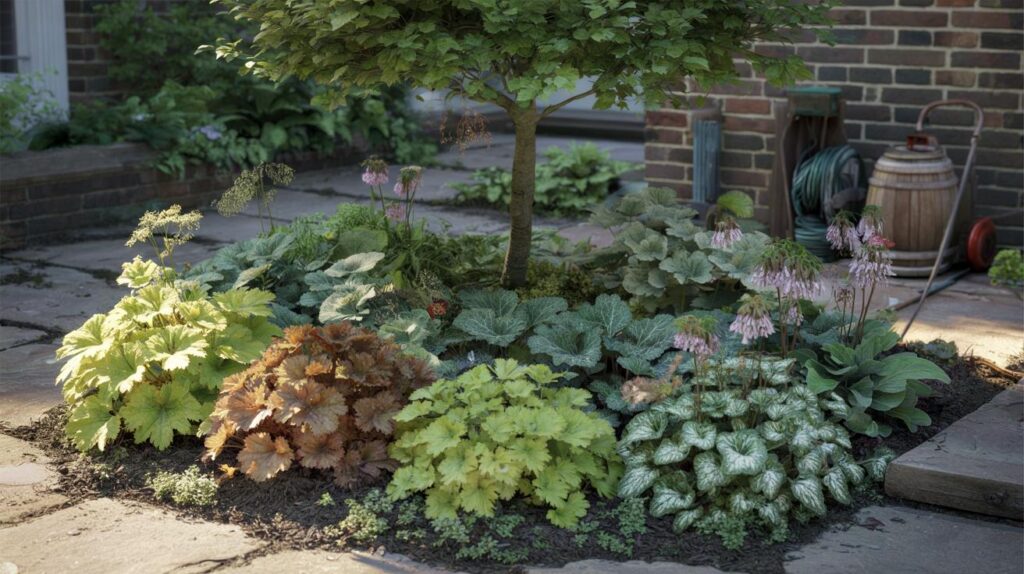
Heucheras act like living paint. Leaves range from lime to ember-orange and deep claret, with veins that pop in low light. The foliage holds its shape through winter in many regions, so borders never look bare. In late spring, slender stems carry air-light flowers that draw pollinators without demanding deadheading. Plants form neat mounds that edge paths, soften pots and break up gravel strips.
Epimediums: ground cover that loves the shade
Epimediums, often called barrenwort or fairy wings, thrive where lawn struggles. Their wiry stems and heart-shaped leaves weave a tight mat under shrubs, on slopes and along dry walls. New growth often flushes bronze, then settles to green, before autumn brings russet tones. In April, spurred flowers float above the leaves, bringing a quiet woodland feel to city corners.
Pulmonarias: winter edge and early nectar
Pulmonarias push out spotted or silver-splashed leaves that light up dim beds. Clusters of funnel flowers open as winter loosens, shifting from rose to violet-blue on the same plant. Bees use them as a vital early stop. Plants cope with dry shade once established and knit together to hide bare soil where grass thins under trees.
How they cut work and water
Drought and shade taken in stride
These perennials anchor themselves with fibrous, wide-ranging roots. Once settled, they manage long dry spells better than most bedding and far better than turf. Shade is not a problem; it is their home ground. Heucheras tolerate partial sun, epimediums shine in dry shade, and pulmonarias enjoy cool shade with morning light.
Swap a one-hour evening soak for rain-led irrigation and mulch. Many gardeners report cutting routine watering by half or more after year one.
Weeds down, chemicals out
Dense canopies smother light at soil level. Fewer weeds germinate. You spend minutes, not hours, on hand-pulling. Skip fertilisers and sprays; these plants prefer stable, moderately fertile soil and clean air. A simple spring tidy of tired leaves is enough in most gardens.
Plant now with a weekend plan
A 90-minute layout for beds and borders
- Mark a 1.5 m by 2 m patch in light or moderate shade.
- Clear coarse weeds by hand or with a sharp hoe. Keep roots of shrubs intact.
- Fork in 20–30 litres of garden compost or leafmould. Aim for a crumbly texture.
- Space plants at 30–40 cm in a staggered grid to close gaps within one season.
- Water in once, then mulch with 5 cm of chopped leaves or wood chips.
- Label clumps. Note colours and flowering times for later divisions.
| Plant | Light | Height x spread | Spacing | Flowering | Care |
|---|---|---|---|---|---|
| Heuchera | Partial shade | 30–45 cm x 35–50 cm | 30–40 cm | Late spring to early summer | Trim tired leaves in March; divide every 3–4 years |
| Epimedium | Shade to partial shade | 25–40 cm x 40–60 cm | 35–45 cm | Spring | Cut old foliage in late winter to show blooms |
| Pulmonaria | Shade to dappled light | 25–35 cm x 40–50 cm | 35–45 cm | Late winter to early spring | Shear back after flowering to refresh leaves |
Design moves that look after themselves
Plant in waves, not dots
Colour reads best in groups of three or five. Use heucheras as a bright front edge. Drift epimediums through the middle to lock soil and moisture. Drop pulmonarias in pockets where late winter feels bleak. Repeating these blocks across the bed gives rhythm from January to November.
Mulch once, then let the plants do the rest
Mulch acts like a blanket. It slows evaporation, feeds soil life and suppresses new weeds. Leaves and chipped prunings work as well as bagged bark. By year two, the plants themselves form a living mulch that needs little topping up.
Small risks and quick fixes
Slugs, vine weevil and scorch
Young pulmonaria can tempt slugs in wet spells. A ring of sharp grit or wool pellets protects crowns. Heuchera can fall prey to vine weevil grubs in containers; tip plants out in late autumn and check roots if growth stalls. Epimedium foliage can scorch in hot, dry wind; a deeper mulch and a can of water in heatwaves help.
Soil and drainage traps
None of the trio enjoys standing water. If your plot lies heavy, raise the bed by 10–15 cm and mix in grit. In thin chalk, add leafmould at planting to hold moisture without making the soil rich.
What this means for your time, wallet and wildlife
Replacing a 3 m by 1 m strip of thirsty lawn with these perennials can save several weekend hours per month in peak season. Mowing vanishes. Watering drops to a deep soak in dry runs. Over a year, many households notice lower water use in summer and fewer trips to buy annuals.
Costs stay modest. A basic set of nine plants can start a border for £45–£75, depending on pot size. Divisions after two or three seasons let you infill gaps for free. The early flowers of pulmonaria feed bees when forage is scarce. The layered leaves give ladybirds and lacewings shelter, which helps keep aphids in check.
Where to push the idea next
Shade layers, bulbs and pots
Slip spring bulbs between clumps for extra lift. Snowdrops, species tulips and narcissi thread well through epimedium leaves. In containers, pair a copper heuchera with evergreen grasses for winter structure on the doorstep. Keep drainage sharp and feed lightly in spring, not autumn.
Maintenance calendar you can stick to
- Late winter: shear epimedium leaves; tidy pulmonaria; mulch once.
- Early spring: water new plantings if the month is dry; top-dress with compost.
- Early summer: clip heuchera flowers if you want tighter mounds; leave some for pollinators.
- Late summer: divide crowded clumps; replant to fill edges.
- Autumn: remove damaged foliage; check pots for vine weevil grubs.
Three plants, one season of smart timing, and a light mulch can turn a needy border into a self-managing space.
If you like to quantify gains, set out a 10-litre watering can and note refills over a month before and after changing a bed to these perennials. Track minutes spent on mowing, edging and weeding on a phone timer. The numbers help you refine spacing, mulch depth and plant choices for the next section you tackle.
For windy sites or seaside plots, look at related low-input partners such as Bergenia and hardy ferns. They share the same workflow and sit well behind the heuchera–epimedium–pulmonaria matrix. Add one new group each autumn, and the garden slowly shifts from maintenance-heavy to near-autonomous without a costly overhaul.



Brilliant timing—was about to re-sow a patchy lawn. If I plant heucheras/epimediums now in chilly North Yorkshire, do I still need to fleece young clumps, or will mulch be enough? Also, would 25–30 cm spacing be too tight in a narrow 1 m strip competing with a mature birch?
60% less watering sounds optimistic. Any hard numbers from a small balcony pot setup? Containers dry out way faster than beds, even in shade—curious how you measured this and over what period.