
Autumn’s damp mornings have a new villain, and it’s lurking in your hallway. Households report an odour crisis across Britain this week.
As heating clicks on and windows stay shut, stale whiffs gather near the front door. Readers keep asking for a fix that works without chemical sprays or pricey gadgets. The answer sits in your cupboard, costs pennies, and takes one sleep to act.
Why your shoes smell worse in autumn
Sweat itself has little scent. Bacteria feed on it and produce volatile acids. Those compounds smell sharp and sour. Closed, humid shoes give microbes exactly what they want. Synthetic linings trap moisture. Padded insoles hold it for hours. A quick dash between rain and radiators creates perfect conditions for odour to bloom.
Trainers, boots and work shoes all suffer when you wear them on repeat. Skip airing and the fabric stays damp. Skimpy socks make it worse. Dirt adds nutrients for bacteria. One long commute or school run can be enough to restart the cycle.
Odour thrives on moisture and time. Break either, and you break the smell.
The 7p fix: bicarb, talc and cornflour
Tonight’s plan
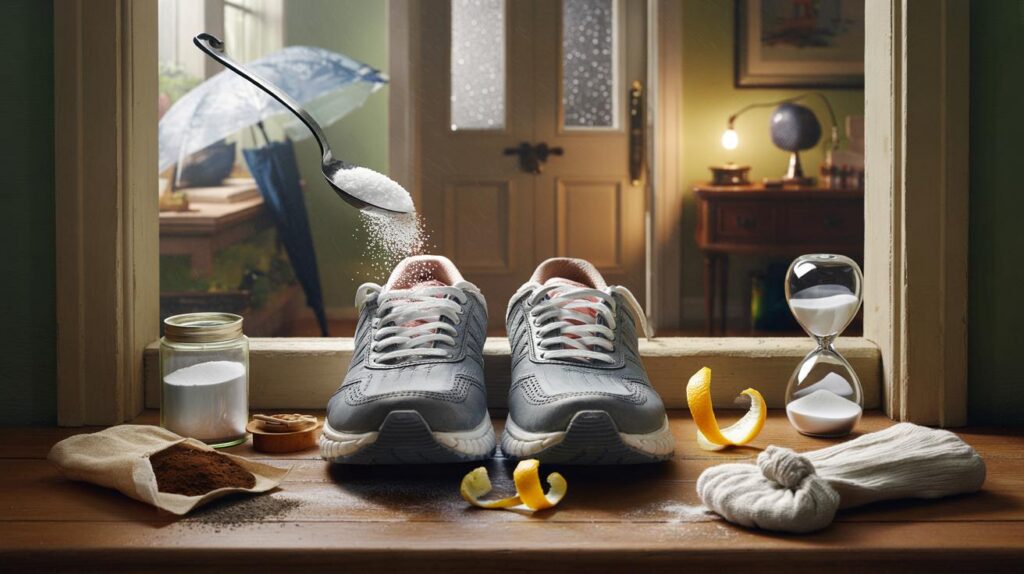
- Tip one level tablespoon of bicarbonate of soda into each dry shoe. About 7p per pair.
- Tap to spread the powder across the insole and into the toe box.
- Leave shoes undisturbed for 8–12 hours. Overnight suits most households.
- In the morning, tip the powder into the bin and wipe the insole with a dry cloth.
Dust, wait 12 hours, shake: the three-step overnight reset.
Bicarb helps in two ways. It absorbs lingering damp. It also neutralises the acids that make the sharp, rancid notes. If you prefer, use unscented talc or plain cornflour for moisture control. For dark interiors or suede linings, slip the powder into a clean sock and knot it first. You’ll avoid white residue while getting the same effect.
How it works
Bacteria such as staphylococci and corynebacteria digest sweat and skin oils. They leave behind molecules like isovaleric acid. Bicarbonate raises local pH and mops up these acids. Talc and cornflour draw out water, starving microbes. Dry shoes smell less because the chemistry stops. Simple inputs, simple outcome.
Teabag and citrus add-ons that boost freshness
If shoes still hold a faint hint, add one of these pocket fixes once the bicarb has done its job.
- One dry teabag per shoe. Green or black. It absorbs odour and adds a clean note. Let used bags dry fully before reuse.
- A strip of lemon or orange peel. Pith removed. It gives a light citrus lift. Replace after 24 hours to avoid mould.
- A spoon of coffee grounds in a breathable pouch. Strong deodoriser. Keep grounds dry.
- Removable insoles? Wash at 30°C inside a laundry bag, then air dry flat. Heat can warp foam.
Boost absorption first, add fragrance second. Water out equals smell down.
Care routine that keeps odour away for good
Small habits, big gains
- Rotate pairs. Give each shoe at least 24 hours off between wears.
- Untie laces and open the tongue fully when you get home. Airflow matters.
- Lift removable insoles after wet commutes. Dry them separately.
- Choose socks in wool, bamboo or cotton blends. Change at midday on heavy days.
- Use cedar shoe trees or scrunched newspaper to wick moisture. Avoid direct radiators for leather.
- Rinse mud from outsoles. Dirt harbours bacteria. Dry the edges and stitching.
- For quick refresh, place shoes by a small fan for 30 minutes. Moving air beats trapped damp.
Give each pair 24 hours off. Rotations beat bacteria.
What works for your budget
| Method | Typical cost per use | Time to act | Best for | Notes |
|---|---|---|---|---|
| Bicarbonate of soda | ≈7p per pair | 8–12 hours | Most trainers and casual shoes | Bag it for dark linings to avoid residue |
| Unscented talc | ≈5–10p | 8–12 hours | Heavy perspiration days | Avoid dust clouds; decant carefully |
| Cornflour | ≈4p | 8–12 hours | Fabric interiors | Strong absorber, neutral scent |
| Dry teabag | ≈3p | 6–24 hours | Light top-up | Ensure fully dry before use |
| Lemon/orange peel | Free if on hand | 6–24 hours | Post-bicarb freshness | Discard before it softens |
When smell signals a health or footwear problem
Persistent odour can flag athlete’s foot or untreated blisters. Skin breaks feed bacteria. Scaling between toes points to a fungal issue. Over-the-counter antifungal creams and powders help, but follow the course. If sweat soaks socks within hours, ask a pharmacist about treatments for excessive sweating. Insoles with activated charcoal add a useful buffer for commuters.
Shoes wear out from the inside before the sole looks done. Compressed foam and torn lining trap sweat. If odour returns within a day after treatment, check the insole for cracks and replace it. Breathable uppers, perforated footbeds and leather linings cut moisture build-up. Plastic-heavy interiors trap it.
Safety notes you should know
- Bicarbonate can mark delicate suede and dyed linings. Use a sachet rather than loose powder.
- Talc is dusty. Fill sachets over the sink and keep it away from children. Cornflour is a low-dust alternative.
- Vinegar sprays work on some fabrics. Mix 1:1 with water, mist lightly, then air until dry. Patch-test first. Avoid smooth leather.
- Never bake shoes on radiators or in ovens. Heat weakens glues and deforms midsoles.
A seven-day reset plan
Day 1: Night-time bicarb treatment. Air shoes by an open shelf, not in a closed cupboard. Wear a different pair tomorrow.
Day 2: Wash removable insoles at 30°C. Dry flat. Place cedar or newspaper in the shells. Swap to wool or bamboo socks.
Day 3: Teabag sachets overnight for a light lift. Clean outsoles and edges with a damp cloth. Dry with a fan.
Day 4: Inspect stitching and lining. Replace insoles if compressed or stained. Start a two-pair rotation for work.
Day 5: Short midday sock change. Keep a spare pair at your desk or in a backpack. Feet stay drier after lunch.
Day 6: Repeat bicarb if rain soaked your commute. Use a powder-in-sock method for dark interiors.
Day 7: Evaluate. If odour returns quickly, add charcoal insoles and check for skin irritation between toes.
Why this approach saves money and hassle
Household staples beat perfume-heavy sprays because they fix the cause, not just the smell. Bicarb and powders dry the microclimate that bacteria need. The routine also extends the life of footwear. Dry shoes crack less, smell less, and feel better by the end of the day. A 500 g tub of bicarbonate can handle dozens of pairs for months.
Extra pointers for specific shoes
Running trainers: remove insoles after each session. Stuff with newspaper for one hour, then switch to a small fan. Replace insoles every 300–500 miles. Leather boots: brush out grit, wipe with a barely damp cloth, air at room temperature, then nourish with conditioner. Court shoes and flats: use slim charcoal liners to trap odour without crowding toes.
Shared households can set a simple rule: shoes off at the door, tongues open, insoles lifted to the air. Add a small tray of silica gel sachets by the rack. They recharge on a sunny windowsill. A five-minute reset before bed keeps the hallway neutral by morning.



Does this work on leather boots or just trainers?