
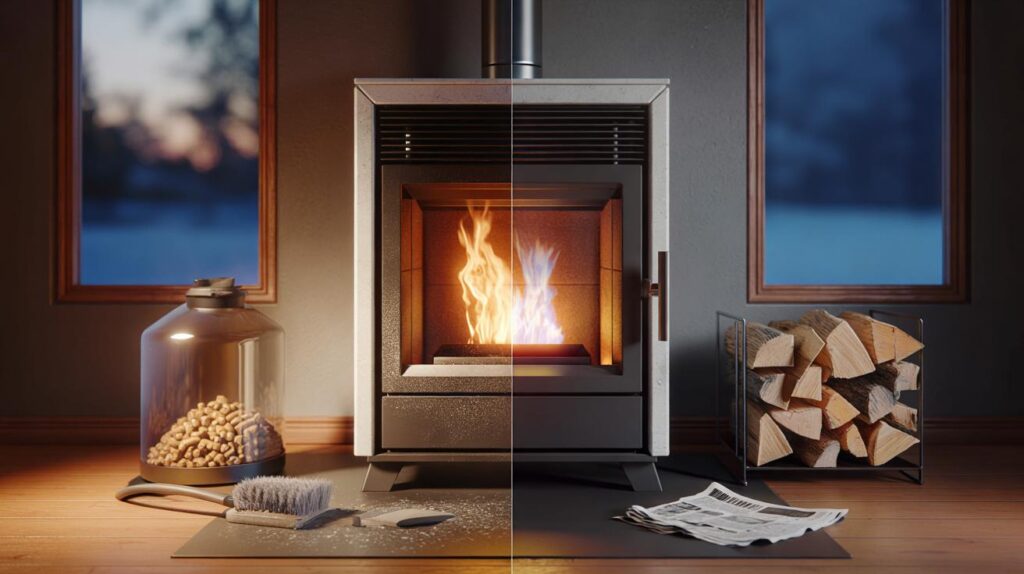
Cold nights are back, budgets feel tight, and stoves work harder. A tiny daily habit could change your comfort and costs.
We followed a familiar winter puzzle: why do pellets vanish faster while rooms feel lukewarm? Heating engineers keep naming the same culprit—build-up that strangles airflow and dulls the flame.
Why your stove burns through fuel as winter sets in
As you fire up the stove night after night, fine dust, soot and ash settle across the burn pot, the heat-exchanger fins and the glass. That grime narrows air paths. Oxygen drops. Combustion cools. The stove then feeds more pellets or chews through extra logs to hit the thermostat setting. You pay for heat that never quite reaches you.
Spot the signs before bills rise. A glass pane that blackens quickly suggests choked airwash. A lazy, orange-tipped flame points to poor mixing. An ash pan that fills faster than usual can mean incomplete burn. A stronger whiff of smoke when you open the door often signals restricted draw.
Dirty surfaces starve the flame of oxygen. Cooler burn, weaker heat, higher consumption—an expensive chain reaction.
Pellet appliances suffer most because their metering is precise; even small restrictions skew the air–fuel balance. Log stoves aren’t immune either. Wet wood, fluffy ash build-up and tired door seals all push fuel use up without adding comfort.
The two-minute habit technicians swear by
Service engineers keep returning to the same fix because it works: a quick clean after a full cool-down. You don’t need tools beyond a soft brush, a dry microfibre cloth, a sheet of damp newspaper and an ash vacuum rated for fine dust.
- Open the door only when the stove is cold and power is off.
- Wipe the inside glass with damp newspaper, then finish with a dry cloth.
- Lift out the burn pot or grate and brush away clinker and fines.
- Empty the ash pan before it gets half full and vacuum the chamber edges.
- Tap the accessible heat-exchanger fins or baffles to drop soot into the ash pan.
- Check the air inlets are clear and that nothing blocks the room vent.
Two minutes after a cool-down keeps airways clear, stabilises the flame and slashes wasted fuel.
Simple safety rules before you start
- Wait for a full cool-down; warm embers ignite dust and scorch seals.
- Use an ash vacuum with a metal hose. Ordinary hoovers leak fine dust.
- Never spray liquid on hot glass; rapid cooling can crack panes.
- Re-seat the burn pot properly so air holes line up.
Can you really save 20%? The numbers that matter
Installers report the same pattern across homes they service: once the glass, burn pot and primary channels stay clean, feed rates drop to maintain the same room temperature. Householders who tidy daily or after every two to three burns often see consumption fall by up to one-fifth across the season. Your figure will vary with insulation, weather and fuel quality, but the maths adds bite.
| Scenario | Annual fuel use | 20% saved | Pocketed value |
|---|---|---|---|
| Pellet stove in a 3-bed home | 3.0 tonnes at £340/t | 0.6 t | ~£204 |
| Hybrid use: pellets weekdays, logs weekends | 2.0 t pellets + 3 m³ logs (£120/m³) | 0.4 t + 0.6 m³ | ~£68 + £72 = £140 |
| Log stove as primary heat | 6 m³ seasoned hardwood | 1.2 m³ | ~£140 if £120/m³ delivered |
These are illustrations, not guarantees. They show why a two-minute routine competes with the biggest savings you can make without touching settings or swapping fuel.
Clean glass, open airways, steady flame: that’s your free 20%—no spare parts, no call-out, no app.
What the trade keeps finding on call-outs
- Leaky door seals: crushed rope gaskets pull in false air, flattening the flame. Replace if the “paper test” slides out easily.
- Clogged burn pot holes: slag and ash cap the jets, so pellets smoulder. Scrape holes clear with a wooden skewer.
- Choked air inlet: pet hair, dust and cobwebs reduce draw. Brush and vacuum the inlet screen.
- Low-grade pellets or damp logs: high ash and moisture raise soot and drop heat. Aim for ENplus A1 pellets and logs below 20% moisture.
- Hard cycling: running at full blast then off wastes fuel. A steady mid setting often heats rooms more evenly with less burn.
Stretch the gains with small setting tweaks
Run the stove longer at a lower output during cold spells. The flame stays clean, the glass stays clear and the fan noise drops. Use the room sensor, not just the front-panel reading, so the control loop measures real comfort rather than the hot spot by the stove.
If your unit offers an eco or modulation mode, favour it for evenings. It trims feed rates once you approach target temperature. For logs, split wood to wrist thickness, stack two or three pieces with space between, and use a top-down light. A bright, vigorous flame burns cleaner and deposits less soot.
Fuel storage matters. Keep pellets sealed and off concrete floors to avoid moisture wicking. Store logs under cover with open sides so wind can finish the seasoning. A £15 moisture meter pays for itself the first time you reject a damp delivery.
Tell-tale symptoms and quick fixes
| Symptom | Likely cause | Quick action |
|---|---|---|
| Glass blackens within a day | Poor airwash, wet fuel, blocked pot holes | Clean glass, clear holes, check fuel dryness |
| Flame looks dull and lazy | Restricted inlet or flue, leaky seals | Vacuum inlet, inspect gaskets, book a sweep |
| More ash than usual | High-ash pellets, incomplete burn | Change supplier, raise output briefly to burn clean |
| Room heats unevenly | Fan speed or placement issues | Reduce fan, redirect airflow, add a small desk fan to move heat |
Safety and a simple maintenance calendar
Fit a carbon monoxide alarm in the same room. Test it monthly. Keep a metal ash bucket with a lid; embers can glow for days inside ash clumps. Book an annual service and a chimney sweep before peak season. Many insurers expect proof of sweeping for solid-fuel claims.
Never skip the yearly sweep. Cleaner flues cut fire risk, stabilise draught and save fuel on every burn.
Week-by-week, give the stove a deeper tidy: remove baffles if your manual allows, brush heat-exchanger tubes and check for soot glaze. Inspect the door latch tension and the glass rope seal. A tight seal helps the airwash do its job and keeps the flame bright.
Two practical add-ons for extra savings
Run your own mini test. Weigh a day’s pellets into a bucket—say 10 kg—then note how long they last before and after adopting the two-minute clean. Do the same over a weekend with logs by counting pieces from the same stack. The difference shows on your stopwatch and your bin.
Choose fuel with care. Look for ENplus A1 pellets with moisture below 10% and ash content under 0.7%. For logs, buy hardwood split to 5–10 cm across and seasoned below 20% moisture. Better fuel means fewer cinders, fewer clinkers and less time with a brush.
If you heat more than one room, consider a door fan or a through-wall transfer grille to move warm air gently. That lowers the stove set-point by a notch and trims consumption without sacrificing comfort.



20% sounds optimistic—has anyone actually measured before/after by weighing a day’s pellets like you suggest? I clean weekly and my feed rate doesnt move much. Maybe my door gasket is leaking instead?
Great reminder. The damp newspaper trick for the glass actually works; took 60 seconds and the flame brightened.