
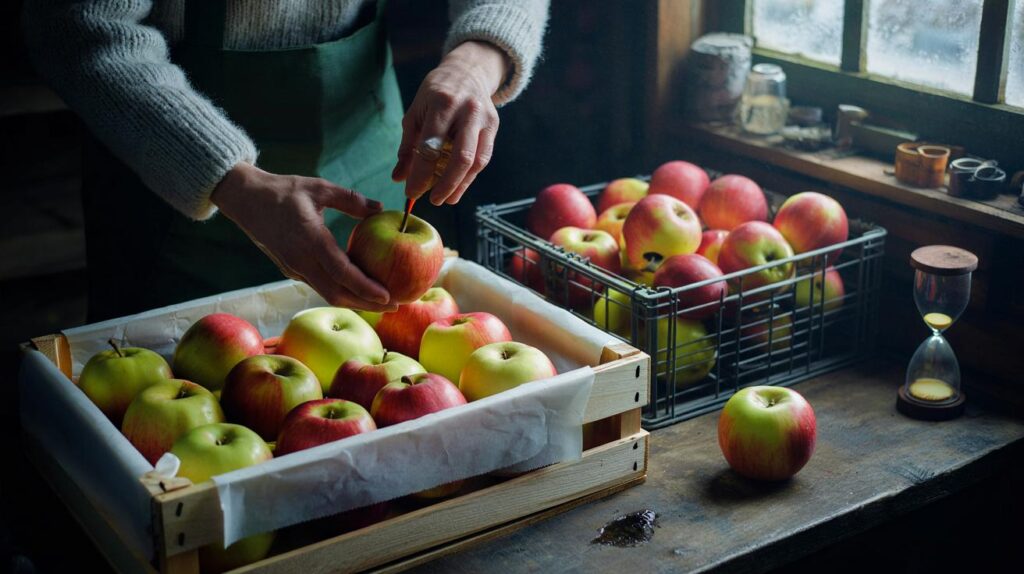
Across Britain, you fill crates with pride, then watch them shrivel by Christmas. The fix sits closer than you think.
This week, a two-minute habit takes centre stage: a quick sort at harvest that turns October bounty into January bowls of fruit. No fancy kit. Just timing, gentle hands, and a cool, dark, airy corner.
The 120-second habit gardeners forget
Right after picking, spend two minutes per crate to separate perfect fruit from the rest. Keep the firm, blemish-free ones for storage. Eat or cook the bruised, scuffed or overripe fruit within days. This micro-ritual stops one bad apple from kicking off a chain of rot that can wipe out a month of snacks.
Invest 120 seconds at harvest. One bruise can infect an entire tray within a week.
Pick at the right moment
Fruit stores best when mature, not underripe or collapsing soft. Apples lift away with a slight twist when ready. Pears come off with their stalks intact; finish ripening them on the counter. Overripe fruit slips faster into decay. Underripe fruit wrinkles and never develops full flavour.
Handle like eggs
Use both hands. Twist, don’t tug. Keep the stalk on; it seals the fruit. Lower fruit into a bucket or crate; never drop it. Line crates with a sheet of paper to cushion the skin. Every knock cuts weeks off the shelf life.
Sort, separate and stage your storage
That two-minute sort pays off if you set the right stage. Aim for steady cool, low light and air movement. Quick checks stop small problems becoming a binful of waste.
Spot the risks before they spread
- Soft patches, weeping juice or dark sunken spots signal trouble.
- Split skin welcomes mould.
- Wasp stings leave pinholes that rot fast.
- Fruit without stalks dries out sooner and infects neighbours.
- Mixed ripeness accelerates spoilage in the whole crate.
Store only firm fruit with intact skin and stalks. Eat, cook or preserve the rest.
Set up the room
Choose a cool, dark, well-ventilated spot. A brick outhouse, cellar, garage cupboard or an unheated spare room can work. Target 8–12°C with minimal swings. Keep it out of direct light to slow mould and reduce water loss. Aim for moderate humidity; fruit prefers slightly moist air over bone-dry radiators.
Use slatted shelves, wire racks or stacking crates with gaps. Lay fruit in a single layer, stalks down, so air reaches every side. Put paper between layers if you must stack, though one layer per tray gives the best results. Place a cheap thermometer on the shelf and check it at the same time each day for a week.
Cool, dark, ventilated: 8–12°C, steady air, single layers. No stacks. No sunlight. No sudden heat.
A simple weekly routine that prevents rot
Your store stays safe when you patrol it. Five minutes once a week is enough for most households.
The five-minute check
- Lift each fruit; feel for soft spots or off smells.
- Remove suspects immediately and use them the same day.
- Wipe shelves with a clean, slightly damp cloth.
- Open the door for a minute to change the air in still rooms.
- Turn trays front to back so conditions stay even.
Organise by variety and date
Label every tray with the variety and the day you picked it. Early apples go first; late keepers follow. Separate apples from pears and quinces if space allows. Keep batches small, so a problem stays contained. Rotate stock like a grocer: first in, first out.
| Fruit | Best storage range | Typical keep time |
|---|---|---|
| Apples (firm autumn types) | 8–12°C, dark, airy | 8–16 weeks |
| Pears (picked mature, not soft) | 8–12°C, finish ripening at room temp | 4–8 weeks |
| Quinces | 8–10°C, no stacking | 4–8 weeks |
| Persimmons (kaki) | 10–13°C, gentle airflow | 4–8 weeks |
Why this matters now: money, flavour and waste
Food prices bite, and waste stings. A family with 10 kg of apples worth £14 loses about £3.50 if 25% fail in storage. That quick sort and a weekly check can slash losses below 5%, saving roughly £2 per crate. Multiply that by four crates and you keep more than £8 in your pocket, plus weeks of snacks that taste like autumn.
Flavour holds when fruit breathes cool, still air. Texture stays crisp when you avoid pressure points. Vitamins last longer when light stays off the skin. Small choices, measurable results.
Two minutes in October buys you breakfast in January—crisp, fragrant and paid for months ago.
Extra tips that boost your odds
Mind the ethylene
Apples release ethylene, a ripening gas. Keep them away from carrots, parsnips and potatoes, which sprout faster near apples. Keep onions separate; their aromas invade fruit. If space is tight, use lids with vent holes and store different foods on different shelves.
What to do with borderline fruit today
Turn soft or scuffed fruit into compote, chutney or tray bakes the same day. Slice, steam for five minutes, and freeze in portions for winter porridge. Dry thin slices in a low oven until leathery and keep them in jars for packed lunches. Nothing needs to go in the bin.
Cleanliness and pests
Wash trays before the season starts; warm water with a splash of vinegar does the job. Sweep floors so mice find nothing to snack on. Fit mesh on vents and set snap-safe traps where you see droppings. Keep cardboard off damp floors to avoid mould wicking up into crates.
When temperatures swing
Garages warm up on sunny afternoons. Buffer the heat with water containers under the shelves; water changes temperature slowly. Move fruit away from walls that catch the sun. If a cold snap threatens, cover trays with breathable cloth, not plastic, so moisture does not condense on the skin.
For the data-minded
Track three numbers for one month: temperature at 7am, relative humidity at noon, and weekly weight loss of a sample fruit. Aim for steady readings and keep weight loss under 1% per week. If you see faster loss, reduce drafts, raise humidity with a shallow tray of water, and check for hidden gaps that pull warm air in.
Work with the fruit you grow. Some late apples keep longer than early ones. Your room might sit closer to 10°C than 8°C. Adjust tray depth, spacing and inspection frequency to match your microclimate. The two-minute sort stays the anchor—small habit, big season-long payoff.



Brilliant tip—never thought 120 seconds could save months! Quick question: would wrapping each apple in paper help or trap moisture? Any brand/type of paper you reccomend?
So you’re telling me my impatience is the villain? Guilty as chraged. But does the “single layer” rule still apply if I’ve got tiny crabapples?