
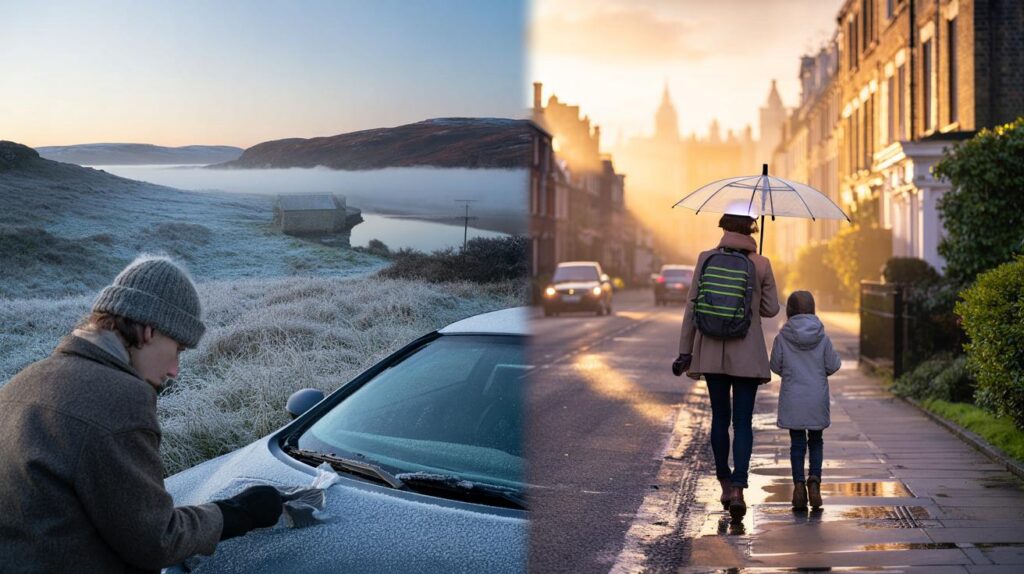
Coats out, heating on standby, and traffic creeping at dawn: families brace for a season of sharp contrasts and questions.
With autumn showing its hand, attention turns to the winter ahead. Will mornings bite or will radiators rest longer?
What the Met Office is signalling
The Met Office’s latest long-range outlook points to a softer start to winter than many remember. Forecasters see a greater chance of near-normal temperatures than a deep freeze. They also flag a notable risk of mild spells. High pressure often sits close by, which can keep rain at bay for stretches. Any break in that pattern could still bring showers to a few spots.
Headline odds: 55% chance of average temperatures and 30% chance of a mild season across the UK.
Regional splits still matter. Southern England is projected to hover around 8°C on many afternoons early in the season. Parts of Scotland could dip close to 1°C on the coldest nights. That spread decides whether you face frosty windscreens or just a misty start.
Indicative monthly means: October 9.73°C, November 6.48°C, December 4.20°C.
No early snow signal for the UK
Rumours of Halloween flurries have been knocked back. The Met Office has not flagged snow for Scotland or northern England in late October. That means no instant sledges or surprise school closures. With high pressure nearby, many areas look settled and fairly dry. A few showers can still sneak into exposed coasts, because patterns wobble from week to week.
How cold will it feel where you live
Numbers tell part of the story. Local factors finish it. Rural frost pockets cool faster after sunset than city centres. Hills grab colder air sooner than low-lying suburbs. Clear skies at night enhance radiative cooling, so grass frosts can strike even when the day felt gentle.
- South of England: average near 8°C early in the season, with chilly dawns after clear nights.
- Central belt and the Midlands: cool days, sharper evenings, and frequent hat-and-glove mornings.
- Northern England and Scotland: nights near 1°C in colder spots, with risk of frost on untreated surfaces.
Wind also shifts how it feels. Light winds on a sunny afternoon can make 6–8°C feel serviceable for the school run. A northerly breeze on the same thermometer reading can sting the ears. Short bursts of sunshine warm south-facing streets, while shaded pavements keep their chill.
Month-by-month: what the averages suggest
| Month | UK average temperature | What households typically notice |
|---|---|---|
| October | 9.73°C | Cool mornings, mild afternoons, coats on standby, occasional mist and patchy frost in rural lows. |
| November | 6.48°C | Heating used more evenings, thicker layers on commutes, early frosts more frequent after clear nights. |
| December | 4.20°C | Short days, regular frosts in colder spots, icy car windscreens, occasional damp chill under cloud. |
Dry spells versus incursions of rain
High pressure tilts the odds toward longer dry windows. That helps with travel reliability and outdoor jobs. The Met Office still keeps a cautious eye on weak fronts nudging in from the Atlantic. Those can deliver bursts of rain, mainly to western hills and coastal fringes. Most places see more dry days than wet ones during these settled phases.
Expect more dry days under high pressure, but keep a brolly by the door for passing fronts.
What this means for your week
Planning helps. Layering beats one bulky jumper, because classrooms and offices vary in warmth. Gloves and a hat cut wind chill on exposed platforms. A thermos on a long touchline wait spares frozen fingers. Keep a scraper and de-icer in the car, as grass frost can form even when roads look fine.
- Set earlier alarms on clear nights, because frost can slow the school run.
- Air rooms on drier days to reduce condensation, then shut windows before temperatures drop.
- Check boiler pressure and bleed radiators before the first long cold snap.
- Use porch mats and trays to catch slush and protect floors during damp, chilly spells.
For parents and commuters
PE kits need a warm layer added this term. Reflective strips help on dark school runs. For drivers, low sun at dawn can be blinding when roads are damp and cold. Cyclists feel chill first in hands and ears, so lightweight windproofs earn their space in the bag.
Could things flip later in the season
Long-range guidance always carries wiggle room. A sudden change in the jet stream can shuffle the deck in a week. Cold pools over the continent can edge west if blocking builds in the north. That said, current signals lean away from an early, prolonged freeze. Any sharp cold hits would likely be short-lived bursts, not weeks of lock-in.
Signals favour a milder start, but the door to short cold snaps never fully shuts in a UK winter.
What families are asking: practical answers
When to turn the heating on depends on your home’s insulation, not just the calendar. Modern flats hold heat longer than draughty semis. A programmable schedule saves energy on milder days when the sun helps. For older homes, draught blocking along skirting and doors makes a big difference in rooms you use most.
Kit choices matter too. Thermal base layers weigh little and trap warmth under school shirts. Shoes with grippy soles help on frosty pavements. Keep a compact umbrella in backpacks for those brief, unscripted showers during otherwise calm weeks.
Risks to watch, advantages to grab
Clear, calm nights raise the risk of fog patches in valleys and river routes. That can delay buses and slow motorways at dawn. On the plus side, longer dry spells mean fewer washouts for weekend plans. Outdoor training, garden jobs, and market trips get easier windows between fronts.
If you like to plan ahead, think in scenarios. Build a kit for a three-day cold snap: scraper, spare gloves, car blanket, and a head torch. Prepare a mild spell set: lighter coat, sunglasses for low sun, and a water bottle for brisk lunchtime walks. Switching between these sets helps you respond as pressure patterns shuffle the deck.



A 55% chance of “average” feels like a hedge. Do these long‑range forecasts actually beat just using climatology over the last 30 years?